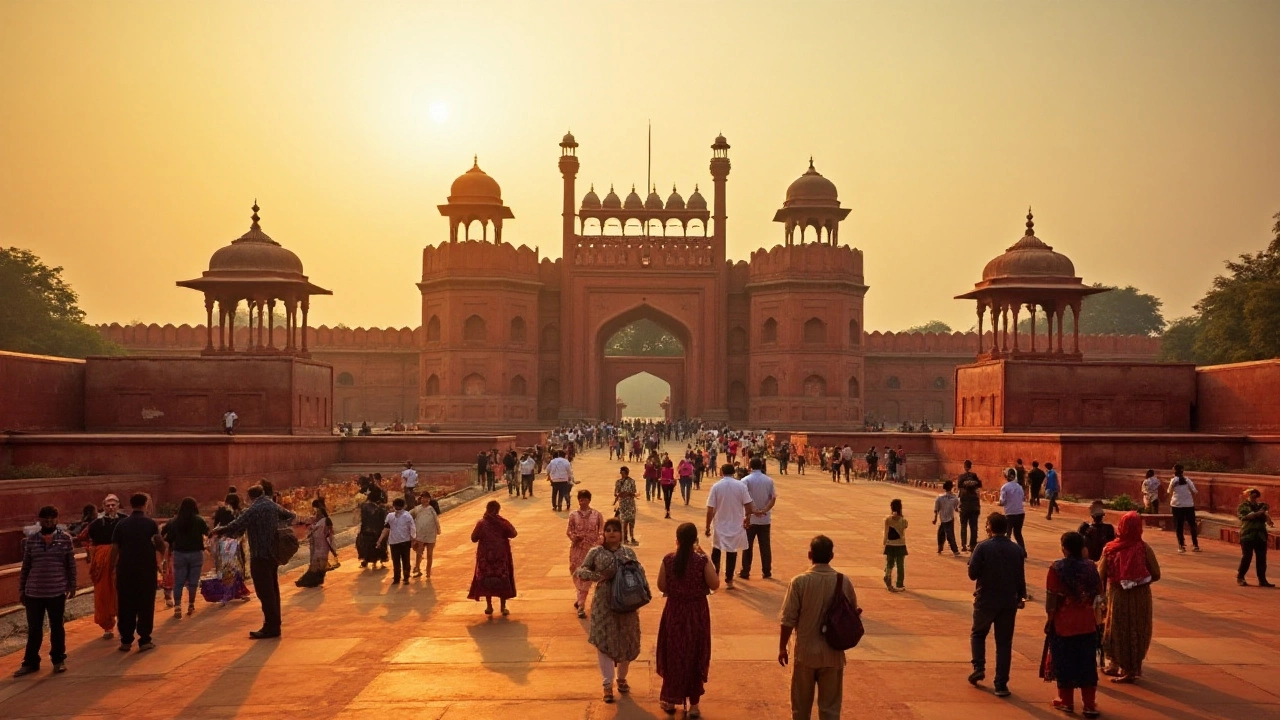
National Monuments: What They Are and Why They Matter in India and Beyond
When we talk about national monuments, structures or sites officially recognized by a government for their historical, cultural, or symbolic importance. Also known as heritage landmarks, they are the physical memory of a people—built not just to impress, but to endure. These aren’t just tourist spots. They’re where history breathes. From the Taj Mahal to the Khajuraho temples, India’s national monuments tell stories of empires, devotion, art, and resistance. They’re protected not because they’re old, but because they still speak.
What makes a site a national monument? It’s not just size or age. It’s meaning. A monument might be a temple carved into rock, a colonial building turned museum, or even a battlefield where freedom was won. In India, the Archaeological Survey of India, the government body responsible for preserving ancient sites and artifacts decides which places get this status. Outside India, UNESCO World Heritage Sites, locations recognized globally for their outstanding universal value often overlap with national monuments, but the rules are stricter. A site must prove it matters not just to one country, but to all of humanity. That’s why the Great Wall of China, Machu Picchu, and the Pyramids of Giza sit on both lists.
But here’s the thing: most people only see monuments as backdrops for photos. They don’t know the labor behind them—the centuries of craftsmanship, the political battles to save them, or the communities still tied to them. In Tamil Nadu, for example, the Meenakshi Temple isn’t just a monument—it’s alive with daily rituals, music, and pilgrims. In Delhi, the Qutub Minar stands not just as a relic of conquest, but as proof of how cultures layered over time. These aren’t frozen in time. They’re part of living culture.
And it’s not just about the past. Monuments shape how we see ourselves today. When a community fights to protect a local site from being replaced by a mall, they’re not just saving bricks—they’re defending identity. That’s why India’s list of national monuments keeps growing. New sites are added every year, from colonial railway stations to tribal rock art. Even forgotten places, like ancient stepwells in Gujarat or forgotten forts in Odisha, are being rediscovered and protected.
What you’ll find in the posts below isn’t just a list of famous sites. It’s a deeper look at what makes these places matter—how they connect to music, religion, travel, and even misunderstandings. You’ll see how the same monument can mean different things to different people. You’ll learn why some global landmarks get all the attention while others, just as powerful, stay hidden. And you’ll find out how places like the Taj Mahal or the Ajanta Caves aren’t just Indian treasures—they’re part of a global conversation about what we choose to remember.