Mythology Stories: Ancient Tales from Tamil and Indian Traditions
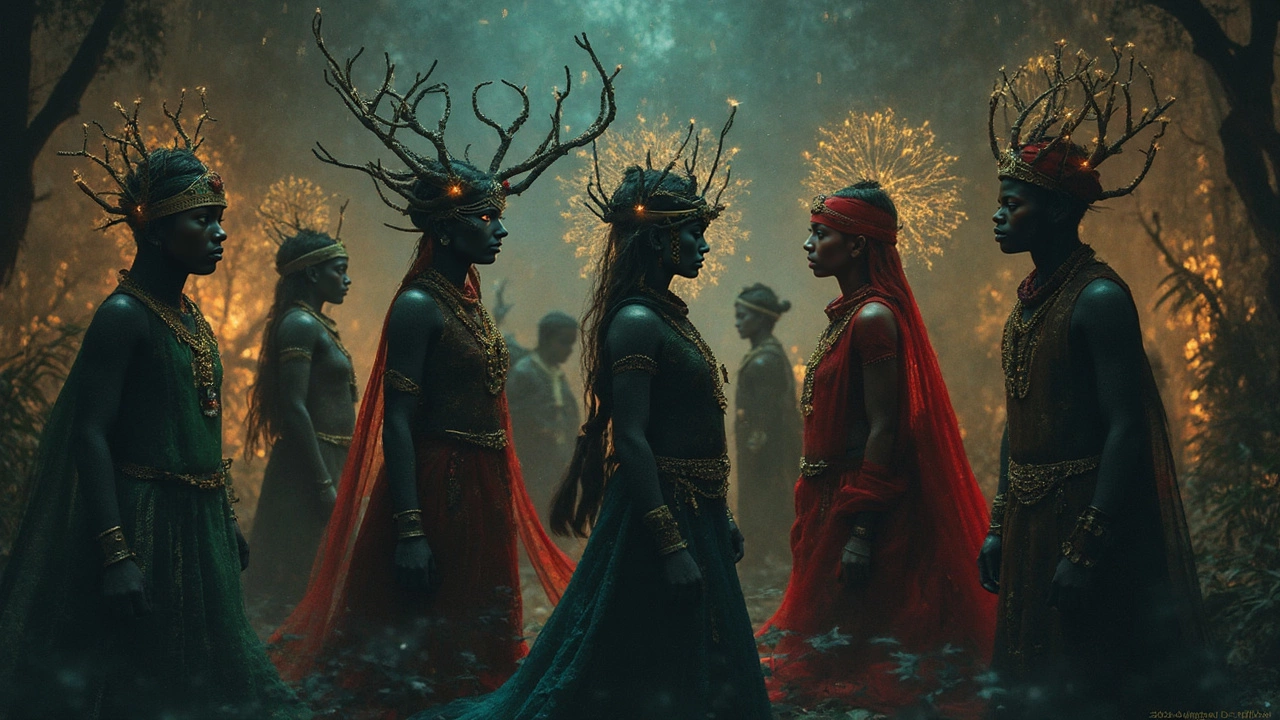
When you hear mythology stories, narratives passed down through generations to explain the divine, the natural world, and human behavior. Also known as folk myths, they’re not just old tales—they’re living pieces of identity that shape how people see the world. In Tamil and Indian culture, these stories aren’t confined to temples or books. They live in dance, song, festivals, and even the way people dress or cook. From the blue skin of Krishna symbolizing infinite consciousness to the Jalpari, a mermaid-like water spirit in Tamil and Bengali folklore who guards rivers and rain, these myths answer questions science never could—and they do it with beauty, not just logic.
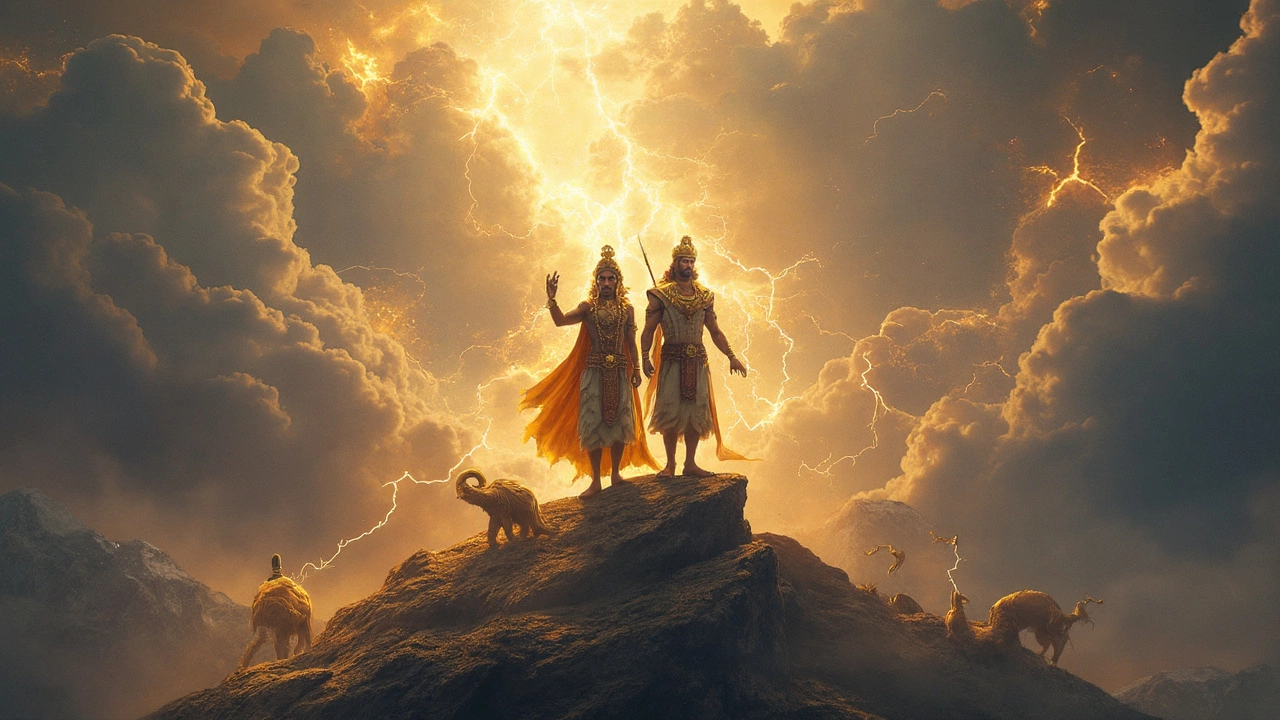
These stories don’t just entertain. They teach. The Hindu gods, deities like Shiva, Vishnu, and Devi who appear in countless regional versions across India aren’t just painted blue for style—their color, weapons, animals, and postures all carry meaning. Why does Shiva dance? Why does Ganesha have an elephant head? These aren’t random choices. They’re coded messages about balance, destruction, wisdom, and renewal. And in Tamil Nadu, these same gods appear in Tamil folklore, a rich oral tradition blending Dravidian beliefs with Vedic stories through performances like Theru Koothu and Karakattam, where dancers become living gods for a night. These aren’t reenactments—they’re spiritual acts.
Mythology stories also reveal how culture adapts. Diwali, often seen as a pan-Indian festival, takes on a different rhythm in Tamil homes where it blends with Karthigai Deepam, a fire-lit celebration tied to the Tamil calendar. Meanwhile, the cambion, a hybrid being from myth that appears in both Western and Indian tales shows up in Tamil stories as half-human, half-divine figures who bridge worlds—just like the Kinnara, a celestial musician with human and bird traits in ancient epics. These aren’t fantasy tropes. They’re reflections of real human experiences: belonging, transformation, and the search for meaning.
What you’ll find below isn’t a list of fairy tales. It’s a curated collection of real stories—some ancient, some still told in village squares—that explain why people do what they do. Whether it’s why sweets are given during Diwali, why gods wear blue, or how a folk song without words carries more emotion than any lyric, these posts dig into the roots. No fluff. No guesses. Just the stories, their meanings, and the people who keep them alive.