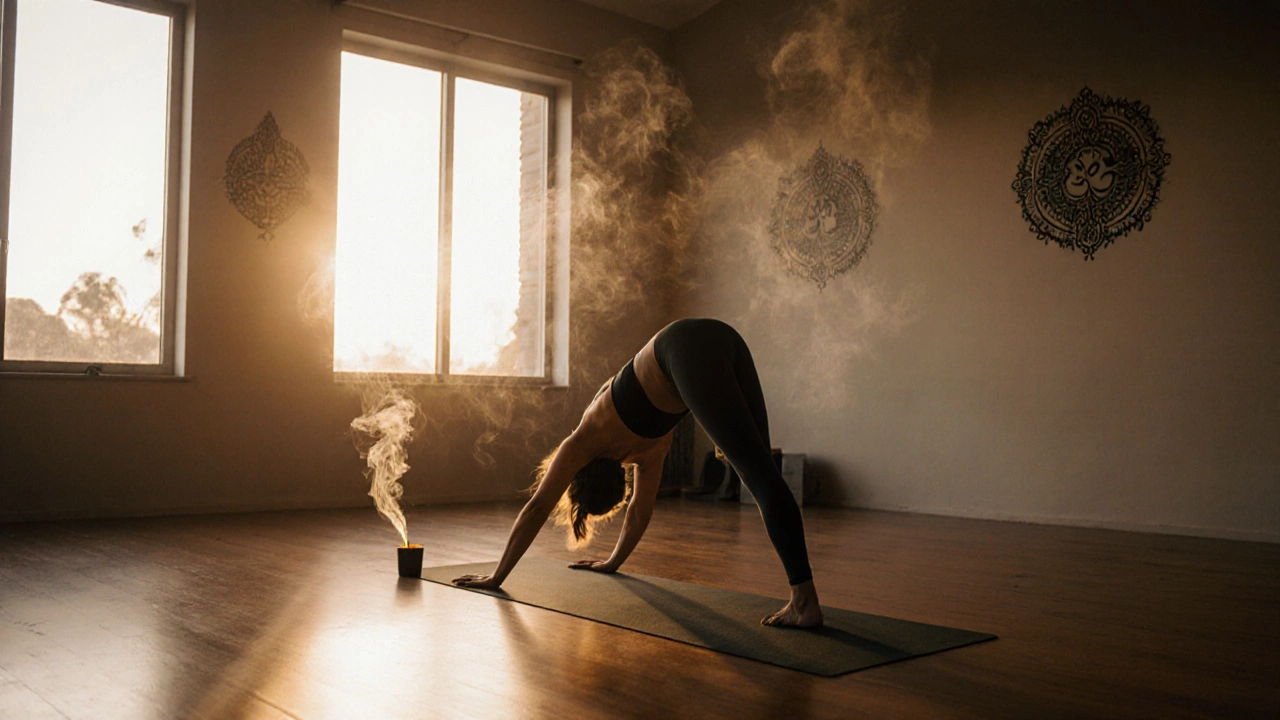
Meditation in Tamil Culture: Practices, Benefits, and Traditions
When you think of meditation, a quiet practice of focused awareness used to calm the mind and connect with deeper states of being. Also known as dhyana, it's not just a trend—it's a centuries-old way of life in Tamil Nadu, woven into temples, homes, and daily routines. You won’t find it only in silent retreats or apps. In Tamil homes, it starts before sunrise with a cup of filter coffee, a few deep breaths, and a glance at the family shrine. It’s not about emptying the mind—it’s about settling into it, quietly, steadily, like the tide pulling back from the shore.
yoga, a physical and spiritual discipline that unites body, breath, and awareness often walks hand-in-hand with meditation here. You’ll see elders in Madurai doing pranayama near temple walls, or students in Chennai using simple breath techniques before exams. These aren’t performances—they’re habits, passed down like recipes. And mindfulness, the act of being fully present in each moment without judgment shows up in the way Tamil families eat—no phones, no rushing, just chewing slowly, tasting every bite. Even the rhythm of temple bells, the chanting of Tamil hymns, and the stillness before a ritual are all forms of meditation in motion.
What makes Tamil meditation different? It doesn’t demand hours. It doesn’t need a cushion. It lives in the pause between steps, in the silence after a lullaby, in the way a grandmother hums a prayer while grinding rice. You don’t have to be spiritual to benefit—you just have to be willing to stop, even for a minute. The posts below show you how this shows up in daily life: from ancient temple rituals to modern Tamil families using meditation to handle stress, from the link between breath and Carnatic music to how Ayurveda supports mental balance. You’ll see real examples—not theory, not hype. Just how people here breathe, rest, and find calm in a world that never stops moving.