Lehenga: Traditional Indian Wedding Dress and Its Cultural Significance
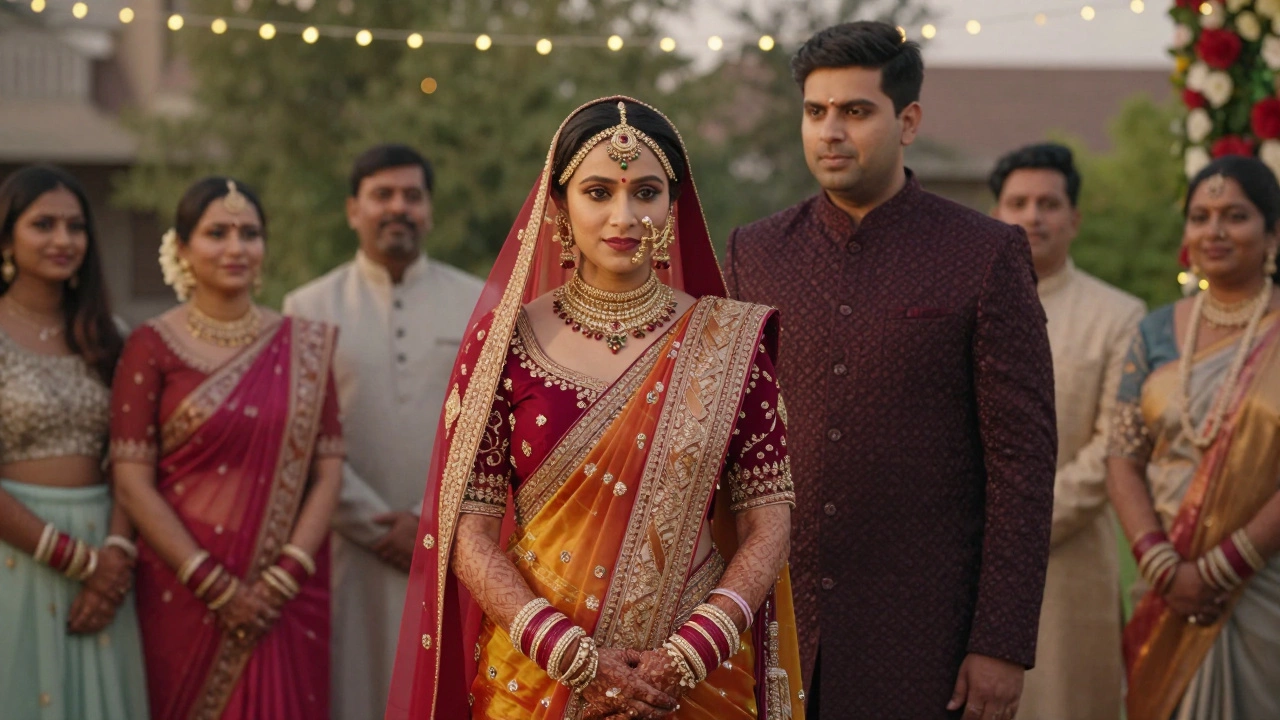
When you think of an Indian wedding, one image almost always comes to mind: the lehenga, a three-piece traditional outfit consisting of a long skirt, fitted blouse, and flowing dupatta, worn primarily by brides across India. Also known as a chaniya choli, it’s not just clothing—it’s a living tradition passed down through generations, shaped by region, craft, and celebration. Unlike Western wedding gowns, the lehenga carries deep symbolism. The heavy embroidery often tells stories—peacocks for grace, lotuses for purity, and gold thread for prosperity. Every stitch has meaning, and every color choice, from crimson to marigold yellow, reflects family heritage and local customs.
What makes the lehenga unique is how it adapts. In Gujarat and Rajasthan, brides wear heavily mirrored lehengas with mirror work that glints like stars under lantern light. In South India, brides might choose a silk lehenga with zari borders, echoing the elegance of Kanchipuram silks. In Punjab, the lehenga gets bolder—brighter hues, heavier embroidery, and sometimes even a matching ghagra with a short choli. It’s worn not just by brides but also by women at festivals, weddings, and religious events. The dupatta, the long scarf draped over the head or shoulders, often matching the lehenga and symbolizing modesty and grace is just as important as the skirt. And the choli, the fitted crop top that anchors the ensemble, is tailored to highlight the waist and balance the volume of the skirt—a design that’s stood the test of time for over 500 years.
Modern designers still draw from these roots. Today’s lehengas mix traditional handwork with contemporary silhouettes—off-shoulder cholis, cape dupattas, even lehengas with pants underneath for comfort. But the soul hasn’t changed. It’s still about celebration, identity, and craftsmanship. Whether it’s a village bride in Rajasthan or a city bride in Mumbai, the lehenga connects her to something older than fashion. Below, you’ll find articles that explore how this garment is made, worn, and revered across India—each one a thread in the larger tapestry of Indian culture.