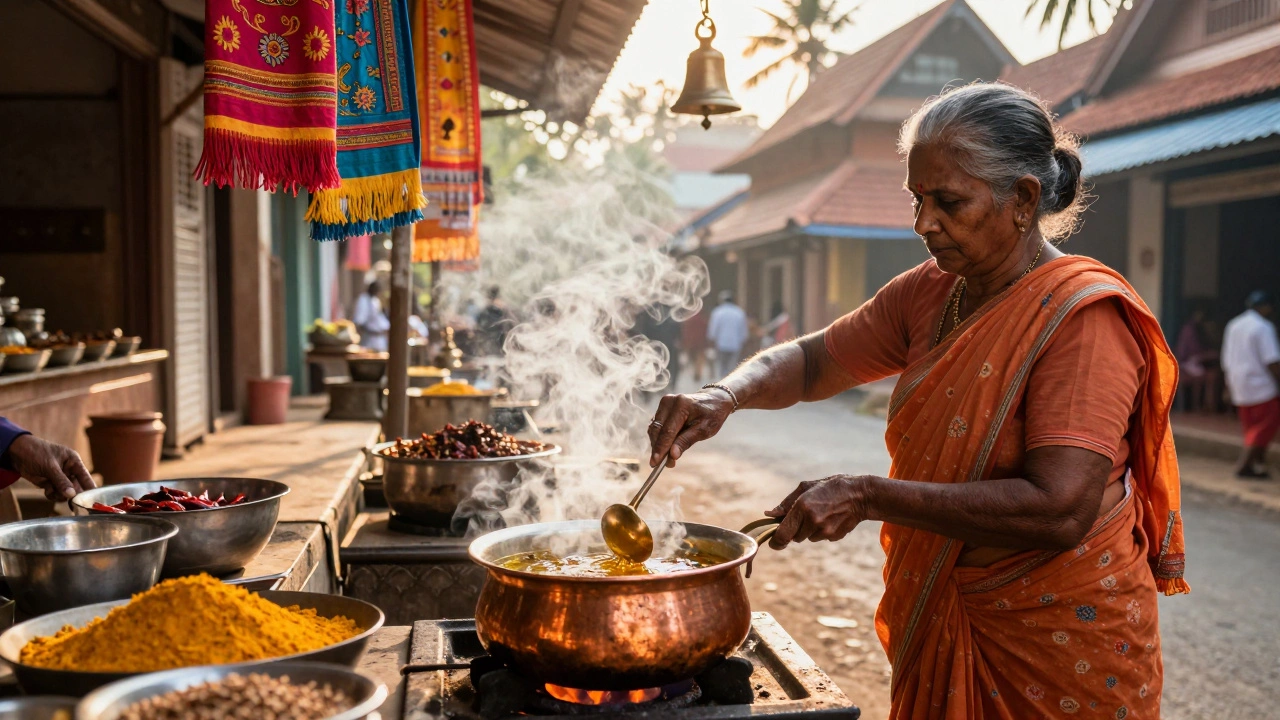
Indian Textiles: Traditional Fabrics, Weaving, and Cultural Heritage
When you think of Indian textiles, handwoven fabrics rooted in regional craftsmanship and centuries-old techniques that vary dramatically across India’s states. Also known as Indian handloom, these textiles are not just clothing—they’re living archives of culture, religion, and community identity. Every thread tells a story: the golden zari in a Banarasi silk sari, the delicate knotting of a Pashmina shawl from Kashmir, the bold natural dyes of a Madhubani painting on fabric. These aren’t mass-produced goods. They’re made by hands that learned from their mothers, grandmothers, and village elders.
Banarasi silk, a luxurious, heavy fabric from Varanasi, often used in bridal wear and religious ceremonies, known for its intricate gold and silver thread work. It takes weeks to weave a single piece, and the patterns often include floral motifs inspired by Mughal art. Then there’s Pashmina shawl, a fine wool product from the Himalayan region, made from the undercoat of Changthangi goats, prized for its warmth and softness. These shawls were once worn by royalty and are still passed down as heirlooms. And Madhubani painting, a folk art from Bihar, traditionally done on walls and now transferred to textiles, featuring vibrant geometric patterns and mythological scenes. It’s not just decoration—it’s a spiritual practice, often done by women during festivals and rites of passage.
These textiles aren’t stuck in the past. They’re worn at weddings, sold in global markets, and revived by young designers who blend tradition with modern style. But behind every piece is a weaver, a dyer, a spinner—someone whose work keeps a 5,000-year-old chain alive. You won’t find this kind of craftsmanship in fast fashion. It’s slow, intentional, and tied to place, season, and soul.
What you’ll find in the posts below are deep dives into the fabrics, the people who make them, and the cultural moments they mark—from the sarees worn by Indian girls during festivals to the silk that defines a bride’s first day. There’s no single Indian textile—just a rich, colorful tapestry of regional pride, skill, and memory, waiting to be understood.