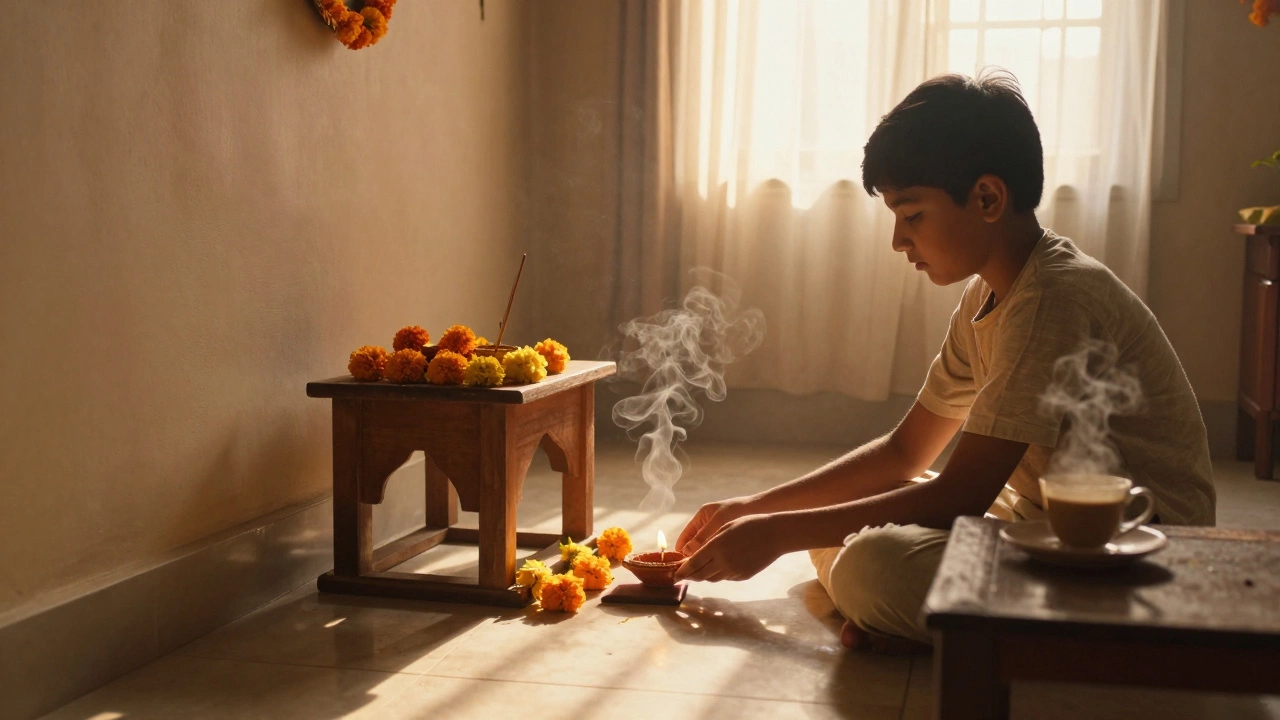
Indian Home Rituals: Daily Practices That Shape Family Life
When you think of Indian culture, you might picture big festivals or colorful temples—but the real heartbeat of tradition lives in the Indian home rituals, daily spiritual and cultural practices performed in households across India to maintain balance, honor ancestors, and invite positivity. These aren’t grand ceremonies. They’re the morning lamp lit before sunrise, the rice flour design drawn at the doorway, the silent prayer before eating. They’re the quiet glue that holds families together, generation after generation. Unlike public festivals, these rituals happen in private, often without fanfare, yet they carry the weight of centuries. They’re passed down not through books, but through hands—mothers teaching daughters, fathers showing sons how to tie a thread around the wrist or place a coconut at the altar.
These rituals aren’t the same everywhere. In Tamil Nadu, you’ll find women offering fresh flowers to the kitchen goddess every day. In Punjab, families might start the day with a hymn from the Guru Granth Sahib. In Bengal, the evening ritual of lighting a diya near the Tulsi plant is tied to stories of divine protection. Even the way food is served—always with the right hand, never left—is a ritual in itself. These aren’t just habits; they’re daily Hindu rituals, structured acts of devotion rooted in ancient texts like the Grihya Sutras, designed to align household life with cosmic order. Vedic home practices are still alive because they work—for peace of mind, for family rhythm, for a sense of belonging. You don’t need to be religious to feel their power. Many families now blend them with modern life: a quick prayer while brewing coffee, a small rangoli made with chalk instead of powder. The core remains: intention over perfection, presence over performance.
What ties all these rituals together is their focus on cleanliness, gratitude, and protection. The act of cleaning the home before dawn isn’t just about hygiene—it’s symbolic, clearing space for good energy. Offering food to a pet or a tree before eating isn’t superstition—it’s recognition that life is interconnected. Even the way elders sit at the head of the table or how children touch their feet isn’t about hierarchy—it’s about respect as a living language. These are the things that survive migration, urbanization, and technology because they answer a deep human need: to feel rooted.
Below, you’ll find real stories and insights from families across India—how they keep these rituals alive, how they’ve changed, and why they still matter. Whether you’re part of a Tamil household, a Gujarati family, or just curious about what happens behind closed doors in millions of Indian homes, these posts will show you the quiet strength of everyday tradition.