Do Any Countries Really Not Dance? Culture, Beliefs, and Surprising Facts
Are there actually countries where people don't dance? Discover how dance is tied to culture and explore why some societies resist or restrict it.
When we talk about the history of dance, the evolution of rhythmic movement as a form of expression, worship, and storytelling across civilizations. Also known as movement traditions, it isn’t just performance—it’s memory carved into the body, passed down through generations without a single written word. Long before theaters and stages, dance was how people spoke to gods, marked harvests, mourned loss, and celebrated life. In Tamil Nadu, dance wasn’t entertainment—it was prayer. The temple carvings at Mahabalipuram show dancers in poses still used today, proving that some movements haven’t changed in over a thousand years.
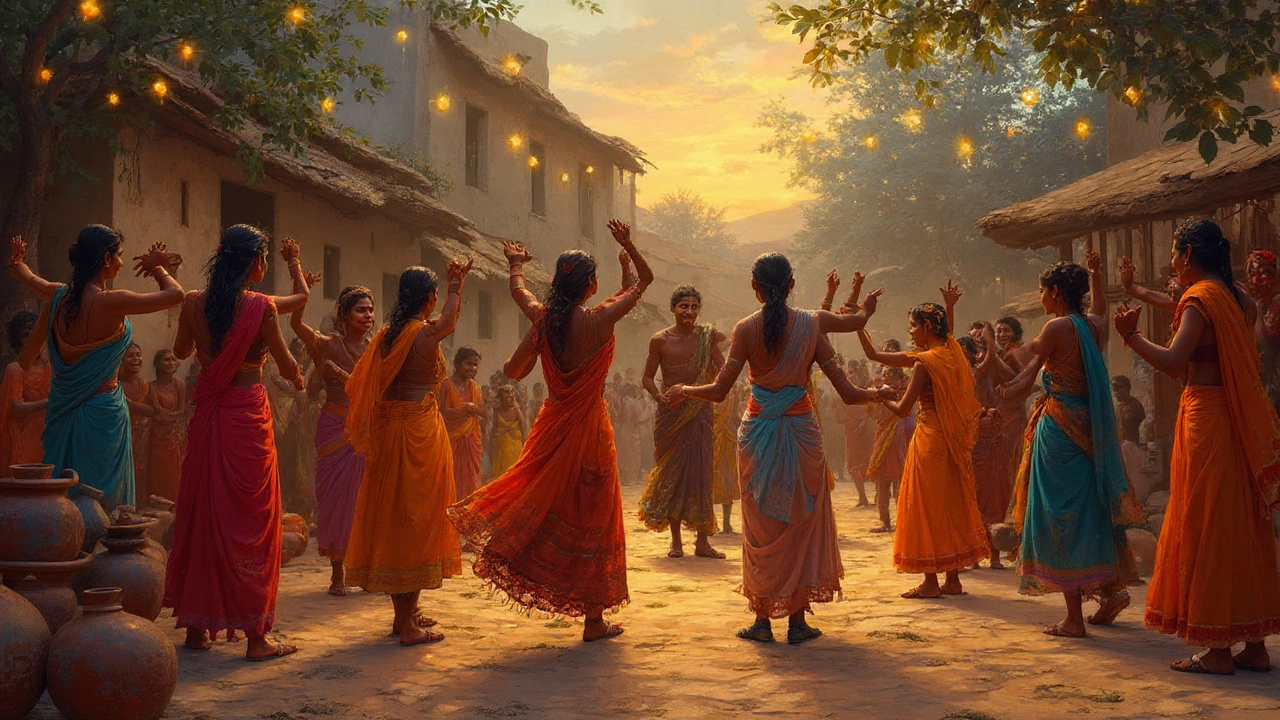
The Tamil dance traditions, a living lineage of movement rooted in ancient texts like the Natya Shastra and local folk practices. Also known as Bharatanatyam and folk forms like Karakattam, it connects every step to a deity, a season, or a village ritual. Karakattam dancers balance pots on their heads while moving to drums, not just to show skill, but to honor the rain goddess. Puliyattam, where dancers paint themselves as tigers, isn’t a costume show—it’s a plea for protection from wild animals. These aren’t performances for tourists. They’re survival stories in motion. And while Bharatanatyam got polished for the stage, its roots are still in the soil of Tamil villages, where elders taught children to move before they could speak.
Across India, dance has always been tied to identity. Carnatic music and dance grew side by side in temple courtyards, while in the north, Kathak evolved in royal courts with Persian influence. But the real power of dance isn’t in its style—it’s in its resilience. Even when colonial rulers banned temple dancing, women kept the steps alive in secret. When modern education pushed kids toward computers, grandmothers still clapped out rhythms at weddings. The Indian classical dance, a structured system of gestures, footwork, and expression passed down through guru-shishya parampara. Also known as the eight classical forms of India, it isn’t frozen in time—it adapts, but never forgets its soul. And then there’s the folk dance, the raw, unfiltered voice of rural communities, danced in fields, during monsoons, at harvests, and in times of grief. Also known as community movement, it doesn’t need a stage—it needs people. You won’t find this in textbooks. You’ll find it in the hands of a grandmother teaching her granddaughter how to twist her wrists just right, or in the drumbeats of a Theru Koothu performance that lasts all night.
What you’ll find below are real stories—how dance kept Tamil culture alive during times of change, how it mixed with other traditions without losing its voice, and how even today, in small towns and cities, people still move the same way their ancestors did. These aren’t just articles. They’re echoes.
Are there actually countries where people don't dance? Discover how dance is tied to culture and explore why some societies resist or restrict it.