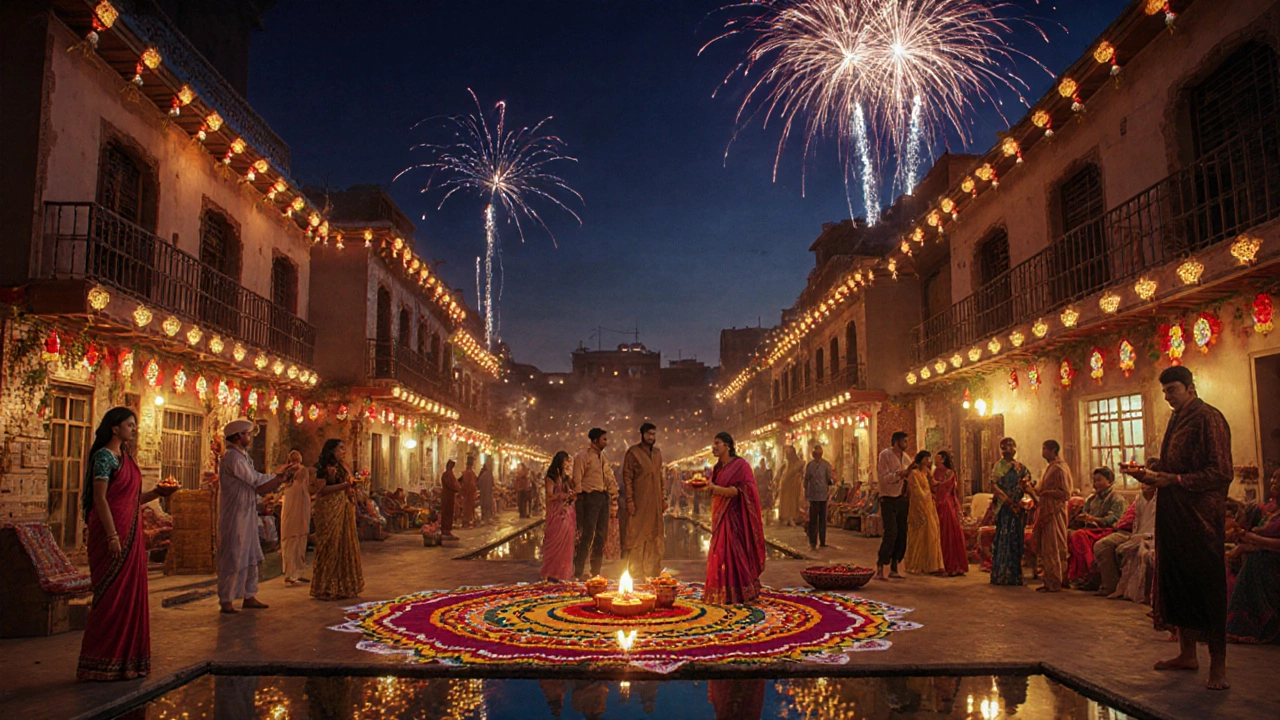
Hindu holidays: Key festivals, traditions, and what they mean
When people talk about Hindu holidays, religious and cultural celebrations rooted in ancient Indian traditions, often tied to lunar calendars and regional customs. Also known as Hindu festivals, they are not just days off—they’re living rituals that shape family life, food, music, and community across India. These aren’t abstract events. They’re the days when homes glow with oil lamps, streets fill with drumbeats, and grandmothers pass down recipes that haven’t changed in generations.
Hindu holidays like Diwali, the festival of lights celebrated across India with fireworks, sweets, and prayers for prosperity and Navratri, a nine- to fifteen-day celebration honoring the divine feminine, with dance, fasting, and colorful attire vary by region. In Tamil Nadu, Diwali blends with Karthigai Deepam, a Tamil-specific festival where lamps are lit on hills and homes to honor the god Shiva. Meanwhile, Navratri stretches to 15 days in some parts, turning into a full month of devotion and community gatherings. These aren’t just religious acts—they’re cultural anchors that connect people to their roots, even in cities far from villages.
What makes these holidays stick? They’re not just about gods and stories. They’re about rhythm. The rhythm of planting and harvest. The rhythm of family reunions. The rhythm of giving sweets, wearing new clothes, and cleaning your home from top to bottom. You’ll find this in every post below—how a single festival like Diwali means different things in Bengal, Punjab, and Tamil Nadu. How Ayurveda ties into fasting during Navratri. How music, dance, and even food taboos shift with each celebration. These holidays don’t exist in a vacuum. They’re shaped by language, climate, history, and local beliefs.
What you’ll find here aren’t generic lists of dates or temple rituals. You’ll see real stories: why Tamils light lamps on the 13th night, why some families avoid sweets during certain festivals, how the color blue in Hindu art connects to divine power, and how music traditions like bol banao show up in temple chants. These are the details that make Hindu holidays more than just holidays—they’re the heartbeat of a living culture.