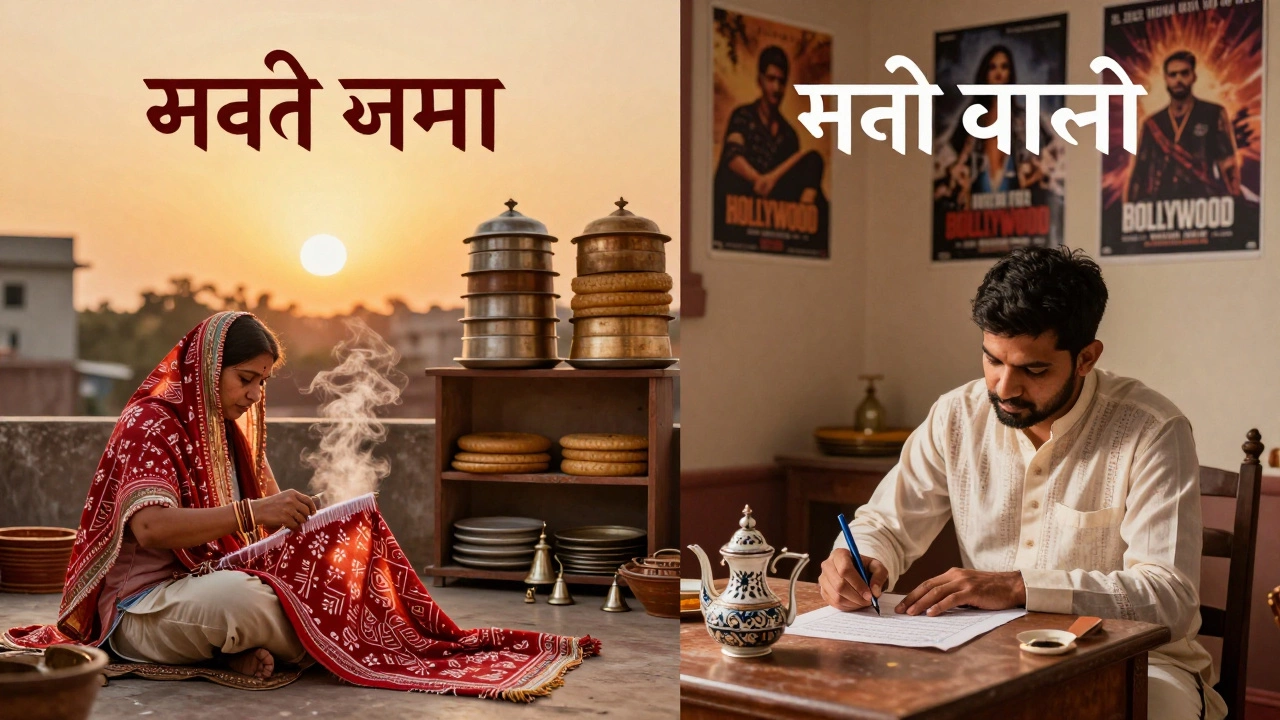
Gujarati Language: Origins, Usage, and Cultural Ties in India
When you hear Gujarati language, a major Indo-Aryan language spoken primarily in the Indian state of Gujarat and by communities worldwide. Also known as Gujarati, it's not just a way to speak—it’s how families pass down recipes, songs, and stories across generations. This language has its own script, derived from the ancient Brahmi system, and is written left to right with rounded characters that look unlike Devanagari or Bengali. Over 55 million people speak it, making it one of India’s 22 scheduled languages. You’ll hear it in homes in Ahmedabad, in businesses in Dubai, and in temples in Nairobi—all with the same rhythm and soul.
What makes Gujarati special isn’t just its grammar or vocabulary—it’s how deeply it’s woven into daily life. The Gujarati script, a distinctive writing system with 47 primary characters and no capital letters. Also known as Gujarātī lipi, it’s used in everything from school textbooks to temple inscriptions. You won’t find it on most phone keyboards by default, but millions type it daily using apps designed for native speakers. The language also carries the weight of religious texts, especially in Jain and Vaishnav communities, where hymns and prayers are preserved in classical Gujarati. And while Hindi and English dominate urban spaces, Gujarati remains the heartbeat of family meals, wedding songs, and local theater.
It’s no surprise that the Gujarati speakers, a tight-knit community known for entrepreneurship, vegetarian food culture, and strong family bonds. Also known as Gujaratis, they’ve built businesses from small shops to global corporations, often keeping their language alive even abroad. You’ll find Gujarati spoken in households where meat is avoided not out of trend, but tradition—rooted in Jain and Vaishnav beliefs. The same people who run diamond businesses in Antwerp or tech startups in Silicon Valley still greet each other with "Kem cho?" and end conversations with "Aavjo." Their language isn’t fading—it’s adapting, growing, and staying real.
There’s a quiet strength in how Gujarati survives. It doesn’t need Bollywood to stay relevant. It thrives in small-town newspapers, in home-cooked meals labeled with handwritten notes, in children learning to write their names for the first time. The posts below explore how this language connects to food, identity, and daily rituals—not as a footnote, but as the core. Whether you’re learning it, missing it, or just curious why it matters, you’ll find stories here that don’t just talk about Gujarati—they live it.