Shiva vs Jesus Timeline Calculator
This tool shows the vast difference between Shiva's origins in ancient India and Jesus' historical period in the Middle East. Click the markers to see key details of each figure's historical context.
Shiva's worship predates Jesus by over 3,000 years. The earliest evidence of Shiva-like worship comes from the Indus Valley Civilization (3300-1300 BCE), while Jesus was born around 4 BCE. This means Shiva was already a central figure in Indian spiritual traditions thousands of years before Jesus' historical period.
Key Insight: These figures existed in completely different historical contexts. Shiva represents a divine archetype in Hinduism that developed over millennia, while Jesus is a historical figure whose story is documented in the context of Roman-era Judea.
People often ask: who came first, Shiva or Jesus? It sounds like a simple question, but it’s not. One is a figure from ancient Indian spiritual traditions that stretch back thousands of years. The other is the central figure of a religion that began in the Middle East around 2,000 years ago. They don’t belong to the same world, the same time, or the same story. But because both are deeply respected, people try to compare them - sometimes even pit them against each other. That’s where things get messy.
Shiva existed long before Jesus was born
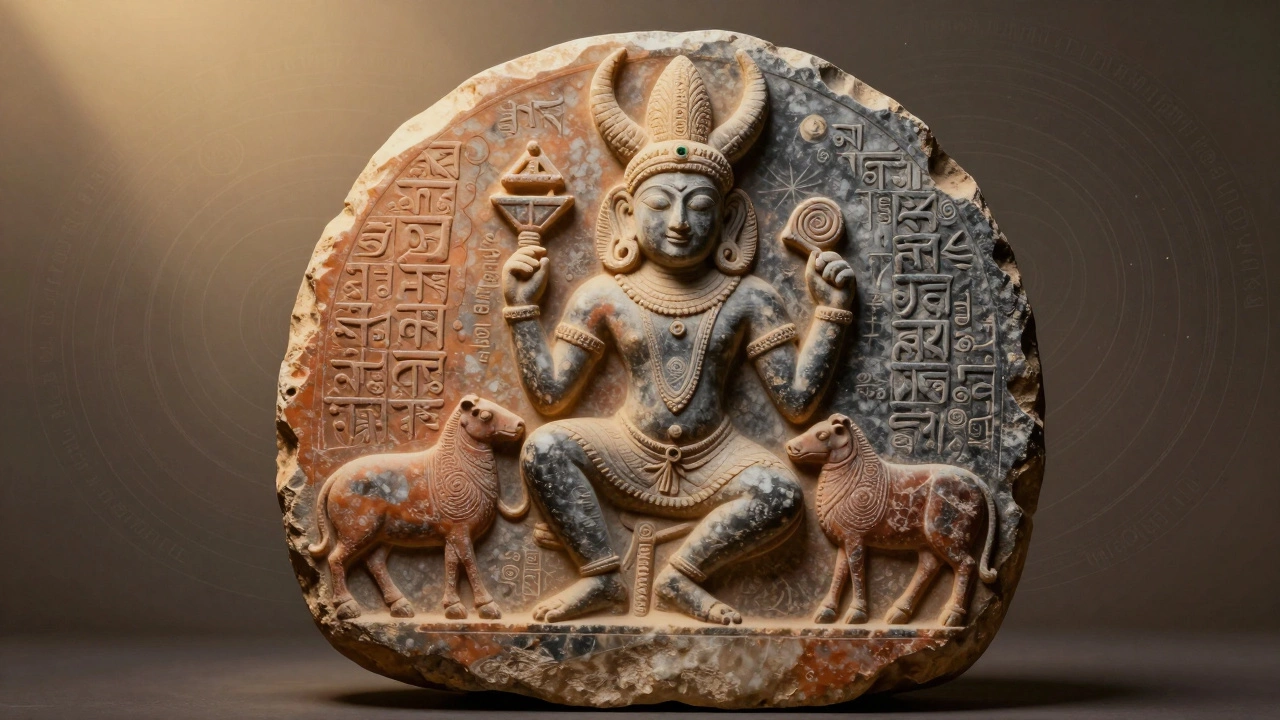
Shiva is one of the principal deities in Hinduism, part of the Trimurti - along with Brahma and Vishnu. He’s known as the destroyer and transformer, the yogi in deep meditation, the dancer of cosmic cycles. The earliest traces of Shiva-like figures go back to the Indus Valley Civilization, around 3300-1300 BCE. Archaeologists found seals from Mohenjo-daro showing a seated figure surrounded by animals, wearing a horned headdress. Scholars call this the Pashupati seal, and many believe it’s an early representation of Shiva as the lord of animals.
By the time the Vedas were composed - between 1500 and 500 BCE - Shiva was already a major god under the name Rudra. The Shvetashvatara Upanishad, written around 600 BCE, calls him the supreme being. The Puranas, written between 300 and 1000 CE, expanded his myths: his marriage to Parvati, his son Ganesha, his third eye, his trident, his association with the lingam. These stories weren’t written down overnight. They were passed down orally for centuries before being recorded.
That means Shiva, as a concept and a worshiped figure, was already part of Indian spiritual life over 3,000 years before Jesus was born.
Jesus appeared in a completely different time and place
Jesus of Nazareth is believed to have lived between 4 BCE and 30-33 CE. He was born in Judea, a province of the Roman Empire, in what is now the Middle East. His life and teachings are recorded in the New Testament, written in Greek by followers decades after his death. The earliest Gospel, Mark, was likely written around 70 CE. The others followed in the next 20-30 years.
There’s no historical record of Jesus before 1 CE. No temples, no texts, no inscriptions from his childhood. The first mentions of him outside Christian writings come from Roman historians like Tacitus and Josephus, writing around 90-110 CE - more than 60 years after Jesus’ death.
By contrast, Hindu texts from 1,000 years before Jesus already described Shiva’s rituals, his role in the universe, and how devotees should worship him. The idea of a divine being who destroys and renews was already deeply rooted in Indian culture. Jesus’ message - love, forgiveness, resurrection - was new to the Mediterranean world. Shiva’s symbolism - destruction as renewal, asceticism, cosmic dance - had been part of Indian thought for millennia.
They never met. They never knew each other.
There’s no historical, textual, or archaeological evidence that Shiva and Jesus ever existed in the same world. They lived in different continents, spoke different languages, and belonged to entirely separate religious systems. Hinduism didn’t know about Christianity. Christianity didn’t know about Shiva - not until centuries later, when European colonizers arrived in India.
Some modern spiritual movements try to link them - saying Jesus traveled to India, studied with yogis, or was an incarnation of Shiva. These ideas sound appealing, but they’re not based on facts. The earliest Christian texts don’t mention India. The earliest Hindu texts don’t mention Jesus. The idea that Jesus spent his "lost years" in Kashmir or Tibet comes from 19th-century books written by Western authors with no access to reliable sources. It’s fiction dressed up as history.
Shiva and Jesus are not rivals. They’re not even in the same race. One belongs to the ancient spiritual landscape of South Asia. The other to the historical context of the Roman Near East. Trying to rank them by who came first isn’t just misleading - it’s like asking whether the Eiffel Tower came before the Great Wall of China. One was built in 1889. The other in 7th century BCE. The difference isn’t close. And they serve different purposes.
Why does this question even come up?
People ask this because they’re trying to make sense of religion in a global world. With the internet, we’re exposed to so many beliefs at once. It’s natural to wonder: which one is older? Which one is "more true"? But religion isn’t a competition. It’s not a timeline you can measure like a sports record.
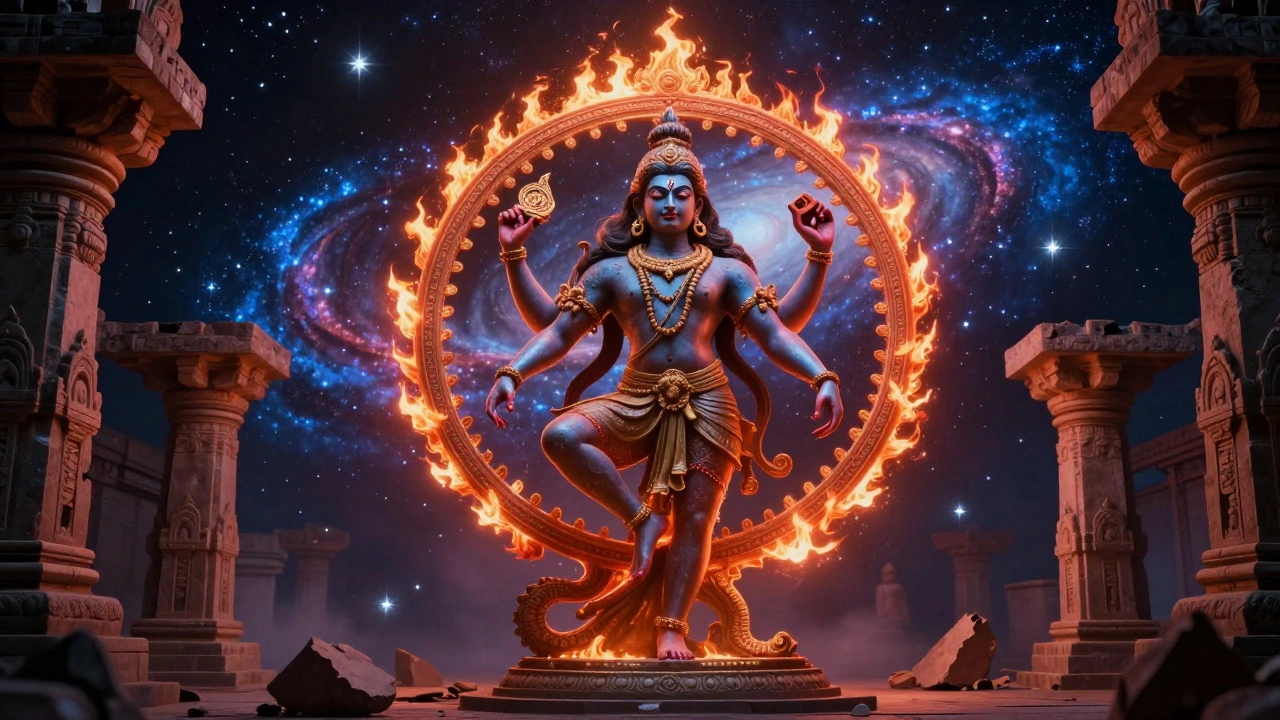
Shiva represents the cyclical nature of existence - birth, death, rebirth. He’s not a historical person. He’s a symbol of cosmic forces. Jesus, on the other hand, is presented in Christian tradition as a real man who lived, taught, died, and rose again. His story is tied to history, to specific places, to witnesses.
One is mythic. The other is historical. Comparing them directly is like comparing a poem to a biography. Both can be true in their own way. One doesn’t need to win to be meaningful.
What do scholars say?
Religious historians agree: Shiva’s worship predates Jesus by at least 2,500 years. The Rigveda, the oldest Hindu scripture, mentions Rudra - a precursor to Shiva - as a powerful, fearsome god. The name "Shiva" itself appears in later Vedic texts. By the time of the Mahabharata (compiled around 400 BCE), Shiva is already a central figure.
Meanwhile, Jesus emerges in the context of Second Temple Judaism, a time of Roman occupation and religious reform. His teachings were shaped by Jewish prophets, Roman law, and Greek philosophy - none of which had any contact with the Vedic traditions of India.
There’s no overlap. No influence. No shared origin. The two figures developed independently, in different cultures, for different reasons.
Can you worship both?
Some people do. In India, you’ll find Christians who respect Shiva as a symbol of power. You’ll also find Hindus who admire Jesus’ message of compassion. That’s not about theology. It’s about personal meaning. You don’t have to pick one to honor the other.
But if you’re asking who came first - the answer is clear. Shiva was worshipped as a divine force long before Jesus was born. The evidence isn’t debated among scholars. It’s written in ancient texts, carved in stone, passed down through generations.
It’s not about superiority. It’s about time. And time doesn’t lie.
Myth vs. History: What’s the difference?
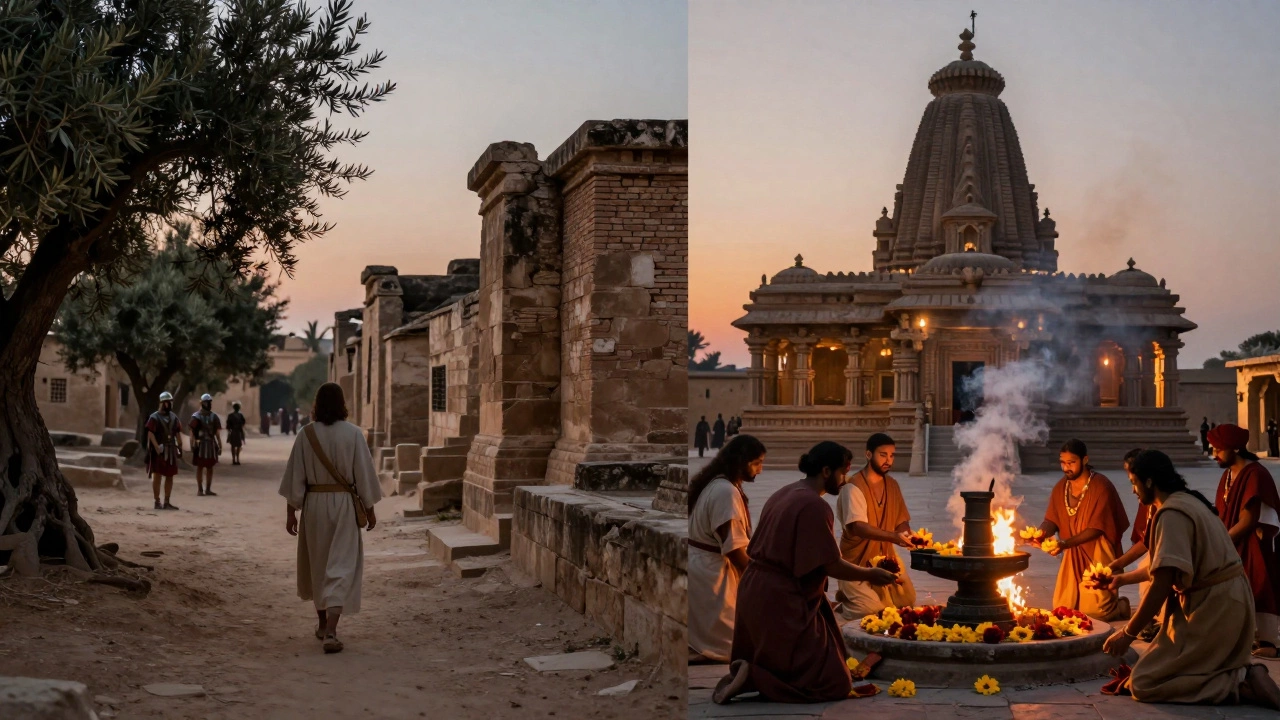
One common mistake is treating myth as history. Shiva isn’t a person who lived in a specific year. He’s a divine archetype - like the Greek god Zeus or the Norse god Odin. His stories explain the universe, not record events.
Jesus, by contrast, is presented as a real man in a real place at a real time. His birth is tied to a census under Augustus. His death is tied to Pontius Pilate. Historians can’t prove he was divine, but they can prove he existed.
That’s why comparing them is tricky. One is eternal. The other is historical. One belongs to the realm of symbolism. The other to the realm of memory.
Trying to say one is "better" because he came first misses the point. Shiva doesn’t need to be older to be powerful. Jesus doesn’t need to be newer to be meaningful. They serve different needs in different cultures.
What should you take away from this?
If you’re curious about ancient religions, start with the facts. Shiva’s worship goes back over 5,000 years. Jesus’ life began around 2,000 years ago. That’s not a close call. It’s a gap of millennia.
Don’t let modern spiritual blending confuse you. Just because two ideas sound similar doesn’t mean they’re connected. The idea of a divine savior? That exists in many cultures. The idea of a cosmic dancer? That’s uniquely Indian.
Respect both. Learn from both. But don’t force them into the same box.
Final thought: Time doesn’t erase meaning
Shiva has been worshipped since before writing was common in India. Jesus appeared in a world with Roman roads, scrolls, and emperors. One shaped the soul of a civilization. The other changed the course of Western history.
Neither needs to be first to matter. But if you want to know who came first - the answer is written in the stones of Mohenjo-daro, in the verses of the Rigveda, in the silence of ancient temples that still stand today.
Shiva was there long before.