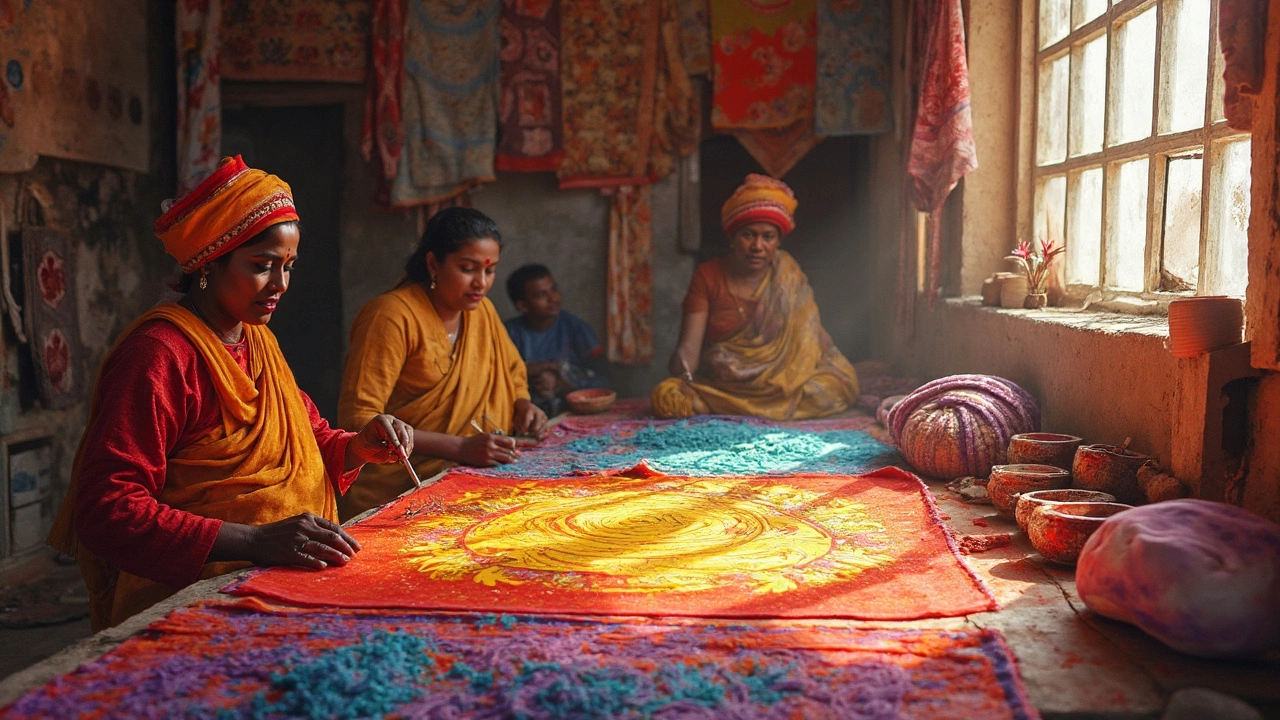
Gujarat Art: Traditional Crafts, Folk Traditions, and Cultural Expressions
When you think of Gujarat art, a rich tapestry of handcrafted textiles, ritual paintings, and community-driven design rooted in centuries of artisanal practice. Also known as Gujarati folk art, it’s not just decoration—it’s storytelling woven into cloth, painted on walls, and carved into wood. Unlike mass-produced decor, this art lives in the hands of families who’ve passed down techniques for generations. You won’t find it in big malls. You’ll find it in the looms of Patan, the studios of Saurashtra, and the village squares where women paint walls during festivals.
One of the most famous forms is Patola weaving, a double ikat silk textile from Patan, where threads are dyed before weaving to create mirror-image patterns. It takes months to make a single sari, and the designs often include peacocks, elephants, and geometric motifs tied to Hindu cosmology. Then there’s Kalamkari painting, a hand-painted or block-printed textile using natural dyes, often depicting scenes from epics like the Ramayana. These aren’t just pretty pictures—they’re devotional acts, made with rules passed down from mother to daughter. You’ll also see Gujarati handicrafts, including terracotta toys, metalwork from Bhuj, and embroidery from Kutch. Each region has its own style: the mirror work of Banni, the bold reds of Saurashtra, the delicate stitches of Rabari women.
These crafts aren’t relics. They’re alive. Women in Kutch still spin cotton on charkhas. Artisans in Ahmedabad mix indigo and pomegranate rind to make dye. Children learn to paint on cloth before they learn to write. What makes Gujarat art unique isn’t just its beauty—it’s how deeply it’s tied to daily life, belief, and identity. You can’t separate the art from the farmer who grows the cotton, the priest who blesses the loom, or the grandmother who teaches the pattern. That’s why these traditions survive—even when modern life pushes hard against them.
What you’ll find in the posts below isn’t a list of tourist attractions. It’s a look at the real people, the hidden stories, and the quiet resistance behind every stitch, brushstroke, and carved figure. From forgotten motifs to modern revival efforts, these articles show how Gujarat art isn’t frozen in time—it’s being redefined, one handcrafted piece at a time.