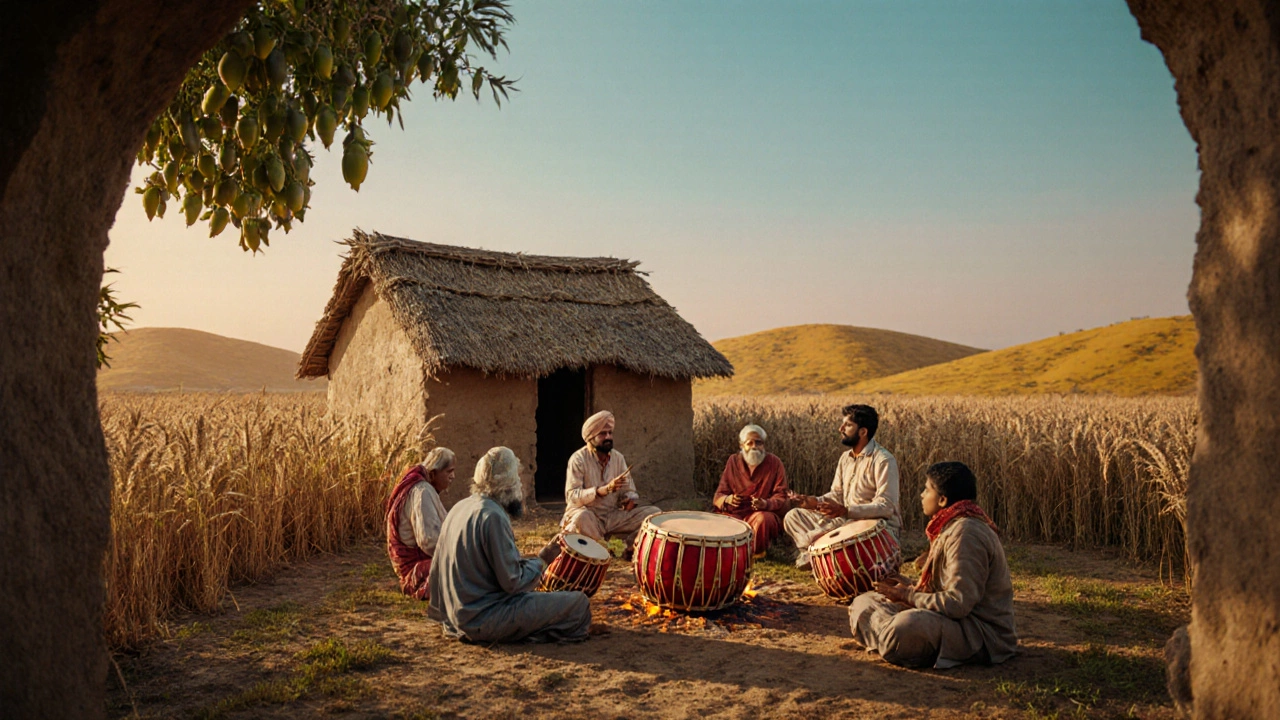
What Is a Punjabi Song? A Simple Guide to the Music of Punjab
Discover what a Punjabi song really is-its language, instruments, history, and key sub‑genres-plus tips for listening and exploring the vibrant world of Punjabi music.
When you hear the deep, rhythmic thump of a thavil, a double-headed drum central to Tamil temple and festival music. Also known as tavil, it’s not just an instrument—it’s the heartbeat of processions in Tamil Nadu, driving the energy of Karthigai Deepam and temple festivals. This isn’t background noise. It’s a language. Every beat carries meaning, passed down through generations of drummers who learn by ear, not sheet music.
Alongside the thavil, you’ll find the kombu, a long, curved horn made from metal or buffalo horn, used to signal rituals and announce religious events. Also known as kombu vadyam, it doesn’t play melodies—it calls. Its piercing tone cuts through crowds, guiding devotees during temple parades or waking villages before dawn during festival nights. Then there’s the tumbu, a small, handheld drum played with fingers, often used in folk storytelling and village dances like Karakattam. Also known as tumbi, it’s the quiet companion to the thavil’s roar, keeping rhythm in intimate gatherings where songs are sung, not performed.
These instruments aren’t relics. They’re alive in places where modern music hasn’t replaced tradition—rural Tamil Nadu, temple courtyards, harvest festivals, and family weddings. You won’t find them in concert halls often, but you’ll hear them when a village gathers to honor a deity, celebrate a birth, or mourn a loss. The nadaswaram, a double-reed wind instrument often paired with the thavil in processions. Also known as nagaswaram, it’s the sound of Tamil pride—loud, spiritual, and unmistakable. It’s what you hear when a bride enters the mandap, or when a temple idol is carried through the streets. These instruments don’t need amplification. They carry weight because they’re tied to belief, not just sound.
What makes these instruments special isn’t their age—it’s their role. They’re not played for entertainment. They’re played to connect—to gods, to ancestors, to community. A thavil player doesn’t just keep time; he holds the rhythm of memory. A kombu player doesn’t just blow air; he sends a message across fields and rooftops. And in a world where digital beats dominate, these sounds remind us that music doesn’t always need to be polished to be powerful.
Below, you’ll find articles that dig into these instruments—not just how they’re made or played, but why they still matter. From the hidden meanings behind their shapes to the families who’ve kept them alive for centuries, these stories reveal how Tamil folk music isn’t just heard—it’s lived.
Discover what a Punjabi song really is-its language, instruments, history, and key sub‑genres-plus tips for listening and exploring the vibrant world of Punjabi music.