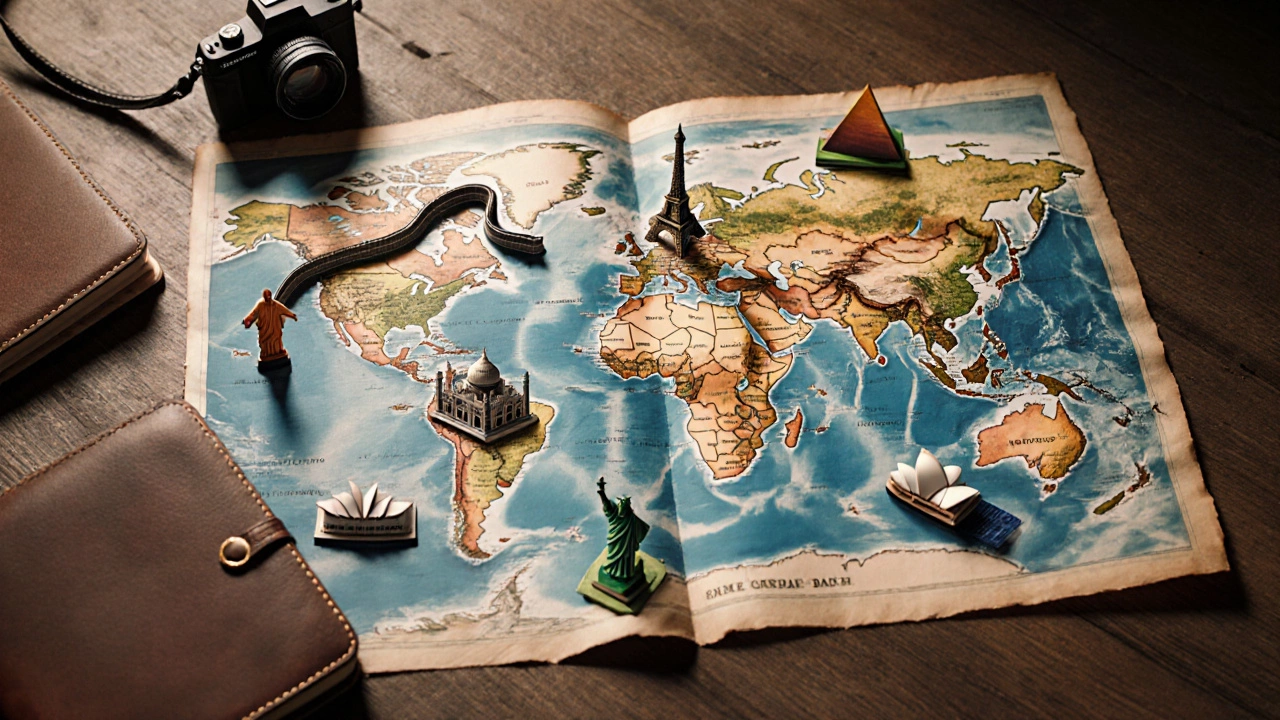
Top 10 Must‑See World Monuments - A Travel Bucket List
Discover the top 10 world monuments, their history, visitor tips, and a quick comparison to help you plan an unforgettable travel bucket list.
When you think of famous monuments, enduring structures that carry the weight of history, faith, and identity. Also known as historical landmarks, they are more than stone and mortar—they’re living stories carved into the landscape. In Tamil Nadu, these monuments aren’t just tourist spots. They’re the backbone of a culture that’s been building, praying, and celebrating for over two thousand years.
Take the Meenakshi Amman Temple, a sprawling complex in Madurai that blends sculpture, sound, and spirituality. Also known as Meenakshi Sundareswarar Temple, it’s not just a place of worship—it’s a living museum where every pillar tells a myth, and every festival fills the air with drums and chants. Then there’s the Great Living Chola Temples, a group of UNESCO-listed sites built by kings who turned stone into poetry. Also known as Chola dynasty temples, they include Brihadeeswarar in Thanjavur, with its 66-meter vimana that still casts the same shadow it did in 1010 AD. These aren’t ruins. They’re active centers of devotion, art, and community. People still climb their steps, offer flowers, and sing hymns just like their ancestors did.
But famous monuments aren’t just Hindu temples. The Fort St. George, a British colonial stronghold in Chennai. Also known as Fort George, it holds the first English settlement in India and now houses a museum that shows how power, trade, and resistance shaped the region. And let’s not forget the Mahabalipuram Shore Temple, a 8th-century structure built right where land meets sea. Also known as Shore Temple, Mahabalipuram, it’s one of the oldest stone temples in South India—and it’s still standing after centuries of waves, storms, and time. These sites show that Tamil culture didn’t just survive—it built, adapted, and outlasted empires.
What ties these places together? Not just age or size. It’s purpose. Each monument was built to connect people to something bigger—god, king, community, or memory. They’re where rituals began, where art was born, where history was written in stone instead of ink. And today, they’re still doing that work. Children learn their stories in school. Tourists come to see them. Locals still light lamps in the same corners their grandparents did.
Below, you’ll find articles that dig into the myths behind these structures, the people who built them, and the rituals that keep them alive. Some explain why certain temples look the way they do. Others reveal how colonial powers repurposed sacred sites. A few even compare Tamil monuments to other famous landmarks across India. Whether you’re planning a trip, writing a paper, or just curious about the stones you’ve seen in photos, this collection gives you the real stories behind the scenery.
Discover the top 10 world monuments, their history, visitor tips, and a quick comparison to help you plan an unforgettable travel bucket list.