Rajasthan Crafts Comparison Tool
Compare Rajasthan's Famous Crafts
Select 2-3 crafts to compare their key characteristics side by side
Craft Comparison
| Attribute | Craft 1 | Craft 2 | Craft 3 |
|---|---|---|---|
| Origin | |||
| Primary Material | |||
| Key Technique | |||
| Price Range | |||
| Cultural Significance |
Rajasthan's vibrant culture is deeply intertwined with its world-renowned Rajasthan handicrafts, each piece telling a story of heritage and artistry. But which handicrafts is Rajasthan truly famous for? From the cobalt blue pottery of Jaipur to the intricate block-printed fabrics of Sanganer, this article explores the top crafts that define Rajasthan's artistic legacy. We'll dive into their history, unique techniques, and where to find authentic pieces today.
Jaipur Blue Pottery: The Cobalt Blue Legacy
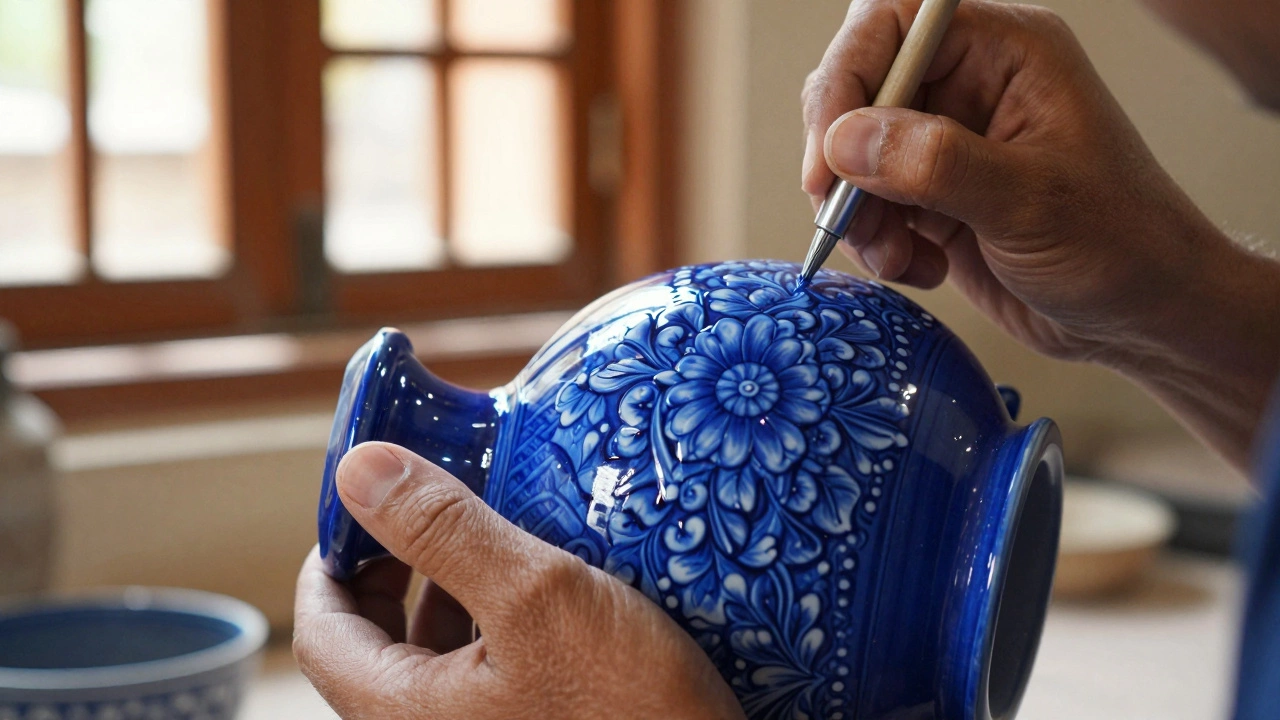
Jaipur Blue Pottery is a distinctive ceramic craft from Jaipur, Rajasthan, made without traditional clay. Instead, it uses a blend of quartz, glass, and minerals, resulting in vibrant blue pieces that are both decorative and functional. Unlike regular pottery, this craft doesn't use clay at all. Artisans mix quartz, glass, and other minerals to create the base. This gives the pottery a unique texture and durability. The cobalt blue color comes from natural pigments, and each piece is hand-painted with intricate designs. The process involves firing at high temperatures, resulting in a glossy finish. This craft dates back to the Mughal era but was perfected in Jaipur during the 19th century. Today, you'll find these beautiful pieces in markets like Johari Bazaar and Tripolia Bazaar. From tea sets to decorative plates, each item tells a story of Rajasthan's rich heritage.
Block Printing: Nature-Inspired Patterns
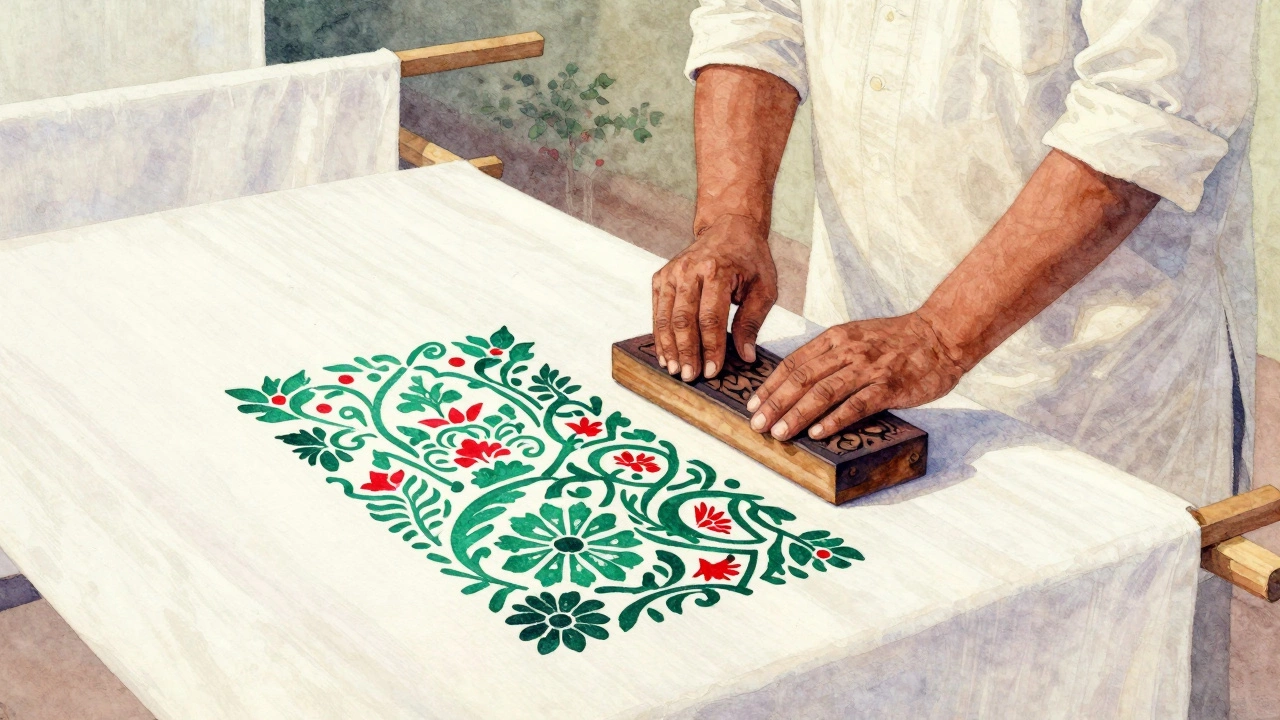
Block Printing is a traditional textile printing technique from Rajasthan, using hand-carved wooden blocks dipped in natural dyes to create intricate patterns on fabric. In towns like Sanganer and Bagru, artisans have been perfecting this craft for centuries. They carve detailed designs into wood, dip the blocks in natural dyes like indigo or pomegranate, and press them onto fabric. Each print is unique, with slight variations that add character. Sanganer is known for fine floral patterns, while Bagru specializes in geometric designs. These fabrics are used for sarees, dupattas, and home decor. The process is entirely manual, taking days to complete a single piece. This sustainable method avoids synthetic chemicals, making it eco-friendly.
Mojari Shoes: Handcrafted Leather Art
Mojari Shoes are traditional Rajasthani footwear known for their pointed toes and intricate embroidery, crafted from leather and adorned with mirror work and beads. Originating in Jodhpur, Mojari shoes are more than just footwear-they're a symbol of cultural identity. Artisans stitch leather using traditional techniques, then embellish them with mirror work, beads, and thread embroidery. Each pair takes days to complete. Traditionally worn by men, Mojari shoes are now popular globally for their unique style. You can find them in markets like Sardar Market in Jodhpur. The craftsmanship requires years of training, ensuring each pair is a masterpiece of functional art.
Lacquer Work from Bikaner
Lacquer Work is a decorative craft from Bikaner, Rajasthan, where wooden items are coated with resin-based lacquer and painted with vibrant colors and intricate designs. Bikaner's lacquer work is famous for its bright colors and detailed patterns. Artisans start with a wooden base, then coat it with lacquer made from tree resin. After drying, they paint intricate designs using natural pigments. Common items include decorative boxes, bangles, and trays. The craft has been practiced for over 200 years. Today, Bikaner's lacquer products are prized for their durability and beauty. You can find these items in local markets or specialty stores across Rajasthan.
Bandhani and Textile Crafts
Bandhani is a tie-dye textile art from Rajasthan where tiny knots are tied in fabric before dyeing to create intricate patterns. Also known as Bandhej, this craft is famous across Rajasthan, especially in cities like Jodhpur and Udaipur. Artisans tie thousands of tiny knots in the fabric, then dip it in dye. Each knot creates a dot pattern, and the process is repeated for multiple colors. The result is stunning, with vibrant colors and intricate designs. Bandhani is commonly used for sarees, dupattas, and turbans. The technique requires immense patience-each piece can take weeks to complete. This craft is a testament to Rajasthan's artistic heritage and continues to thrive today.
Where to Find Authentic Rajasthan Handicrafts
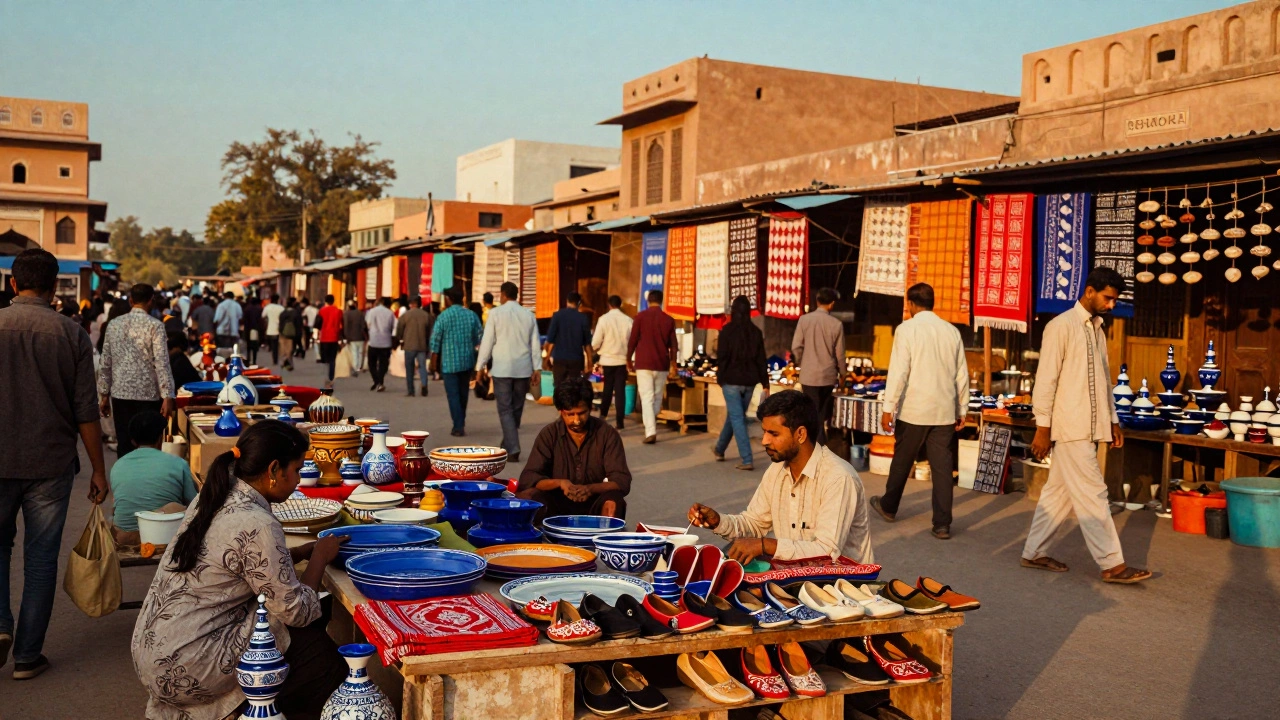
For authentic Rajasthan handicrafts, visit specific markets in each city. In Jaipur, Johari Bazaar and Tripolia Bazaar are perfect for Blue Pottery and textiles. Sanganer is the go-to place for block-printed fabrics, while Bagru offers traditional geometric patterns. For Mojari shoes, head to Sardar Market in Jodhpur. Bikaner's markets showcase lacquer work, and Udaipur's City Market has Bandhani textiles. Many artisans also sell directly online through platforms like Craftsvilla or local cooperatives. Buying directly supports the craftspeople and ensures you get genuine pieces.
Frequently Asked Questions
What is the most famous handicraft of Rajasthan?
Jaipur Blue Pottery is arguably the most famous handicraft of Rajasthan. Its unique cobalt blue color and intricate designs make it instantly recognizable. However, block printing and Mojari shoes are also highly regarded for their craftsmanship and cultural significance.
How is Jaipur Blue Pottery different from regular pottery?
Unlike regular pottery, Jaipur Blue Pottery doesn't use clay. Instead, it's made from a blend of quartz, glass, and minerals. This gives it a distinct texture and durability. The cobalt blue color comes from natural pigments, and each piece is hand-painted before being fired at high temperatures. This process results in a glossy finish that's both decorative and functional.
Where can I buy authentic block-printed fabrics in Rajasthan?
For authentic block-printed fabrics, visit Sanganer and Bagru near Jaipur. Sanganer is known for fine floral patterns, while Bagru specializes in geometric designs. Local artisans sell directly at their workshops, and markets like Johari Bazaar in Jaipur also carry these fabrics. Buying directly from the source ensures authenticity and supports the craft.
Are Mojari shoes still worn today?
Yes, Mojari shoes are still worn today, especially in rural Rajasthan. They've also gained popularity globally for their unique style. Modern designs incorporate contemporary elements while preserving traditional craftsmanship. Many fashion brands now feature Mojari-inspired footwear, making them a timeless piece of Rajasthani heritage.
What makes Bandhani textiles unique?
Bandhani textiles are unique due to their intricate tie-dye technique. Artisans tie thousands of tiny knots in the fabric before dyeing, creating a dot pattern. Each knot is carefully tied by hand, requiring immense patience and skill. The process is repeated for multiple colors, resulting in vibrant, detailed designs. This method is entirely manual, making each piece one-of-a-kind and deeply rooted in Rajasthan's cultural tradition.