Carnatic Classical Music: Origins, Instruments, and Living Traditions
When you hear the intricate rhythms and soaring melodies of Carnatic classical music, a highly structured system of South Indian art music that has evolved over centuries with deep ties to temple rituals and devotional poetry. Also known as Karnataka sangeetham, it’s not background noise—it’s a disciplined language of sound passed down through generations, where every note carries meaning and every rhythm tells a story.
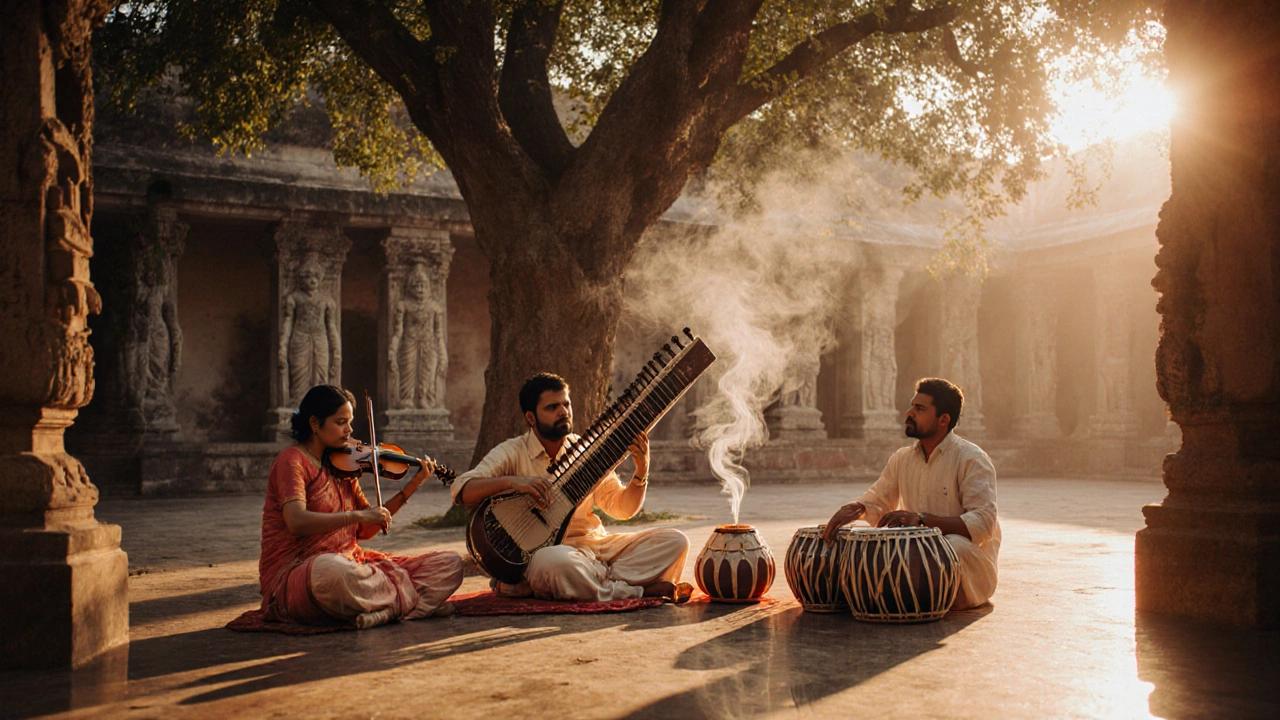
This music doesn’t just use instruments—it gives them soul. The veena, a plucked string instrument with a long neck and resonating gourds, central to Carnatic performances and often seen in depictions of Saraswati, the goddess of knowledge hums with over 20 frets tuned to microtones you won’t find in Western scales. The mridangam, a double-headed drum made of jackfruit wood and animal skin, acts as the heartbeat of the ensemble, keeping time with astonishing precision. Then there’s the violin, adapted from the West but now played with a distinctly South Indian bowing style, sliding between notes like a voice crying in prayer. These aren’t just tools—they’re partners in a centuries-old conversation between musician and divine.
What makes Carnatic music different from other classical systems? It’s built on ragas—melodic frameworks that aren’t just scales but emotional states. A raga like Yaman might evoke peace, while Shankarabharanam bursts with joy. Each raga has rules: which notes to emphasize, when to pause, how to ornament. And then there’s tala—the rhythmic cycle. A single tala like Adi (eight beats) can be broken into dozens of patterns, layered with improvisation. Composers like Tyagaraja, Muthuswami Dikshitar, and Syama Sastri didn’t just write songs—they carved spiritual maps into sound. Their kritis are still sung today in homes, concert halls, and temple courtyards across Tamil Nadu, Karnataka, and beyond.
You won’t find Carnatic music on pop charts, but you’ll hear it in the morning chants of Chennai, in the fingers of a child learning swaras on a harmonium, in the quiet hum of a grandmother tapping rhythm on a rice bowl. It’s not frozen in history—it breathes. Modern performers blend it with electronic sounds, but the core remains: discipline, devotion, and detail. If you’ve ever wondered why Tamil culture feels so deeply musical, this is why. The posts below explore how this tradition lives today—through forgotten compositions, regional variations, the role of women in its history, and how families keep it alive when the world moves too fast.