Banarasi Silk: The Royal Fabric of India's Weaving Heritage
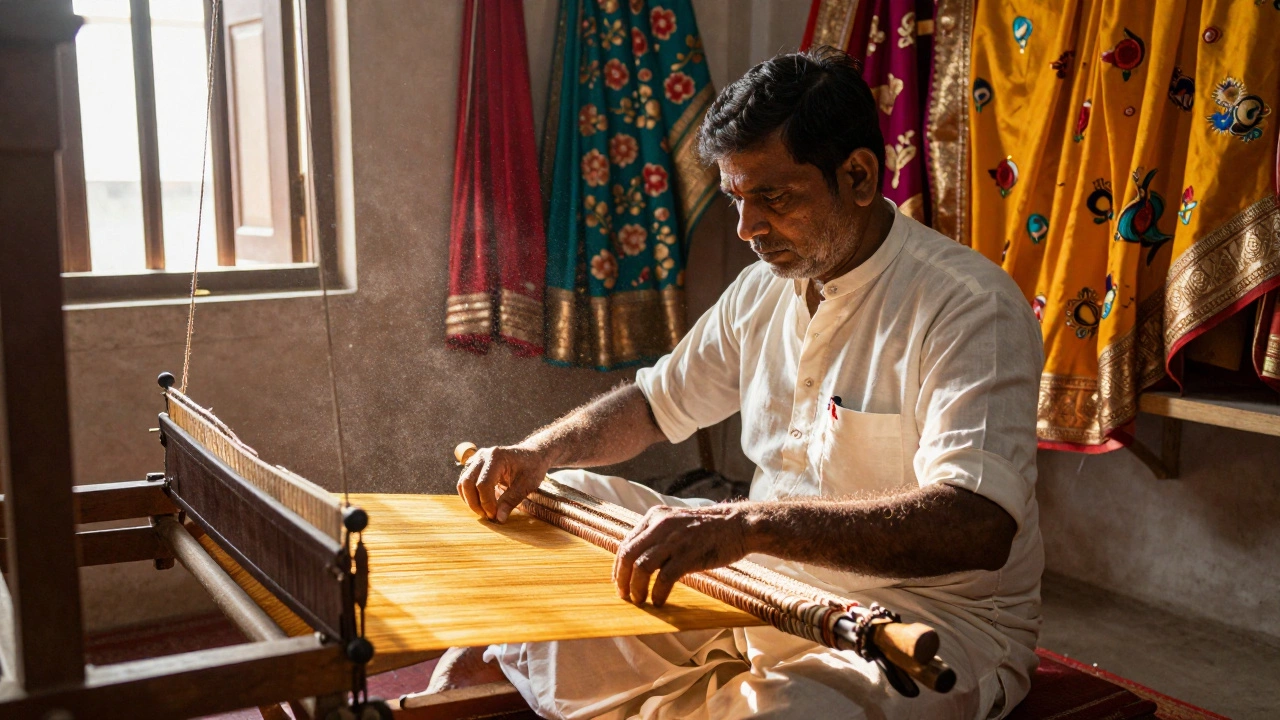
When you think of Banarasi silk, a luxurious, handwoven silk fabric originating from Varanasi, India, known for its intricate gold and silver zari work and timeless elegance. Also known as Banaras silk, it's not just cloth—it's heritage stitched into every thread. This isn’t mass-produced fabric. It’s the result of months of skilled labor, passed down through families for over 400 years. Weavers in Varanasi still use wooden looms, just like their ancestors, to create pieces that shimmer with detail and carry the weight of tradition.
Banarasi silk is closely tied to Indian silk fabrics, a broad category of handwoven textiles from across India, each region offering unique patterns, techniques, and cultural meanings. While Kanchipuram silk from Tamil Nadu features bold temple motifs, and Mysore silk leans toward subtle elegance, Banarasi silk stands out with its dense, metallic embroidery and heavy drape. It’s the fabric of weddings, festivals, and milestones—something you don’t wear, you inherit. And it’s not just about beauty; the zari work often uses real silver and gold threads, making each piece a small treasure.
The demand for Banarasi silk connects deeply to traditional Indian textiles, a living archive of regional identity, craftsmanship, and spiritual symbolism woven into everyday life. These fabrics don’t just cover the body—they tell stories. A bride in a Banarasi saree isn’t just dressed for her wedding; she’s wearing centuries of artistry. And while fast fashion tries to copy its look, no machine can replicate the rhythm of a handloom or the soul behind each knot. That’s why genuine Banarasi silk carries a price tag—and a legacy.
What you’ll find in the posts below aren’t just articles about fashion. They’re glimpses into how textiles like Banarasi silk fit into India’s bigger cultural picture—from the rituals that call for it, to the communities keeping it alive, to the quiet resistance against cheap imitations. Whether you’re curious about how it’s made, why it’s so expensive, or how it compares to other regional silks, the collection below gives you real insight—not fluff.