India Footwear Suitability Checker
Select your planned activity and the type of footwear you intend to wear to see if it's a good choice.
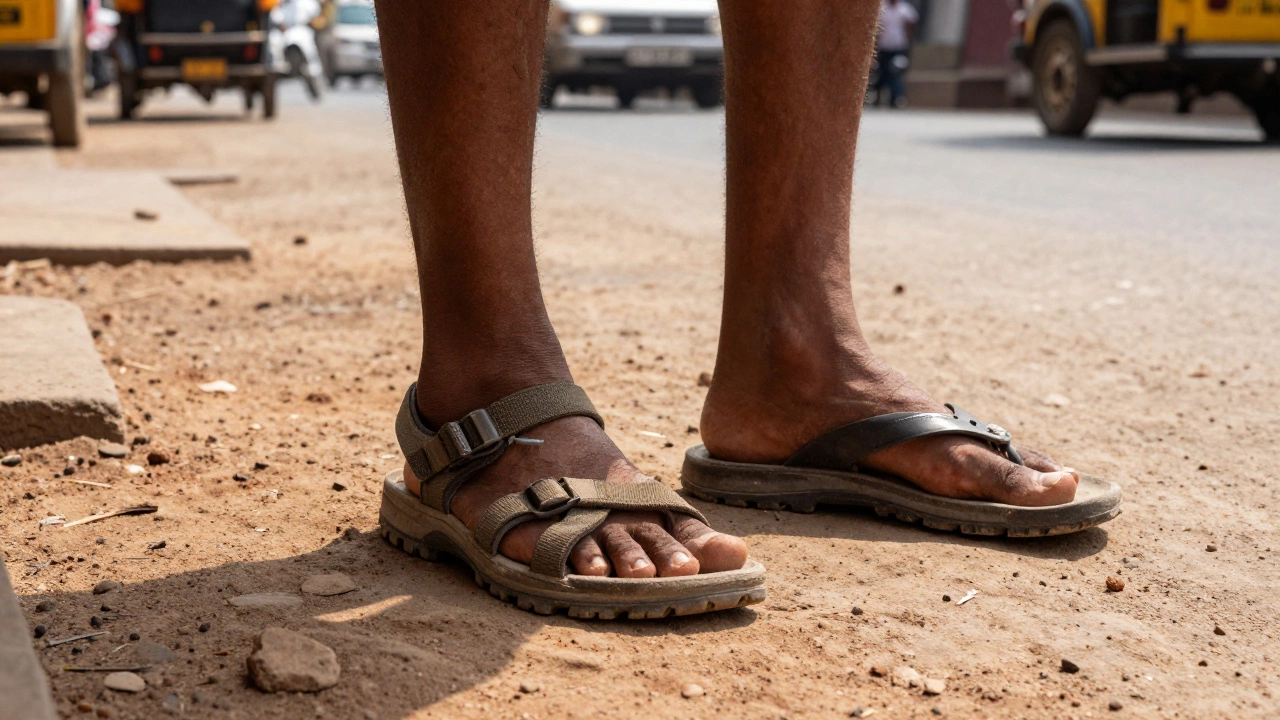
Picture this: you’ve just stepped off a flight in Mumbai or Delhi. The heat hits you like a physical wall. Your instinct? Rip off those heavy sneakers and slip into the flip-flops you packed specifically for the beach. It feels right. It feels logical. But before you wander out onto the dusty streets of Old Delhi or the marble corridors of a temple in Jaipur, pause. Wearing flip flops in India is less about fashion and more about survival, respect, and hygiene.
I’ve spent years navigating the chaotic beauty of Indian cities, from the humid streets of Kolkata to the arid forts of Rajasthan. The short answer to your question is: yes, you can wear them, but only in very specific places. If you plan on wearing rubber thongs as your primary footwear for sightseeing, you are setting yourself up for blisters, infections, and perhaps some uncomfortable social moments. Let’s break down why your feet need better protection than what you find at a gas station, and when it’s actually okay to go barefoot-ish.
The Ground Truth: Why Pavement Is Not Sand
In Australia, where I live in Brisbane, we treat flip-flops as casual weekend wear. We walk on clean concrete, grass, and well-maintained boardwalks. India is different. The infrastructure varies wildly from city to city. In modern malls in Gurgaon or Hyderabad, the floors are polished marble or smooth tile. Here, flip-flops are perfectly fine. You’ll see locals wearing stylish sandals that look similar to thongs, often called Jutti or modern casual sandals.
Step outside those air-conditioned zones, and the reality changes. Indian streets, especially in older parts of cities, are uneven. You will encounter:
- Potholes and cracks: One wrong step with a flimsy sole can twist your ankle.
- Dust and debris: Fine red dust (in Rajasthan) or black coal dust (in industrial areas) gets everywhere. Without enclosed shoes, this grit grinds against your skin.
- Liquid hazards: This is the big one. Open drains, stray animal waste, and unpredictable water spills are common. Walking barefoot or in open-toed shoes exposes you to tetanus, fungal infections, and other serious health risks.
If you’re visiting historical sites like the Taj Mahal or the Red Fort, you’ll be walking on ancient stone surfaces that can be rough and hot under the sun. Flip-flops offer zero cushioning. After three hours of sightseeing, your feet will scream.
Temple Etiquette: When Bare Feet Are Mandatory
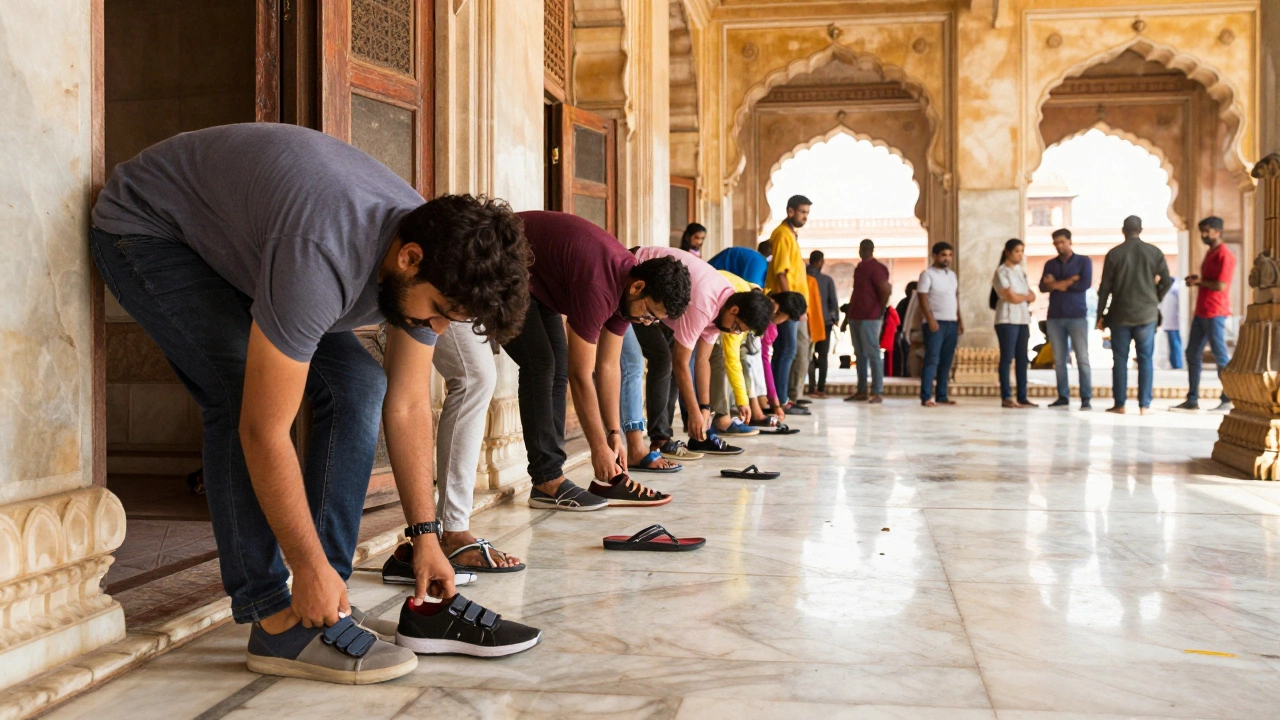
One of the most important cultural rules in India involves footwear and religious spaces. In almost all Hindu temples, mosques, and many Buddhist stupas, you must remove your shoes before entering the main prayer hall or courtyard. This isn’t just a suggestion; it’s a sign of respect. Shoes are considered dirty because they touch the ground, which is seen as impure.
So, if you’re wearing flip-flops, you might think you have an advantage. You can kick them off easily. However, there’s a catch. Many temples provide shoe racks or designated areas to leave your footwear. If you’re wearing expensive designer sandals, you risk theft. More importantly, once inside, you are barefoot. The floors can be cold marble, hot stone, or even dirt. Some travelers bring thin cotton socks for this purpose, but traditionally, you go barefoot.
Here’s the pro tip: wear shoes that are easy to slip on and off. Avoid laces. Velcro straps or simple elastic bands work best. When you exit the temple, you’ll need to put your shoes back on quickly to rejoin the crowd. Flip-flops can get lost in the shuffle, so keep them secured around your neck or in a bag if possible.
The Heat Factor: Choosing Breathable Footwear
India is hot. In summer, temperatures regularly exceed 40°C (104°F). Your feet will sweat. Enclosed leather boots are a recipe for disaster. But neither are flimsy plastic flip-flops the solution. You need a middle ground. Look for:
- Sturdy Sandals: Brands like Teva, Keen, or local Indian brands offer sandals with thick, grippy soles and secure straps. They protect your toes from stubbing and provide arch support.
- Breathable Sneakers: Mesh running shoes allow air circulation while keeping debris out. Choose light colors to reflect heat.
- Cotton Socks: Even in summer, wearing thin, moisture-wicking socks can prevent blisters caused by friction between your foot and the shoe.
If you do decide to pack flip-flops, limit their use to your hotel room, the poolside, or the beach. Treat them as indoor slippers, not outdoor gear.
Social Norms and Local Perception
How do Indians view foreigners wearing flip-flops? Generally, they don’t judge harshly, but it does signal that you’re a tourist who may not understand local conditions. Locals often wear Mojari or Jutti, which are traditional embroidered leather shoes, or sturdy chappals (slippers) made of rubber or leather with thicker soles. These are designed for daily wear on varied terrain.
Wearing high-end sneakers to a village homestay might make you stand out as wealthy or out of touch. Conversely, wearing cheap flip-flops to a formal dinner or a upscale restaurant in Bangalore could be seen as disrespectful or overly casual. Dress codes in India are context-dependent. When in doubt, observe what others are wearing and adapt.
Also, consider the monsoon season (June to September). Streets turn into rivers. Flip-flops will float away or fill with muddy water. Waterproof hiking shoes or quick-dry sandals are essential during this time.
Health Risks You Can’t Ignore
This is the most critical part of the discussion. India has a higher prevalence of certain infectious diseases compared to Western countries. Walking barefoot or in open shoes increases your exposure to:
- Fungal infections: Athlete’s foot thrives in warm, moist environments. Public showers, hotel bathrooms, and wet markets are breeding grounds.
- Bacterial infections: Cuts and scrapes from stepping on glass, metal shards, or sharp stones can lead to serious infections if not cleaned immediately. Tetanus shots should be up to date before traveling.
- Parasitic worms: Hookworm larvae can penetrate bare skin through soil contaminated with feces. This is rare in tourist areas but a real risk in rural regions.
Your feet are your primary tool for exploration. Protecting them isn’t just comfort; it’s medical necessity.
| Footwear Type | Best For | Risks | Comfort Level |
|---|---|---|---|
| Flip-Flops | Hotel room, beach, pool | Infections, blisters, loss of shoe | Low for long walks |
| Sturdy Sandals | City walking, temple visits | Dust entry, minor cuts | High |
| Mesh Sneakers | Hiking, rural areas, monsoon | Sweat accumulation | Very High |
| Leather Boots | Cold weather (Himalayas) | Overheating, weight | Medium |
Navigating Urban vs. Rural Terrain
Your footwear choice should also depend on where you are going. In metropolitan cities like Mumbai, Delhi, or Chennai, sidewalks are relatively well-paved, though crowded. You’ll encounter metro stations with escalators and elevators. Here, stylish sandals or clean sneakers work well.
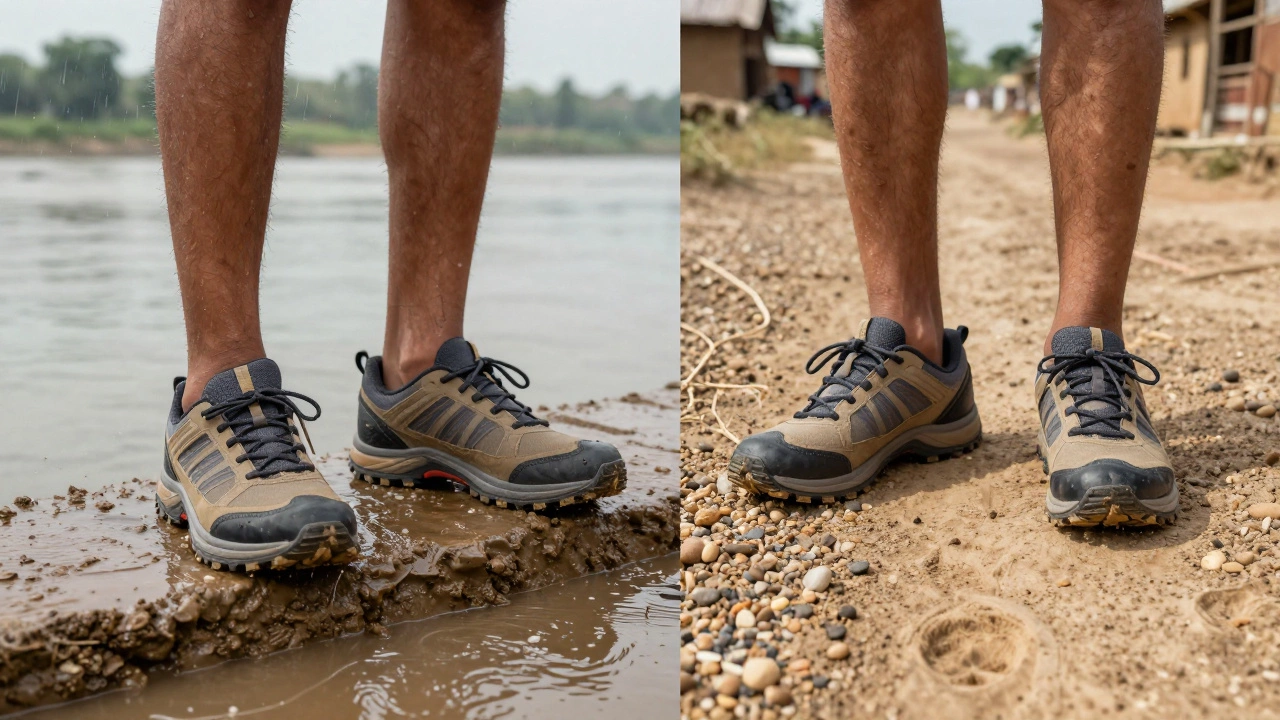
In contrast, rural India or small towns often lack proper pavements. Roads may be unpaved, dusty, or muddy. Animals roam freely. You’ll need shoes with good grip and toe protection. Hiking boots or rugged trail runners are ideal. Don’t underestimate the distance you’ll walk. A "short" visit to a village might involve two kilometers of walking on uneven ground.
If you’re planning a trip to the Himalayas in winter, forget flip-flops entirely. Insulated waterproof boots are mandatory. The temperature drop is severe, and snow is common above 3,000 meters.
What About Traditional Indian Footwear?
You might see beautiful handcrafted shoes in markets. Jutti are flat, pointed-toe shoes often embroidered with beads or mirrors. They are popular for weddings and festivals. While charming, they are not practical for tourists. They lack cushioning, have thin soles, and can be slippery on smooth surfaces. Buy them as souvenirs, not as travel gear.
Chappals are the everyday slippers worn by millions of Indians. They come in rubber, leather, and synthetic materials. Some are quite durable. If you lose your favorite pair, you can buy a decent pair of chappals for under $5 at any local market. Just check the sole thickness before buying.
Practical Tips for Packing
Before you zip up your suitcase, follow these guidelines:
- Bring two pairs of supportive shoes: One for walking/sightseeing, one backup.
- Pack one pair of flip-flops: Strictly for indoor/beach use.
- Include blister plasters: Compeed or similar brands are lifesavers.
- Carry antifungal powder: Apply it to your feet and shoes daily to prevent odor and infection.
- Break in new shoes: Never wear brand-new shoes on your first day in India. Blisters will ruin your trip.
Remember, comfort equals freedom. If your feet hurt, you won’t explore. You’ll sit in cafes. Choose wisely.
Can I wear flip-flops to the Taj Mahal?
Yes, but only if you remove them at the entrance. Inside, you must be barefoot. However, the marble floor can be hot and rough. Many visitors prefer to wear thin socks or bring soft-soled shoes that are easy to remove. Flip-flops are acceptable for the approach, but not recommended for the entire visit due to lack of support.
Are flip-flops safe in Indian hotels?
In high-end hotels, yes. Floors are clean and sanitized. In budget guesthouses or hostels, caution is advised. Bathrooms may have slippery tiles or hidden mold. Using flip-flops in shared bathrooms reduces the risk of contracting athlete’s foot or other fungal infections.
What shoes should I wear for a train journey in India?
Trains in India can be crowded and dirty. Platforms are often concrete and uneven. Wear closed-toe shoes with good grip. You may need to climb stairs and navigate through crowds. Flip-flops are dangerous here as they can easily be stepped on or lost.
Do I need special shoes for Varanasi ghats?
Varanasi ghats involve steep stone steps leading down to the Ganges River. The steps can be wet, mossy, and slippery. Non-slip sandals or water shoes are highly recommended. Flip-flops offer no traction and increase the risk of falling.
Is it rude to wear shorts and flip-flops in India?
It depends on the context. In beaches or resorts, it’s fine. In cities, it’s casual but generally accepted for tourists. However, for religious sites, formal dinners, or business meetings, dress modestly. Cover your shoulders and knees. Footwear should be neat and clean. Avoid looking sloppy.