Indian Folk Music Explorer
Click on a tradition below to explore its origins, key instruments, and thematic essence.
Bhangra: The High-Energy Pulse of Punjab
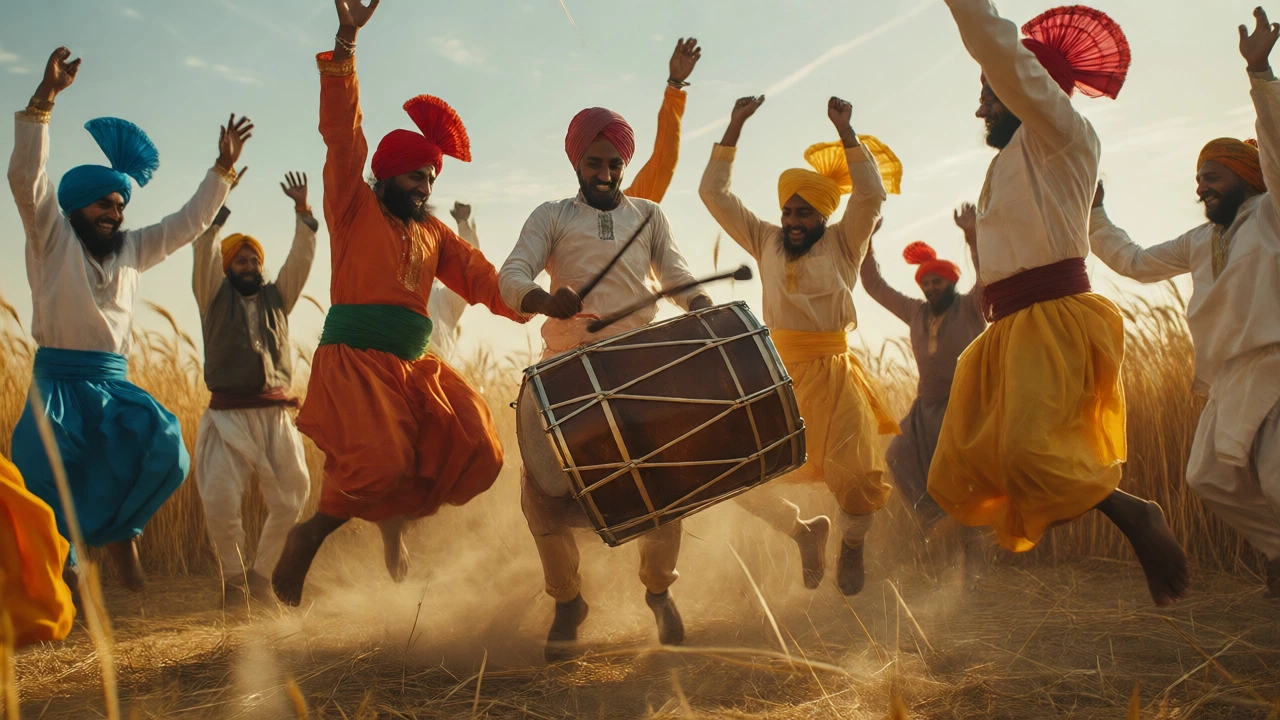
Historically, farmers sang these songs to celebrate the bountiful wheat crops. The rhythm is driven by the Dhol, a double-headed drum that provides a heavy, thumping beat designed to make your feet move involuntarily. It features a call-and-response structure where a lead singer shouts lines and the crowd responds with energetic chants like "Hey Hey!"
Core Theme:
Harvest & CelebrationWhy it Matters Today
Modern artists are blending Bhangra beats with hip-hop. Understanding the roots helps you appreciate the fusion when you hear a remix today.
Have you ever heard a melody that instantly transports you to the dusty plains of Rajasthan or the lush riverbanks of Bengal? That is the power of Indian folk songs. Unlike classical music, which follows strict rules and scales, folk music is the raw, unfiltered voice of the people. It is born from daily life-farming, fishing, weddings, and worship. If you are looking to understand the soul of India through its sounds, you need to know these five distinct regional styles.
Bhangra: The High-Energy Pulse of Punjab
When most people outside India think of Punjabi culture, they picture Bhangra. This isn't just a dance; it is a high-octane musical tradition rooted in the harvest festivals of Punjab. Historically, farmers sang these songs to celebrate the bountiful wheat crops. The rhythm is driven by the Dhol, a double-headed drum that provides a heavy, thumping beat designed to make your feet move involuntarily.
What makes Bhangra unique is its call-and-response structure. A lead singer shouts out a line, and the crowd responds with energetic chants like "Hey Hey!" While modern Bollywood has diluted some of the traditional instruments with synthesizers, the core essence remains unchanged. It is loud, joyful, and deeply communal. If you attend a wedding in North India, you will hear this music echoing through the streets long before the ceremony begins.
Baul Songs: Mystical Melodies from Bengal
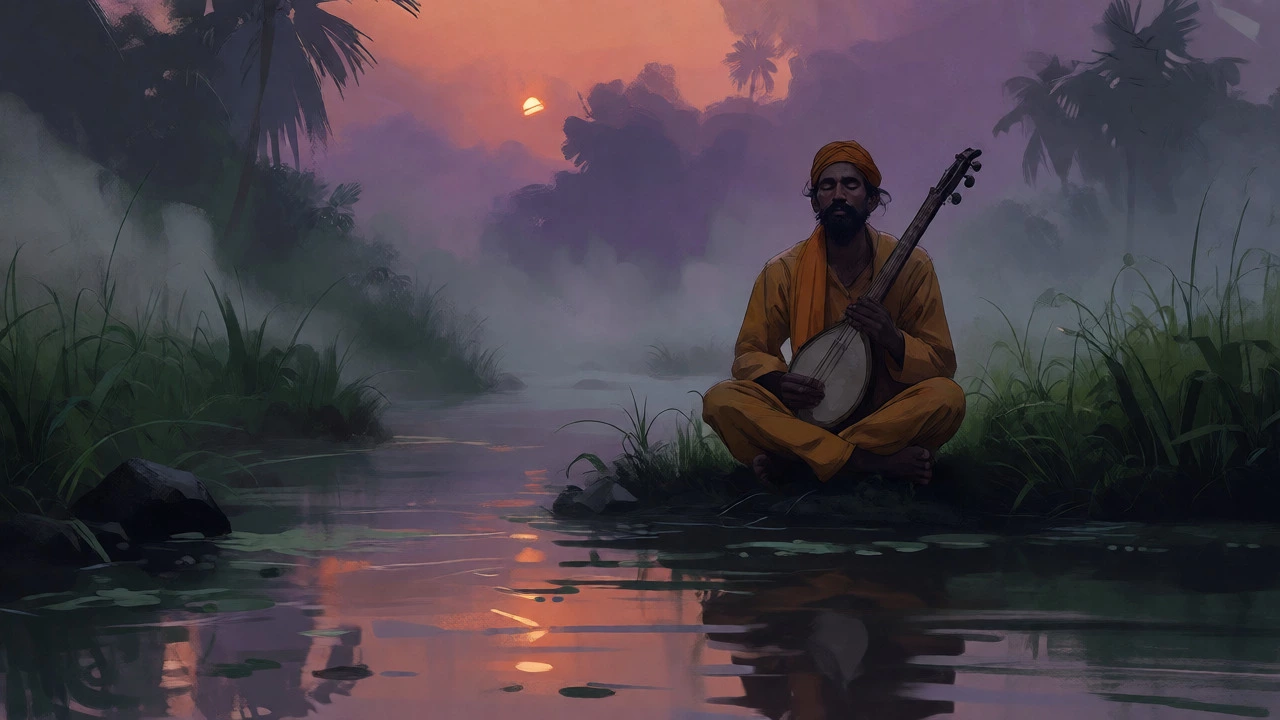
If Bhangra is about external celebration, Baul songs are about internal exploration. Originating from the rural regions of West Bengal and Bangladesh, this tradition belongs to the Bauls, wandering minstrels who reject rigid religious structures. Their music is a form of spiritual philosophy set to melody.
The primary instrument here is the Ektara, a one-stringed drone instrument that produces a hypnotic, repetitive hum. The lyrics often question the nature of existence, love, and the divine, using metaphors drawn from everyday village life. Rabindranath Tagore, the Nobel laureate, was heavily influenced by Baul music, incorporating its themes into his own compositions. Listening to a Baul song feels less like entertainment and more like a meditative conversation with the universe.
Rajasthani Folk: The Desert’s Echo
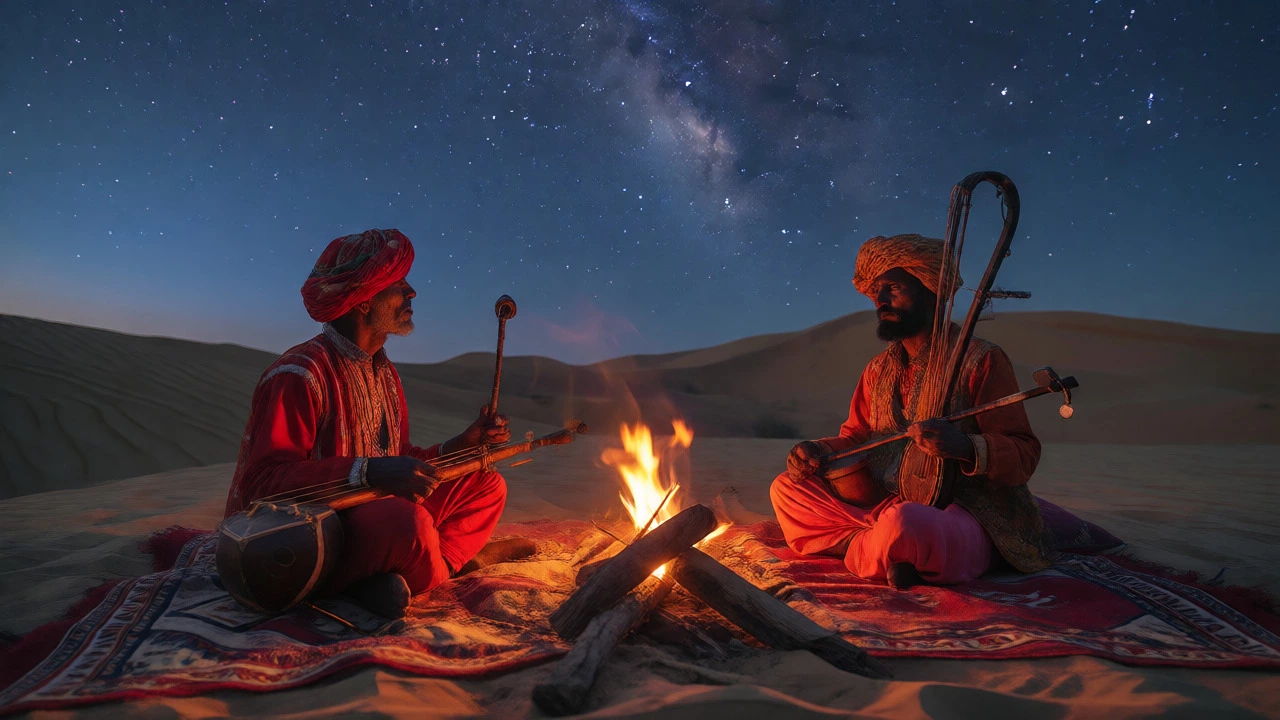
In the arid landscapes of Rajasthan, music serves as a companion to survival. Rajasthani folk songs are characterized by their haunting melodies and complex rhythmic patterns. These songs were traditionally sung by communities like the Manganiyars and Langas, who served as hereditary musicians for noble families.
The instrumentation is rich and varied. You will hear the Kamaicha, a bowed string instrument with sympathetic strings that create a shimmering resonance, alongside the Morchang (jaw harp). The lyrics often tell stories of brave warriors, tragic romances, or the harsh beauty of the desert. One famous example is "Kesariya Balam," a song that speaks of longing and separation, perfectly capturing the emotional depth of the region's culture.
Sufi Qawwali: Devotion Through Sound
While technically a genre of Sufi Islamic devotional music, Qawwali has become an integral part of the broader Indian folk landscape. Popularized globally by legends like Nusrat Fateh Ali Khan, Qawwali is performed at shrines of Sufi saints. It is not merely singing; it is a trance-inducing experience aimed at reaching a state of spiritual ecstasy.
A typical performance starts slowly with a simple melody and gradually builds in intensity. Clapping hands, harmonium drones, and powerful vocal improvisations create a crescendo that can last for hours. The lyrics are usually poetry by great Sufi poets like Amir Khusrau or Bulleh Shah, focusing on the theme of divine love. In many parts of North India, Qawwali nights are community events where people gather regardless of their specific religious background to share in the collective emotion.
Lavani: The Rhythmic Heartbeat of Maharashtra
Moving south to Maharashtra, we encounter Lavani. This is a combination of traditional song and dance, performed primarily by women known as Tamasha performers. Lavani is famous for its fast-paced rhythms and sexually suggestive yet artistic lyrics.
The music is driven by the Dholki, a narrow cylindrical drum played with the hands. The tempo is incredibly fast, requiring immense stamina from the dancers. Historically, Lavani emerged during the Peshwa era as a way to boost the morale of soldiers. Today, it is a staple of cultural festivals in Pune and Mumbai. The lyrics often address social issues, romance, and political satire, delivered with wit and charm.
| Folk Style | Region | Primary Instrument | Core Theme |
|---|---|---|---|
| Bhangra | Punjab | Dhol | Harvest & Celebration |
| Baul | Bengal | Ektara | Spirituality & Philosophy |
| Rajasthani | Rajasthan | Kamaicha | Heroism & Romance |
| Qawwali | North India | Harmonium | Divine Love |
| Lavani | Maharashtra | Dholki | Wit & Social Commentary |
Why These Songs Matter Today
You might wonder why you should care about traditions that seem centuries old. The truth is, these genres are evolving. Modern artists are blending Bhangra beats with hip-hop, mixing Baul melodies with electronic music, and bringing Qawwali to global stages. Understanding the roots helps you appreciate the fusion. When you hear a remix today, you can identify the original folk sample and understand the cultural context behind it.
Furthermore, these songs preserve history. They document how people lived, what they feared, and what they loved. By listening to them, you are engaging with a living archive of human experience. Whether you are planning a trip to India or just want to expand your playlist, starting with these five examples gives you a solid foundation in one of the world's richest musical traditions.
Are Indian folk songs different from classical music?
Yes, significantly. Classical music (like Hindustani or Carnatic) follows strict theoretical frameworks, ragas, and talas, and is often performed by trained professionals in formal settings. Folk songs are passed down orally, vary by region and community, and are often tied to specific daily activities or festivals. They prioritize emotional expression and community participation over technical complexity.
Can I find recordings of these folk songs online?
Absolutely. Platforms like Spotify, Apple Music, and YouTube have extensive libraries of both traditional and contemporary versions. Search for artists like Surjit Bindrakhia for Bhangra, Farida Parveen for Baul, or Abida Parveen for Qawwali to start your journey.
Is Qawwali considered a folk song?
It occupies a unique space. While it has classical elements and is associated with Sufi Islam, it is widely regarded as part of the broader folk tradition because it is accessible to the masses, performed in public spaces like shrines, and relies on oral transmission rather than written notation.
What language are these songs sung in?
Each style uses the local dialect or language of its region. Bhangra is in Punjabi, Baul in Bengali, Rajasthani in Marwari or Hindi, Qawwali often in Urdu, Persian, or Hindi, and Lavani in Marathi. This linguistic diversity is a key feature of India's musical heritage.
Do these songs still have practical uses today?
Yes. Bhangra is central to weddings and sports celebrations. Baul music influences yoga and meditation practices. Qawwali remains vital at religious gatherings. Lavani is performed at cultural festivals. These songs continue to serve social, religious, and celebratory functions in modern society.