Find Your Favorite Realistic Indian Artist
Based on the masters of hyperrealism, naturalism, and social realism discussed in the article, select what you value most to discover which artist aligns with your taste.
Ask ten people who the best realistic Indian artist is, and you’ll likely get ten different names. That’s because "realism" in Indian art isn’t just one style. It ranges from the photographic precision of modern hyperrealism to the mythological narratives rendered with lifelike detail by colonial-era painters. There is no single "best" artist, but there are undeniable masters who defined how we see reality through an Indian lens.
If you’re looking for the pinnacle of technical skill, emotional depth, and cultural relevance, this guide breaks down the top contenders. We’ll look at the pioneers who brought Western techniques to Indian subjects and the contemporary stars who are pushing the boundaries of what the eye can perceive.
The Pioneer: Raja Ravi Varma
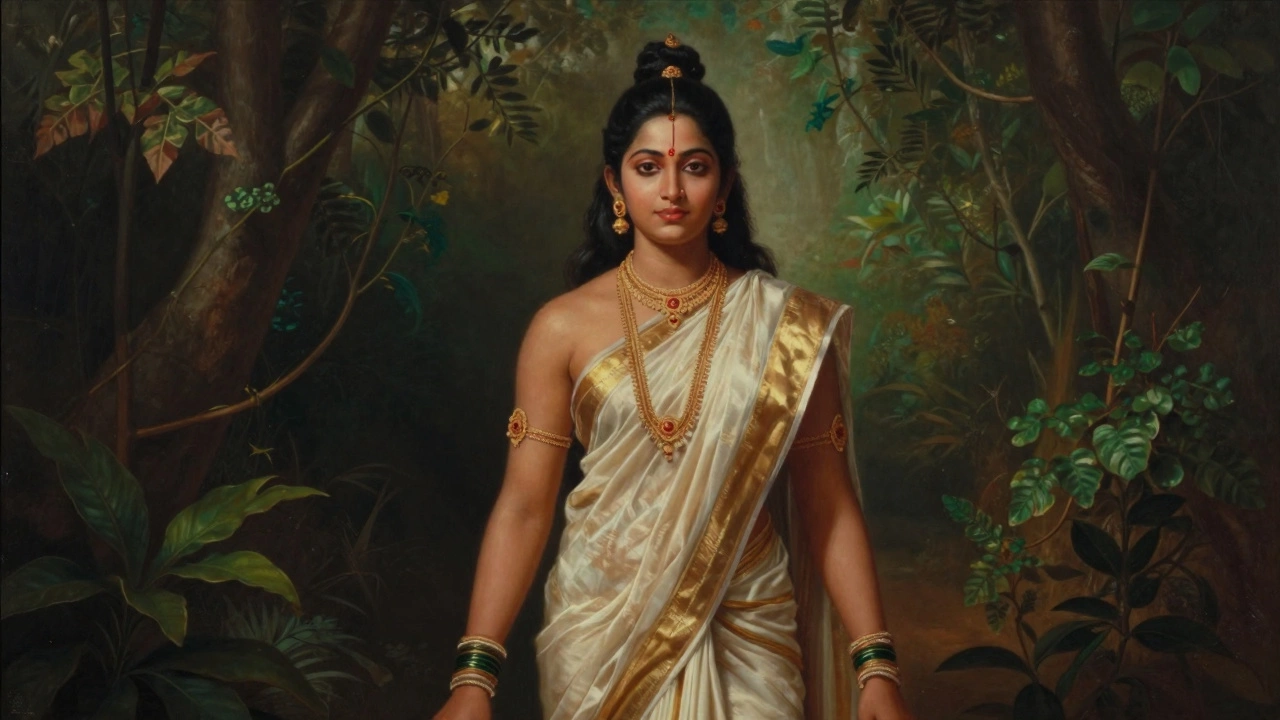
You cannot talk about realistic Indian art without starting with Raja Ravi Varma (1848-1906). He is widely considered the father of modern Indian painting. Before him, Indian art was largely stylized-think flat colors and symbolic proportions found in traditional Pahari or Mughal miniatures. Ravi Varma changed everything by mastering European oil painting techniques, specifically the use of light, shadow, and anatomy.
His genius lay in taking figures from Hindu mythology-Krishna, Sita, Lakshmi-and painting them as if they were real people standing in a living room. He didn’t just draw gods; he gave them human skin textures, realistic drapery that folds naturally over bodies, and expressive eyes that convey genuine emotion. His print reproductions became household staples across India, defining the visual identity of Indian culture for generations. If you want to understand the roots of Indian realism, Ravi Varma is the essential starting point.
The Modern Master: S.H. Raza and The Bombay Progressive Artists’ Group
While many associate S.H. Raza with abstract geometric shapes (his famous "Bindu" series), his early work is a masterclass in realistic landscape painting. As part of the Bombay Progressive Artists’ Group, Raza sought to move away from the nationalist themes of earlier eras and create a new, modern Indian aesthetic.
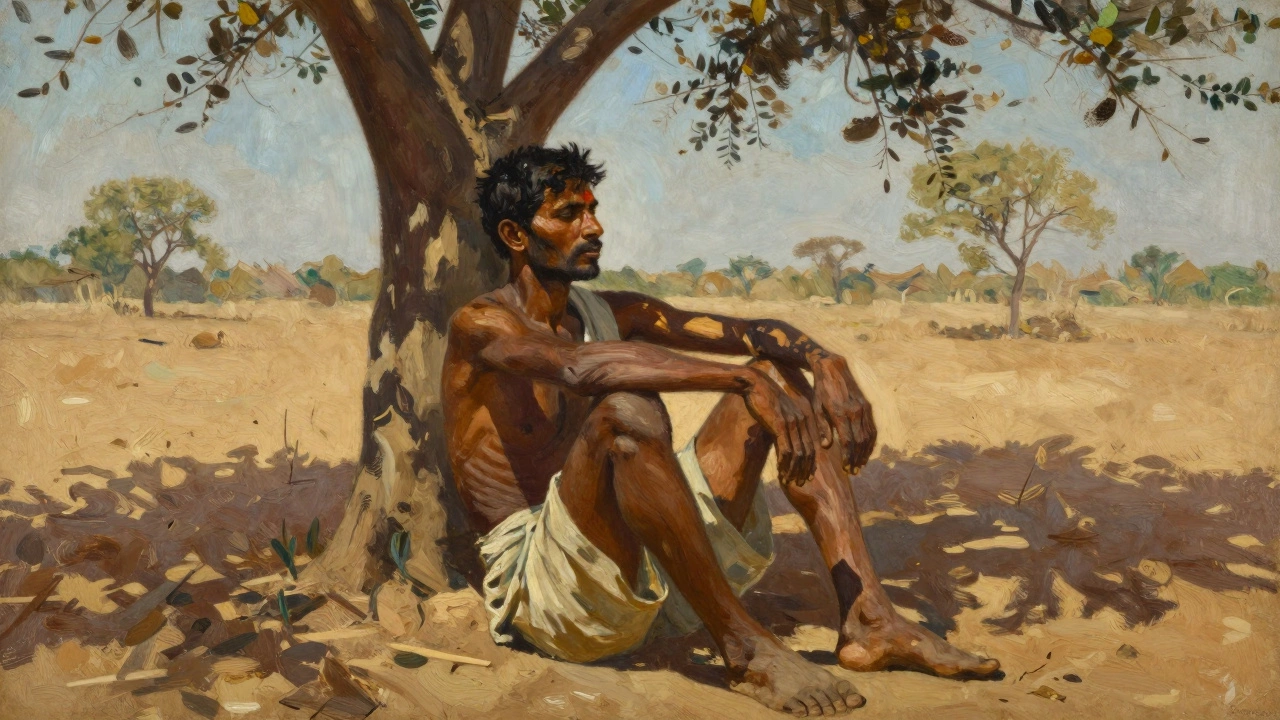
In the 1940s and 50s, Raza painted landscapes of Madhya Pradesh and Rajasthan with intense realism. He captured the harsh sunlight, the dry earth, and the rugged terrain with thick, expressive brushstrokes that still felt grounded in physical reality. Unlike the smooth finish of academic art, his realism was visceral. You could feel the heat of the sun and the texture of the soil. For those who value realism that captures the *spirit* of a place rather than just its visual appearance, Raza’s early period is unmatched.
The Photorealists: Jatin Das and Contemporary Hyperrealism
Fast forward to the late 20th and early 21st centuries, and a new wave of artists emerged who took realism to its logical extreme: photorealism and hyperrealism. These artists don’t just paint what they see; they paint what a camera sees, often magnifying details beyond human perception.
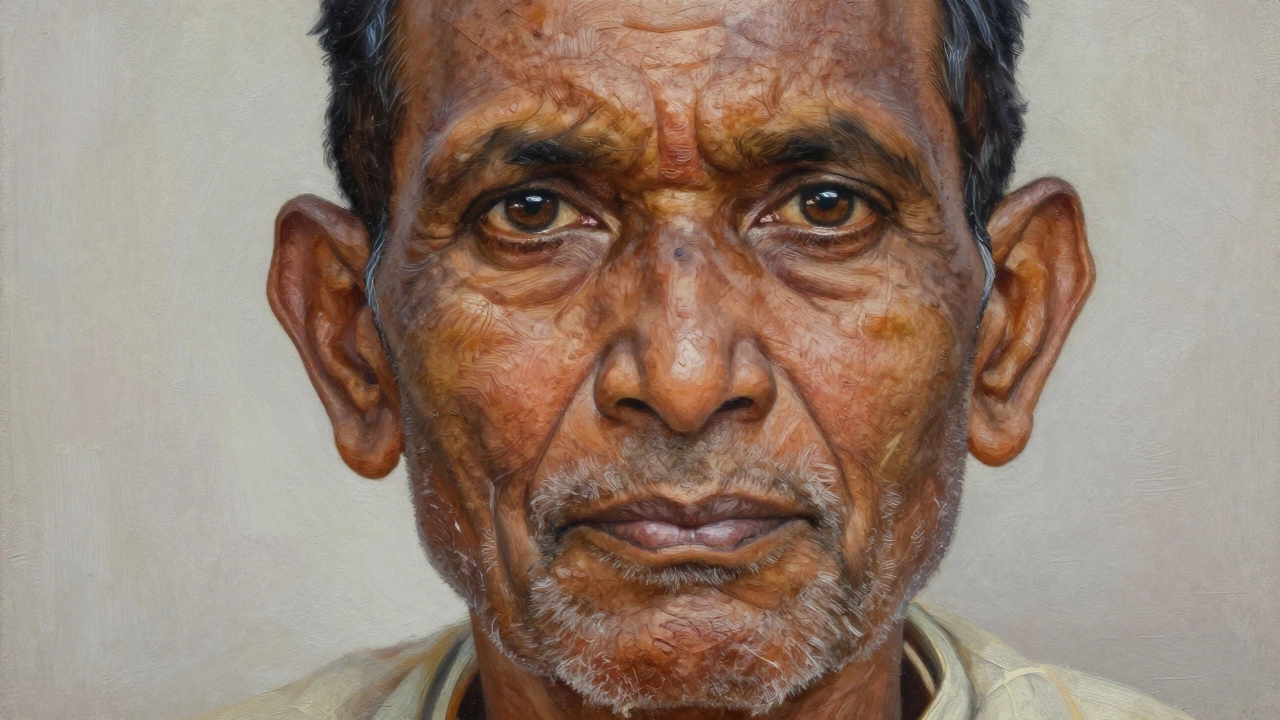
Jatin Das is perhaps the most prominent name in this category. Known for his incredibly detailed portraits, Das paints celebrities, politicians, and common Indians with such precision that viewers often mistake his paintings for high-resolution photographs. His work challenges the viewer to look closer. Is that a pore on the skin? A reflection in the eye? Yes. And it’s all done with oil or acrylic paint.
Another key figure is Anil Kumar, whose hyperrealist works often feature urban scenes and street life in Mumbai. He captures the chaos of Indian cities-the glare of neon signs, the steam from food stalls, the intricate patterns of textiles-with scientific accuracy. This style appeals to audiences who appreciate technical virtuosity and the sheer discipline required to replicate reality stroke by stroke.
The Social Realists: N.S. Bendre and F.N. Souza
Realism isn’t always about perfect anatomy or photographic likeness. Sometimes, it’s about capturing the raw truth of social conditions. N.S. Bendre, another member of the Progressive Artists’ Group, started with realistic depictions of rural Karnataka. His paintings of farmers, laborers, and village women are not idealized. They show the weight of poverty, the texture of rough hands, and the dignity of hard work. This is "social realism," where the goal is to tell a true story about people’s lives.
F.N. Souza, though later known for his provocative and expressionist style, began with a strong foundation in realistic draftsmanship. His early nudes and street scenes demonstrate a keen eye for form and structure. While he eventually moved toward abstraction, his ability to render the human body with intensity and honesty remains a benchmark for artistic courage.
How to Judge "The Best" Realistic Artist
So, who wins the title? It depends on what you value:
- For Historical Impact: Raja Ravi Varma. He created the visual language of modern India.
- For Technical Precision: Jatin Das or Anil Kumar. Their hyperrealism blurs the line between paint and photo.
- For Emotional Depth: S.H. Raza (early period) or N.S. Bendre. They capture the soul of the subject, not just the surface.
- For Narrative Power: Raja Ravi Varma again. His stories are instantly recognizable and deeply rooted in culture.
| Artist | Primary Style | Key Subject Matter | Best For |
|---|---|---|---|
| Raja Ravi Varma | Academic Realism / Mythological Naturalism | Hindu Gods, Royal Portraits | Cultural Heritage & History |
| S.H. Raza | Landscape Realism (Early) | Villages, Trees, Sunlight | Emotional Connection to Nature |
| Jatin Das | Hyperrealism | Portraits of Celebrities & Commoners | Technical Virtuosity |
| Anil Kumar | Urban Hyperrealism | Street Scenes, City Life | Modern Urban Aesthetics |
| N.S. Bendre | Social Realism | Rural Laborers, Village Life | Social Commentary |
Why Realism Matters in Indian Art Today
In an age of digital photography and AI-generated images, why do we still care about realistic painting? Because a painting carries the hand of the artist. When you look at a hyperrealist portrait by Jatin Das, you aren’t just seeing a face; you’re seeing thousands of hours of dedication, decision-making, and interpretation. The artist chooses what to emphasize-a glint in the eye, a wrinkle on the forehead-that tells a story a camera might miss.
Moreover, Indian realism serves as a bridge between tradition and modernity. Artists like Raja Ravi Varma proved that Indian subjects could be treated with the same seriousness and technical rigor as European Renaissance figures. Contemporary hyperrealists continue this legacy, showing that Indian faces, streets, and stories deserve to be seen with clarity and respect.
Finding Your Favorite
The "best" realistic Indian artist is the one who makes you stop and look. Whether it’s the divine grace in a Ravi Varma canvas or the gritty detail in a Jatin Das portrait, the power of realism lies in its ability to make the familiar feel extraordinary. Explore their works, visit galleries, and let your own eyes decide which master speaks to you.
Who is the most famous realistic painter in India?
Raja Ravi Varma is arguably the most famous realistic painter in India. His paintings of Hindu deities and royal figures defined Indian visual culture in the late 19th and early 20th centuries. His prints were ubiquitous in Indian homes, making his style synonymous with Indian art for millions of people.
What is the difference between realism and hyperrealism in Indian art?
Realism aims to depict subjects as they appear in everyday life, focusing on accurate representation without unnecessary embellishment. Hyperrealism goes a step further, creating images that are indistinguishable from high-resolution photographs, often including minute details like skin pores, reflections, and fabric textures that exceed normal human vision.
Are there any female realistic artists in India?
Yes, several prominent female artists excel in realism. Bhavabhuti (though male, often confused due to similar names) is not relevant here, but artists like Rina Banerjee and Arpita Singh have worked with realistic elements in their narratives. More recently, contemporary artists like Shilpa Gupta and Mona Hatoum (of Palestinian-Indian descent) explore realistic themes in installation and sculpture. In painting, Jyoti Bhatt's wife, Kamaladevi Chattopadhyay, promoted folk arts, but for pure fine art realism, look at emerging talents in Mumbai and Delhi who specialize in portraiture.
Where can I buy authentic realistic Indian art?
You can purchase authentic works from reputable galleries in major cities like Mumbai, Delhi, and Bangalore. Galleries such as Vadehra Art Gallery, Jayasierra Art Spaces, and Khoj International Centre for the Arts often feature realistic and hyperrealist artists. Online platforms like Etsy and specialized art marketplaces also offer verified pieces, but always check for certificates of authenticity.
Is Raja Ravi Varma's art considered controversial?
Yes, somewhat. Some critics argue that Ravi Varma's depiction of gods introduced a "Europeanized" beauty standard to Indian mythology, moving away from traditional iconographic rules. Others praise him for democratizing art and making religious imagery accessible to the masses. Despite debates, his influence remains undeniable.