Taj Mahal Knowledge Quiz
How well do you know the Taj?
Answer 5 questions to test your understanding of India's most famous landmark.
Loading question...
Quiz Complete!
You have probably seen it on a postcard, a movie poster, or your friend’s Instagram feed. The white marble dome glowing against a sunset sky. But when someone asks, "What is India's most famous landmark?" there is really only one answer that tops every global list: the Taj Mahal. It isn't just a building; it is a symbol of love, grief, and architectural perfection that draws millions of eyes every year.
If you are planning a trip or just curious about why this structure in Agra holds such power over us, you need more than just a photo. You need to understand the story behind the stone. Why did an emperor build a tomb for his wife? How did they make the marble look like it was breathing? And how do you actually visit it without getting overwhelmed by the crowds?
The Story Behind the Stone
Let’s start with the human element, because that is what makes the Taj Mahal resonate emotionally. In 1631, Shah Jahan, the fifth Mughal Emperor, lost his favorite wife, Mumtaz Mahal, during childbirth. He was devastated. Historical records suggest he went into deep mourning, reportedly turning his hair white overnight.
To honor her memory, he commissioned this mausoleum. Construction began in 1632 and took about 22 years to complete. Imagine the scale of that project. Over 20,000 artisans, masons, calligraphers, and laborers worked on it daily. They brought materials from across Asia-jade from China, turquoise from Tibet, lapis lazuli from Afghanistan, and sapphire from Sri Lanka. This wasn't just local craftsmanship; it was a pan-Asian collaboration fueled by imperial wealth and personal devotion.
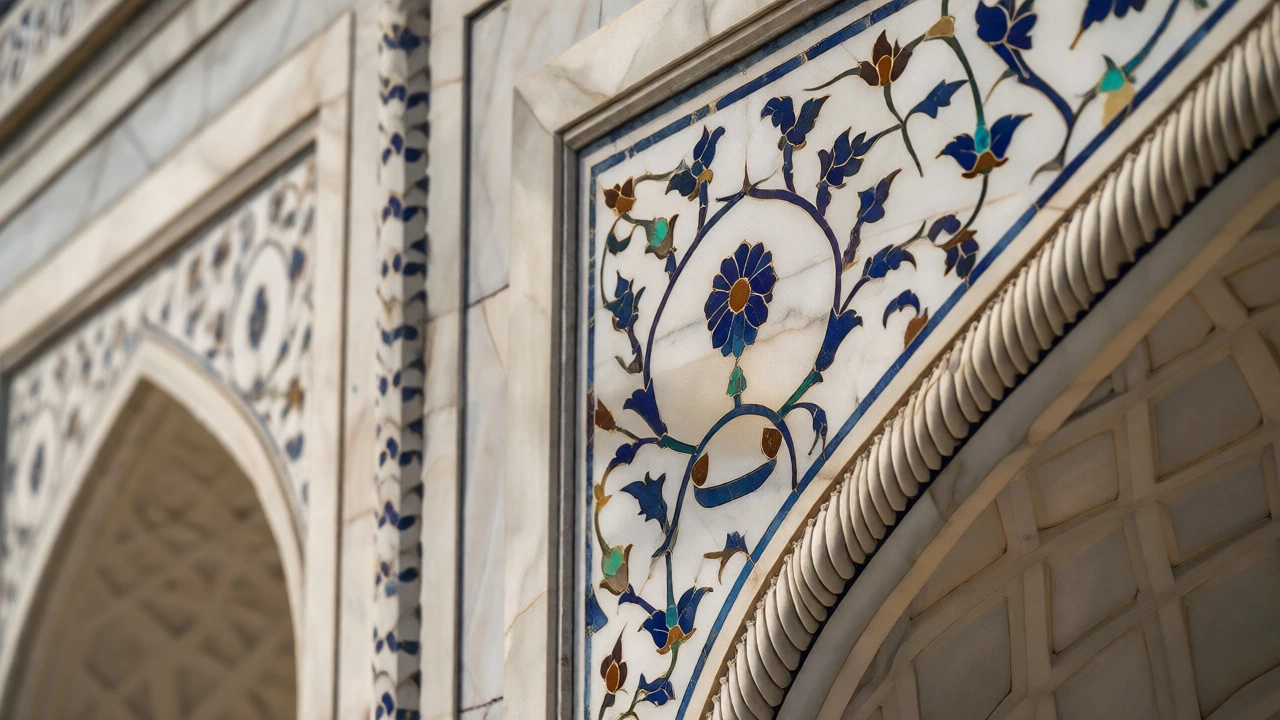
The result is a structure that defies simple categorization. Is it Islamic architecture? Persian? Indian? The truth is, it is a fusion. The Mughal architecture style blends these influences seamlessly. If you look closely at the arches, you see Persian pointed shapes. Look at the lotus motifs, and you see Hindu symbolism. It represents the cultural synthesis of 17th-century India.
Why It Holds Global Status
Not many buildings get recognized as universally iconic. The Eiffel Tower is famous, but it is iron and industrial. The Great Wall is ancient and defensive. The Taj Mahal sits in a different category: aesthetic perfection. It was designated a UNESCO World Heritage Site in 1983, described by UNESCO as "the jewel of Muslim art in India."
But why does it matter today? For travelers, it is often the first major historical site they encounter in South Asia. For historians, it marks the peak of Mughal engineering. For romantics, it is the ultimate gesture of love. This multi-layered appeal keeps it relevant. Even in 2026, despite new developments and digital tours, nothing quite replicates the feeling of standing before its main gate at dawn.
Here is a quick breakdown of the key facts you might need for trivia or travel planning:
| Attribute | Detail |
|---|---|
| Location | Agra, Uttar Pradesh, India |
| Construction Period | 1632-1653 (Approx. 22 years) |
| Architect | Ustad Ahmad Lahauri (Chief Architect) |
| Material | White Marble from Makrana, Rajasthan |
| Height | 73 meters (240 feet) |
| Status | UNESCO World Heritage Site (since 1983) |
Architectural Secrets You Might Miss
When you visit, don't just take a selfie and leave. The details are where the magic lives. The symmetry is so precise that if you drew a line down the center, both sides would match perfectly. Well, almost. There is one intentional asymmetry: the tomb of Shah Jahan himself. When he died, he was buried next to Mumtaz Mahal. His sarcophagus is larger and placed off-center relative to hers, breaking the perfect balance. Some say this was a deliberate choice to show his dominance even in death; others argue it was simply due to space constraints. Either way, it is a detail most tourists walk right past.
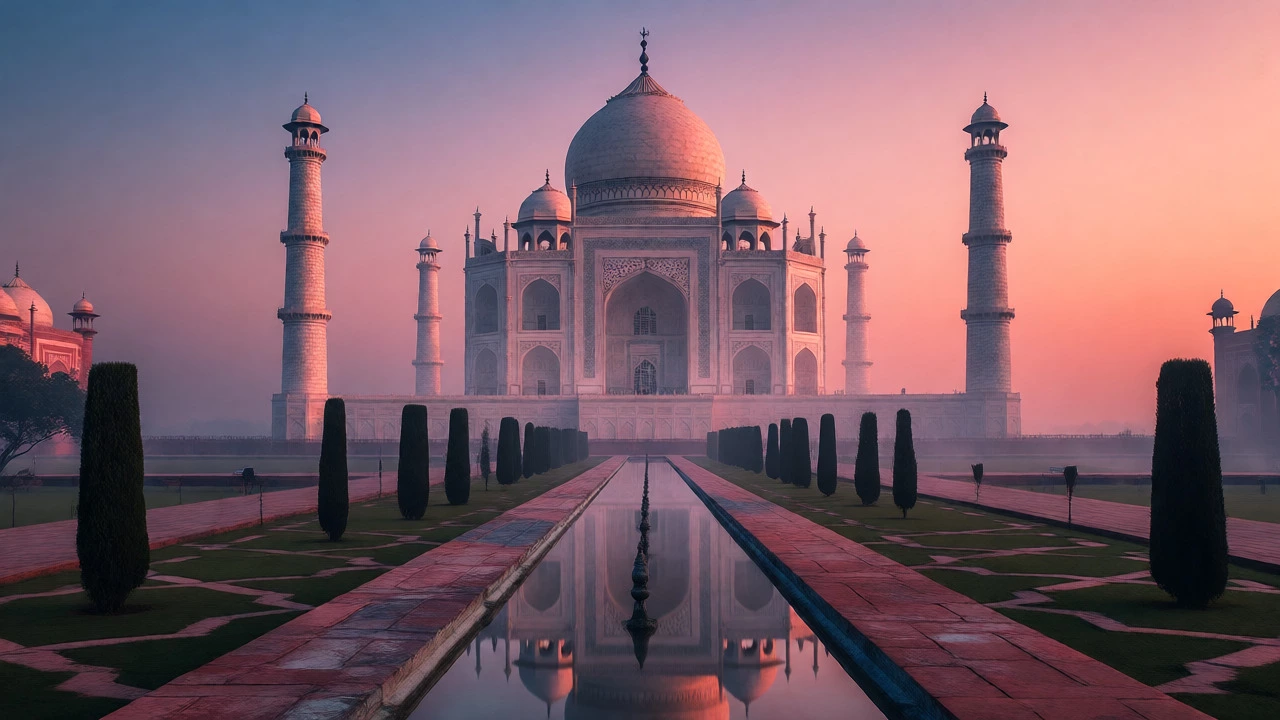
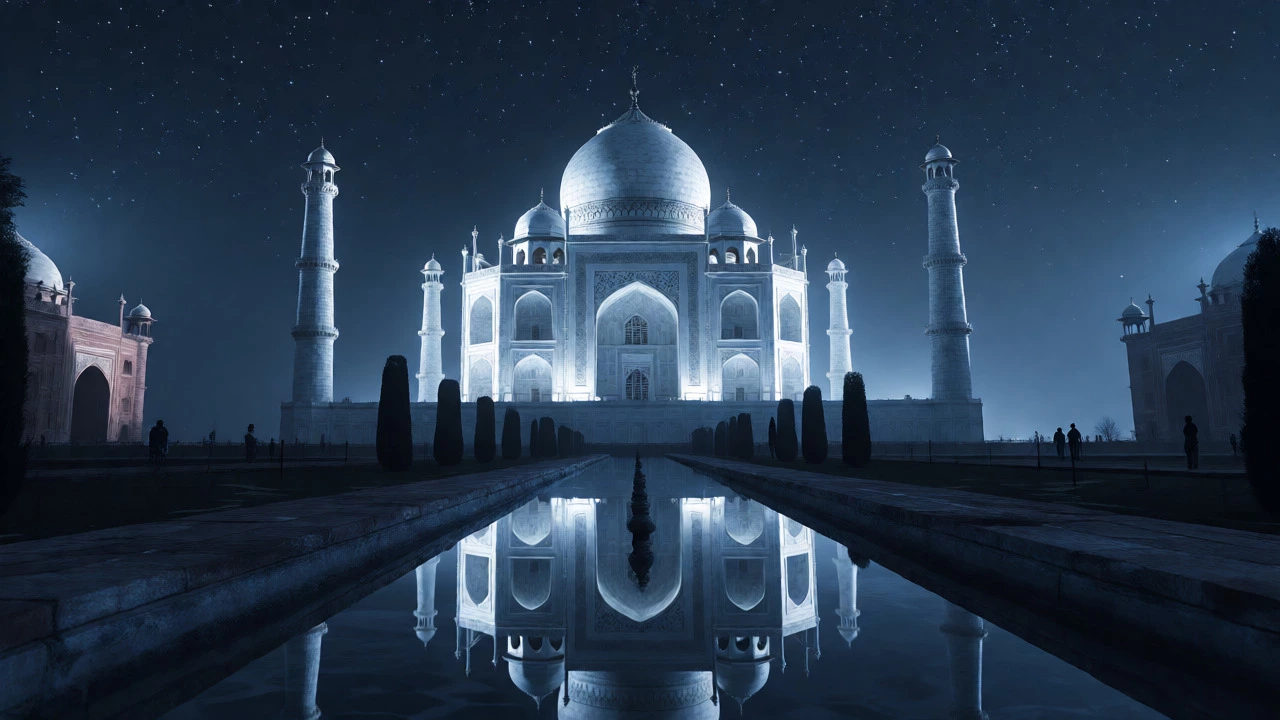
Then there is the play of light. The white Makrana marble is translucent. During the day, it reflects the sunlight, appearing bright white. At sunrise, it takes on a soft pink hue. Under moonlight, it glows silver. This optical effect was engineered by placing the structure near the Yamuna River, allowing reflections to dance on the water surface. If you visit during a full moon night, special viewing sessions are allowed, offering a completely different experience from the daytime chaos.
Another fascinating aspect is the calligraphy. The Quranic inscriptions on the facade use an optical illusion called entasis. The letters at the top are larger than those at the bottom. This compensates for perspective distortion, ensuring that all letters appear the same size to a viewer standing on the ground. Without this trick, the top text would look tiny. It shows the incredible mathematical precision involved in the design.
Planning Your Visit: Practical Tips
Knowing it is famous is one thing; visiting it is another. Agra can be intense. Here is how to navigate it without losing your mind.
- Best Time to Go: October to March offers pleasant weather. Summers (April-June) are scorching, with temperatures often exceeding 40°C. Monsoons (July-September) bring humidity and rain, which can obscure views but also clear the pollution haze.
- Arrive Early: Gates open at sunrise. Be there 30 minutes before opening. You will beat the tour buses that arrive around 9:00 AM. The morning light is also best for photography.
- Entry Rules: Foreign tourists pay a higher entry fee than domestic visitors. Note that Fridays are closed for prayers. Check the official Archaeological Survey of India website for current ticket prices and online booking options, as queues can be long.
- Security Checks: You cannot carry large bags, food, or liquids inside. There are cloakrooms outside. Keep your valuables secure and expect strict metal detector checks.
- Hire a Guide: A licensed guide can explain the history and point out details you would miss. Negotiate the price beforehand. Avoid unlicensed touts who promise "special access" for exorbitant fees.
Don't forget the surrounding complex. The Charbagh Garden layout divides the grounds into four quadrants, representing paradise in Islamic tradition. Walking through these gardens gives you a moment of calm before hitting the main monument. Also, check out the red sandstone mosque and guest house on either side of the main dome. They provide excellent angles for photos without the crowd congestion of the central platform.
Beyond the Taj: Other Contenders for Fame
While the Taj Mahal is the undisputed king, India has other landmarks that rival its fame in specific contexts. If you are looking for variety, consider these alternatives.
The Gateway of India in Mumbai is arguably the second most photographed site. Built to commemorate King George V's visit in 1911, it stands as a colonial-era icon. Unlike the Taj's serene isolation, the Gateway buzzes with city energy, street food vendors, and ferry boats heading to Elephanta Caves.
The Red Fort in Delhi is historically significant as the residence of Mughal emperors for nearly 200 years. It hosts the Prime Minister's Independence Day speech every year, making it a political symbol as well as a historical one. Its massive red sandstone walls are imposing, though less delicate than the Taj's marble.
Hawa Mahal in Jaipur is visually striking with its honeycomb facade. It was built so royal women could watch street festivals without being seen. While smaller in scale, its unique pink sandstone appearance makes it instantly recognizable on social media.
However, none of these have the universal recognition of the Taj. When people think of India, they think of the white dome. That association is deeply ingrained in global consciousness.
Common Misconceptions
Let's clear up some myths. First, many believe the Taj Mahal was entirely built by slaves. In reality, it was constructed by paid artisans and laborers, including skilled craftsmen from Persia and Europe. Second, some think the black Taj Mahal was planned across the river. Legends say Shah Jahan wanted a black marble mausoleum for himself, but archaeologists found no evidence of this construction. It remains a romantic myth.
Also, pollution is a real issue. Acid rain and air particulates have yellowed the marble over time. Restoration efforts involve mud packs applied to the surface to draw out stains. This ongoing maintenance is crucial to preserving the landmark for future generations.
Frequently Asked Questions
Is the Taj Mahal really the most visited tourist spot in India?
Yes, it consistently ranks as the number one international tourist attraction in India. Domestic tourism numbers fluctuate, but foreign visitor counts overwhelmingly favor the Taj Mahal over sites like Goa beaches or Kerala backwaters for single-day visits.
Can you go inside the Taj Mahal?
You can enter the main mausoleum chamber, but you cannot touch the actual tombs of Shah Jahan and Mumtaz Mahal. The real graves are located in a crypt below the main hall. The upper level contains cenotaphs (false tombs) adorned with intricate pietra dura inlay work.
How far is Agra from Delhi?
Agra is approximately 230 kilometers from New Delhi. By car via the Yamuna Expressway, it takes about 3 to 4 hours depending on traffic. Trains are also available, with the Gatimaan Express reducing travel time to under 2 hours, making it feasible for a day trip.
Why is the Taj Mahal closed on Fridays?
Friday is the holy day for Muslims. The mosque within the Taj complex holds congregational prayers, which requires the area to be cleared of general tourists. This is a standard practice for many active religious sites within heritage monuments in India.
Is it worth hiring a photographer at the Taj Mahal?
It depends on your budget and skill level. Professional photographers know the best angles and lighting conditions. However, they can be pushy. If you prefer a relaxed experience, bring your own camera and use the early morning hours for better results without paying extra fees.
Final Thoughts on Visiting
Visiting the Taj Mahal is more than checking a box on a bucket list. It is an encounter with history that feels surprisingly immediate. The sheer effort put into carving each petal, laying each tile, and aligning each arch speaks to a dedication that modern convenience often lacks. Whether you are interested in architecture, history, or just beautiful scenery, this landmark delivers. Plan ahead, respect the rules, and try to catch it at sunrise. That quiet moment, when the world hasn't fully woken up yet, is when the Taj reveals its true soul.