What Is Tamil Folklore? A Deep Dive into Tamil Nadu’s Folk Traditions
Explore Tamil folklore's myths, music, dance, and rituals. Learn about Karakattam, Puliyattam, Theru Koothu, and how Tamil Nadu preserves its vibrant folk heritage.
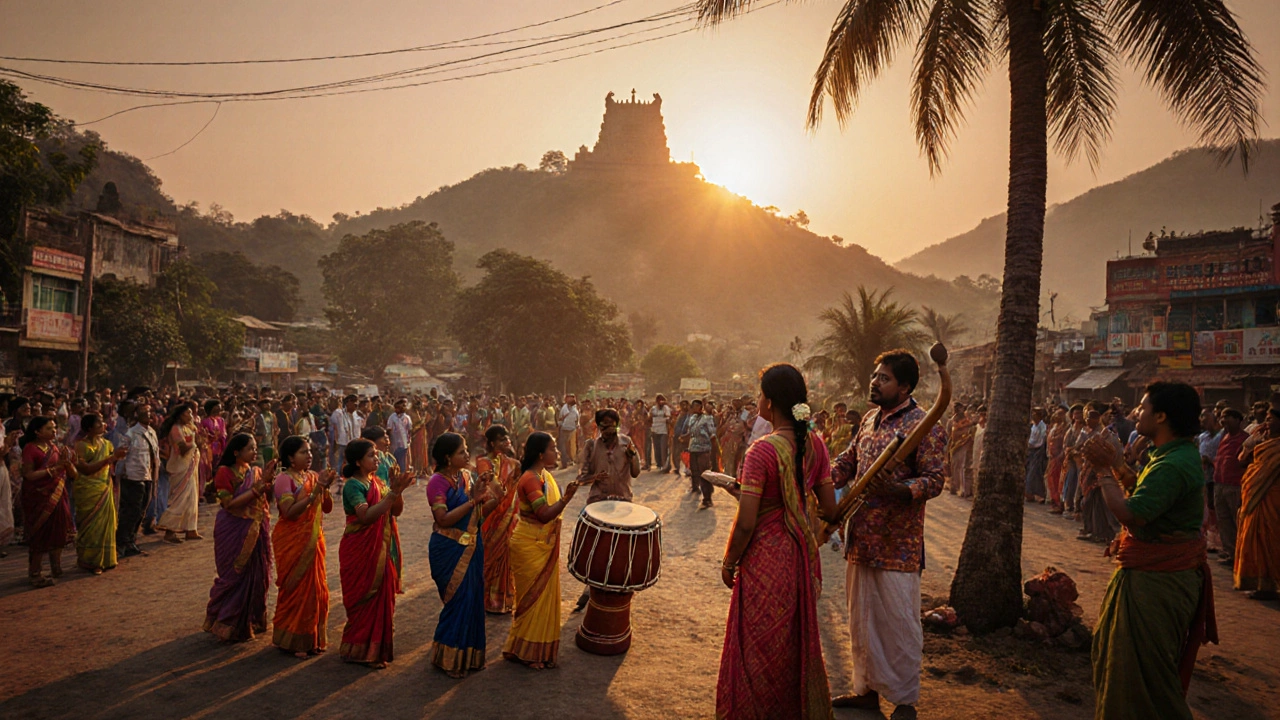
When you hear Tamil folk music, the unfiltered, living songs passed down through generations in Tamil villages. Also known as Tamil rural music, it’s not performed on stages—it’s sung while farming, during festivals, at weddings, and late at night by the fire. This isn’t polished classical sound. It’s the voice of people who don’t need sheet music to feel rhythm. You’ll hear it in the clatter of wooden sticks, the drone of the tambura, a long-necked string instrument used to hold the drone in both folk and classical Tamil music, and the sharp beat of the thavil, a double-headed drum that drives processions and temple rituals across Tamil Nadu.
Tamil folk music doesn’t just entertain—it tells stories. The bol banao, a form of nonsense singing using rhythmic syllables to express joy, grief, or ritual focus, isn’t random noise. It’s a coded language of emotion, used in fields and homes to keep time, lift spirits, or call for rain. Unlike Carnatic music, which follows strict ragas and talas, folk music bends rules. A song about a cow might use the same melody as one about a monsoon, but the meaning comes from the voice, the pace, and the crowd singing along. These songs don’t need fame. They survive because they’re real. And they’re still alive today—in village fairs, harvest celebrations, and even in the backyards of Tamil families abroad.
What makes Tamil folk music different from other Indian traditions? It’s not just the instruments. It’s how deeply it’s woven into daily rhythm. While North India leans into Sufi and Bhangra, Tamil folk music ties to agrarian life, temple cycles, and ancestral rituals. You won’t find it on Spotify playlists often, but if you’ve ever heard a woman humming while grinding rice, or a group chanting during a village procession, you’ve heard it. The songs don’t change much—but they don’t need to. They carry memory. In the posts below, you’ll find deep dives into the voices behind these songs, the forgotten instruments still played in remote villages, and how even modern Tamil artists borrow from this raw, uncut sound. This isn’t history. It’s still happening. Right now, somewhere in a Tamil village, someone is singing a song that’s been sung for 300 years. And they’re not doing it for an audience. They’re doing it because it’s part of breathing.
Explore Tamil folklore's myths, music, dance, and rituals. Learn about Karakattam, Puliyattam, Theru Koothu, and how Tamil Nadu preserves its vibrant folk heritage.