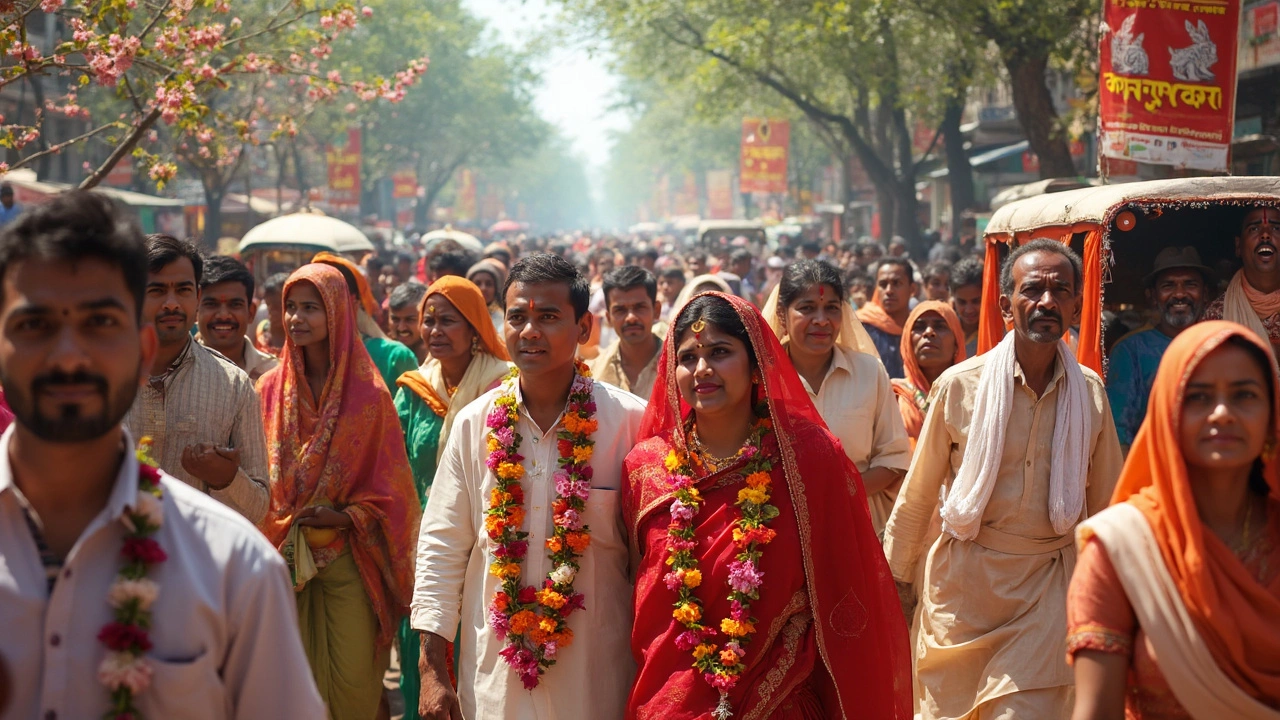
Pohela Boishakh: The Bengali New Year and Its Cultural Roots
When you hear Pohela Boishakh, the first day of the Bengali calendar year, celebrated with red-and-white attire, street fairs, and traditional sweets across West Bengal and Bangladesh. Also known as Poila Boishakh, it’s not just a date on the calendar—it’s a living tradition that binds families, markets, and music in a single day of renewal. Unlike New Year’s Day in January, Pohela Boishakh follows the lunar-based Bengali calendar, falling in mid-April. It’s when shops clean their counters, people wear new clothes, and street vendors set up stalls selling sholapith crafts, hilsa fish, and pitha cakes. This isn’t just a holiday—it’s a cultural reset button for millions.
It’s closely tied to other major Bengali festivals, like Durga Puja and Saraswati Puja, which shape the rhythm of life in Bengal. While Durga Puja is about devotion and grand processions, Pohela Boishakh is about community and commerce. You’ll see farmers settling accounts, shopkeepers offering discounts, and students singing Rabindra Sangeet in schools. It’s the one day when the whole region pauses to celebrate beginnings—not just of a year, but of work, relationships, and hope. And while it’s rooted in rural agrarian cycles, today it’s just as alive in Kolkata’s bustling lanes as it is in the villages of Barisal.
What makes Pohela Boishakh stand out is how it blends the sacred with the everyday. There’s no temple ritual that dominates the day—instead, you find families sharing meals, artists performing jatra songs, and children chasing paper kites. It’s a festival that doesn’t demand silence or prayer—it asks for laughter, color, and shared plates. And if you’ve ever wondered why Bengalis are so proud of their New Year, it’s because this day doesn’t just celebrate time passing—it celebrates identity surviving, adapting, and thriving.
Below, you’ll find articles that dig into how Pohela Boishakh fits into the wider world of Bengali traditions—from its food and music to how it compares with other regional New Year celebrations across India. Whether you’re curious about the dishes served, the songs sung, or why this day matters to people far beyond Bengal, you’ll find real stories here—not just facts, but the heartbeat behind the celebration.