Pashmina Shawl: What It Is, Why It Matters, and How It Connects to Indian Textiles
When you think of a Pashmina shawl, a fine, soft woolen shawl made from the undercoat of Himalayan goats, traditionally handwoven in Kashmir and valued for its warmth and elegance. Also known as cashmere shawl, it’s not just clothing—it’s a piece of living history worn by queens, passed down through families, and still prized across India and beyond. The wool comes from the Changthangi goat, raised at high altitudes in Ladakh and Tibet, where the cold forces the animal to grow an ultra-fine undercoat. Harvesting it is labor-intensive, spinning by hand, and weaving on traditional looms takes weeks. That’s why a real Pashmina shawl isn’t cheap—it’s a craft that survives because people still care about quality over speed.
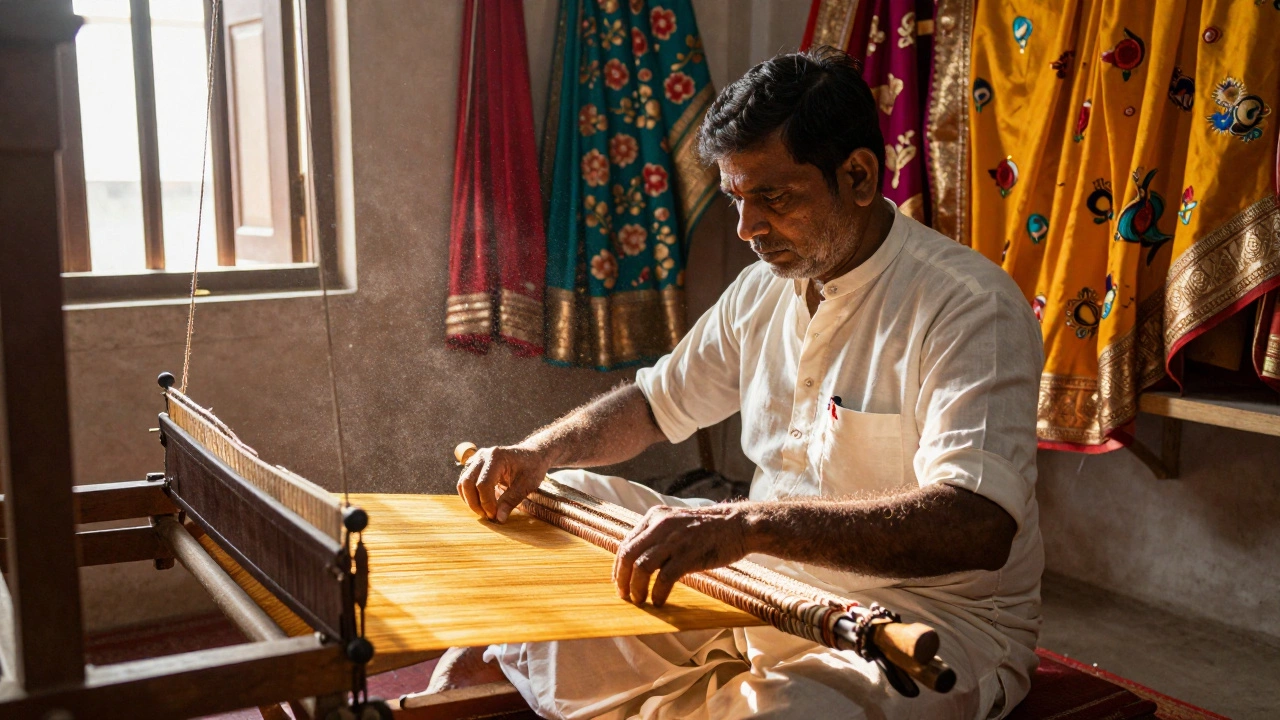
This isn’t just about wool. A Pashmina shawl, a luxury textile deeply tied to the artisan communities of Kashmir and northern India connects directly to the broader world of Indian textiles, a diverse family of handwoven fabrics, embroidery styles, and dyeing techniques that vary by region and carry centuries of cultural meaning. Think of it alongside the Banarasi silk saree, the Kanchipuram silk, or the Chanderi cotton—each tells a story of place, skill, and identity. Pashmina stands out because of its softness, but also because it’s one of the few textiles where the entire process—from goat to garment—is still mostly done by hand, often in small homes or village workshops. It’s not mass-produced. It’s made by people who learned from their mothers and grandmothers.
And it’s not just worn in India. The Pashmina shawl has traveled—from Mughal courts to European royalty, from modern-day weddings in Chennai to winter streets in New York. But here’s the thing: most shawls sold as "Pashmina" today aren’t real. Many are blends with synthetic fibers or lower-grade wool. That’s why knowing the difference matters. A true Pashmina shawl will drape differently, feel lighter, and last decades if cared for. It’s not just a fashion item—it’s a cultural artifact. And in a world where fast fashion dominates, choosing a real one is a quiet act of preservation.
What you’ll find in the posts below isn’t a list of where to buy one. It’s a deeper look at how textiles like the Pashmina shawl fit into the larger story of Indian culture—how they’re tied to regional identity, spiritual meaning, and daily rituals. You’ll see how they connect to traditions in Tamil Nadu, Gujarat, and beyond, even when the shawl itself comes from Kashmir. Because in India, clothing is never just clothing. It’s memory. It’s pride. It’s belonging.