North Indian Music: Sounds, Styles, and What Makes It Unique
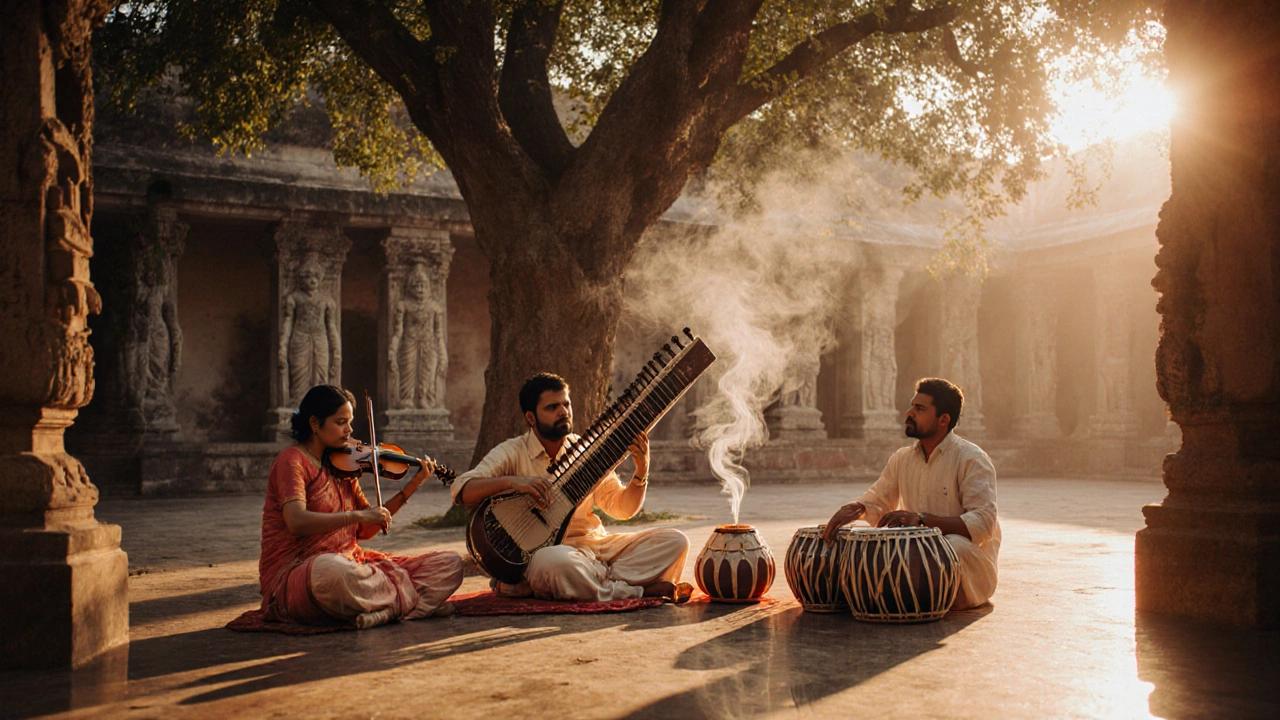
When you hear the sitar gliding over a tabla rhythm, you're listening to North Indian music, a classical tradition rooted in the Hindustani system that evolved across northern India, Pakistan, and Bangladesh. Also known as Hindustani classical music, it’s not just background sound—it’s a living language of emotion, time, and devotion. Unlike the structured, math-heavy Carnatic music of the south, North Indian music thrives on improvisation, personal expression, and the deep connection between melody and mood. It’s the kind of music that doesn’t just play—you feel it change as the day moves from morning to night.
This tradition is built on two core pillars: ragas, melodic frameworks that define mood, season, and time of day, and talas, rhythmic cycles that give structure to improvisation. A raga like Yaman might be played at dusk to bring calm, while Bhairav wakes you up at dawn. These aren’t just scales—they’re emotional maps. And the instruments? The sitar, sarod, bansuri, and tabla aren’t just tools—they’re voices. Each has its own history, technique, and role in shaping the sound. Even in modern Bollywood or folk songs from Punjab and Uttar Pradesh, you can hear these roots—like the drone of a tanpura under a pop beat, or the syncopated pulse of a dhol in a wedding procession.
North Indian music doesn’t live only in concert halls. It’s in village weddings, temple chants, street performers in Varanasi, and radio broadcasts from Lucknow. It’s passed down through guru-shishya relationships, not textbooks. And while it’s often compared to Western music, it doesn’t follow the same rules—there’s no fixed harmony, no chord progressions. Instead, it bends, breathes, and waits. If you’ve ever wondered why Indian music sounds so different from anything else, the answer starts here. Below, you’ll find real stories and insights from people who live this music—not just listen to it. From the quiet discipline of a morning raga to the wild energy of a Bhangra beat, this collection shows how North Indian music still moves millions.