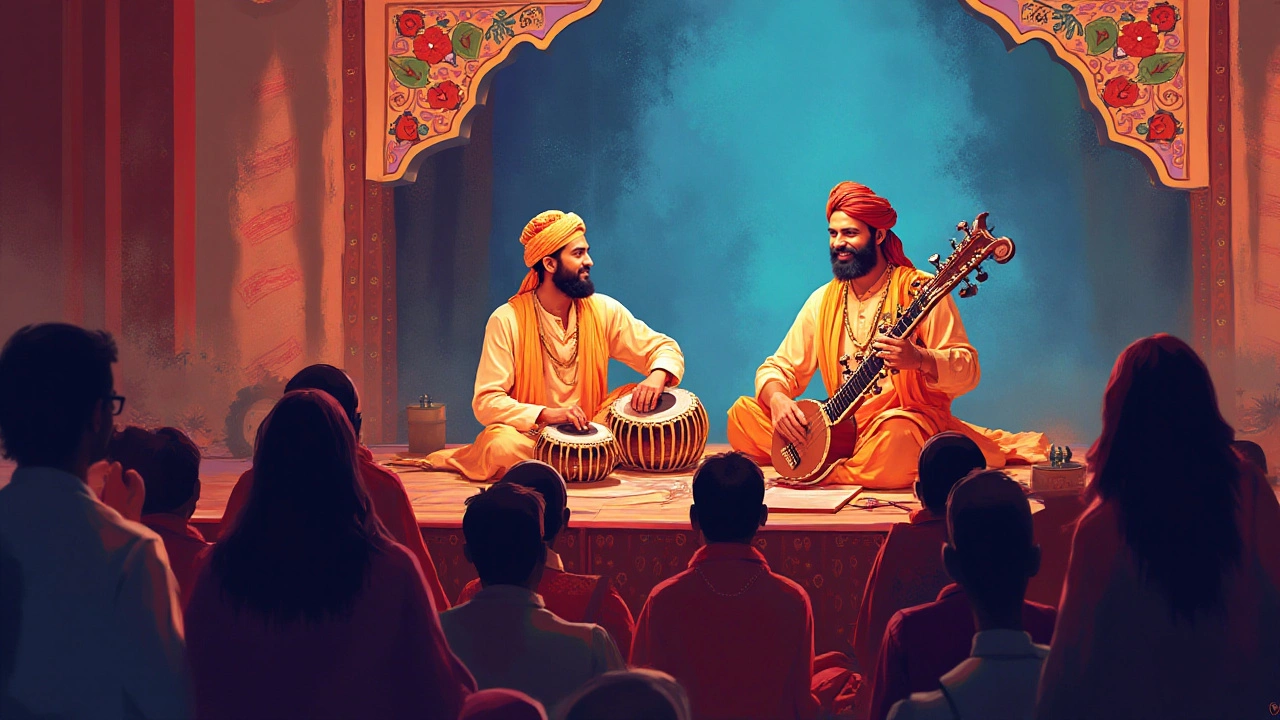
Tamil Music Tradition: Roots, Instruments, and Living Folk Sounds
At the heart of Tamil culture lies a Tamil music tradition, a living, breathing system of sound that blends devotion, rhythm, and daily life across centuries. It’s not just about concerts or recordings—it’s in the clapping of hands during temple processions, the drumbeats of Theru Koothu performances, and the wordless hums of farmers in the fields. This tradition doesn’t sit in museums. It walks, dances, and sings in homes, streets, and festivals from Madurai to Melbourne.
The Carnatic music, a highly structured classical system rooted in South Indian temples and royal courts is one pillar of this tradition. With its intricate ragas and talas, it’s taught in homes from childhood, passed down through generations like family recipes. But alongside it thrives the raw, unfiltered pulse of Tamil folk music, the voice of rural communities, where songs are made for harvests, weddings, and healing rituals. You’ll hear it in the hypnotic beats of the thavil and the haunting strings of the yeruthazhu, instruments that have changed little in 2,000 years. And then there’s bol banao, a form of nonsense singing that uses rhythmic syllables to express joy, grief, or prayer without using real words. It’s not random—it’s coded emotion, passed from grandmother to granddaughter, understood by those who listen closely.
What makes this tradition so powerful isn’t its complexity, but its accessibility. You don’t need a degree to feel it. You just need to be there—during Karthigai Deepam, when lamps flicker to the tune of devotional songs, or at a village festival where children learn to dance before they learn to read. This isn’t history preserved in books. It’s alive in the sweat of a drum player, the voice of a grandmother humming while cooking, the echo of a flute in a temple courtyard at dawn. The posts below show you exactly how this sounds, where it comes from, and how people still keep it going today.
Hindustani classical music, a profound art form from northern India, uses several languages, each lending a unique charm and expression. Predominantly, songs are composed in languages such as Hindi, Urdu, Braj Bhasa, and Awadhi, reflecting the cultural diversity of the region. This musical tradition, deeply intertwined with historical and spiritual elements, serves as a conduit for storytelling and emotional expression. Through this article, we explore the significance of language in this genre, how it influences performances, and its role in preserving cultural heritage.