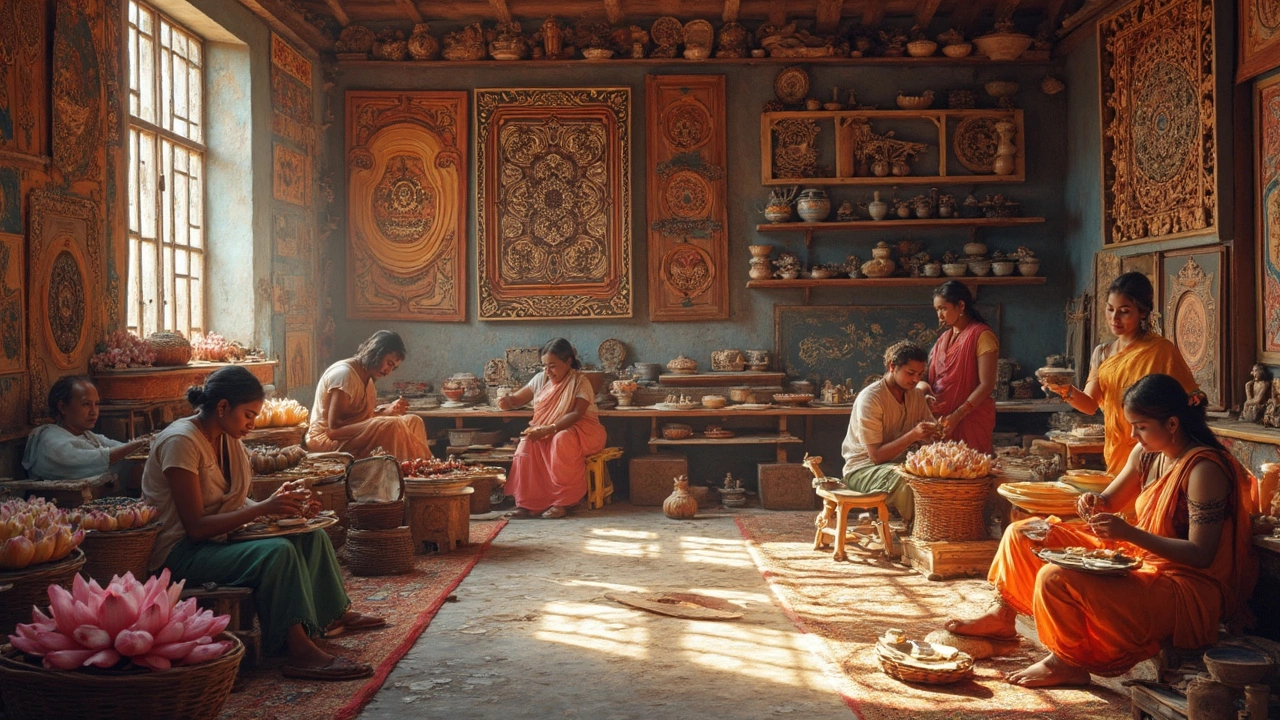
Lotus in Tamil Culture: Symbolism, Rituals, and Sacred Meaning
When you see a lotus, a water-born flower revered across South Asia for its purity and spiritual power. Also known as padma, it isn’t just decoration—it’s a living symbol in Tamil temples, homes, and festivals. You’ll find it carved into temple pillars, painted on kolams, and offered to deities like Lakshmi and Murugan. Unlike ordinary flowers, the lotus rises clean from muddy water, making it the perfect metaphor for enlightenment, resilience, and divine beauty in Tamil tradition.
It’s not just about looks. In Tamil Nadu, the lotus, a sacred floral emblem tied to devotion and cosmic order appears in rituals from daily pujas to major festivals like Karthigai Deepam. During Diwali, families place lotus-shaped oil lamps on their thresholds—not just for light, but to invite prosperity. The flower’s five petals are often linked to the five elements, and its center represents the soul’s awakening. Even in folk music and dance, like Karakattam, performers wear lotus-patterned costumes to honor the goddesses who are said to sit upon them.
The lotus, a cultural anchor connecting spirituality, nature, and identity in Tamil life doesn’t just belong to religion—it’s in poetry, medicine, and even food. Ancient Tamil texts like the Thirukkural use the lotus to describe grace and moral strength. In Ayurveda, lotus seeds and roots are used for cooling the body and calming the mind. You won’t find it in every Tamil household, but you’ll find its meaning in almost every meaningful moment.
What you’ll find in the articles below isn’t just a list of posts about flowers. It’s a deeper look at how the lotus ties into Tamil rituals, how it’s misunderstood in global myth comparisons, and why it remains one of the most powerful symbols in a culture that still sees divinity in nature. Whether you’re curious about why gods are shown seated on lotuses, how it’s used in Tamil weddings, or why it shows up in folk songs, these stories reveal a tradition where even a petal carries meaning.