Indian Bridal Jewelry: Traditions, Symbols, and Styles Across Tamil and Beyond
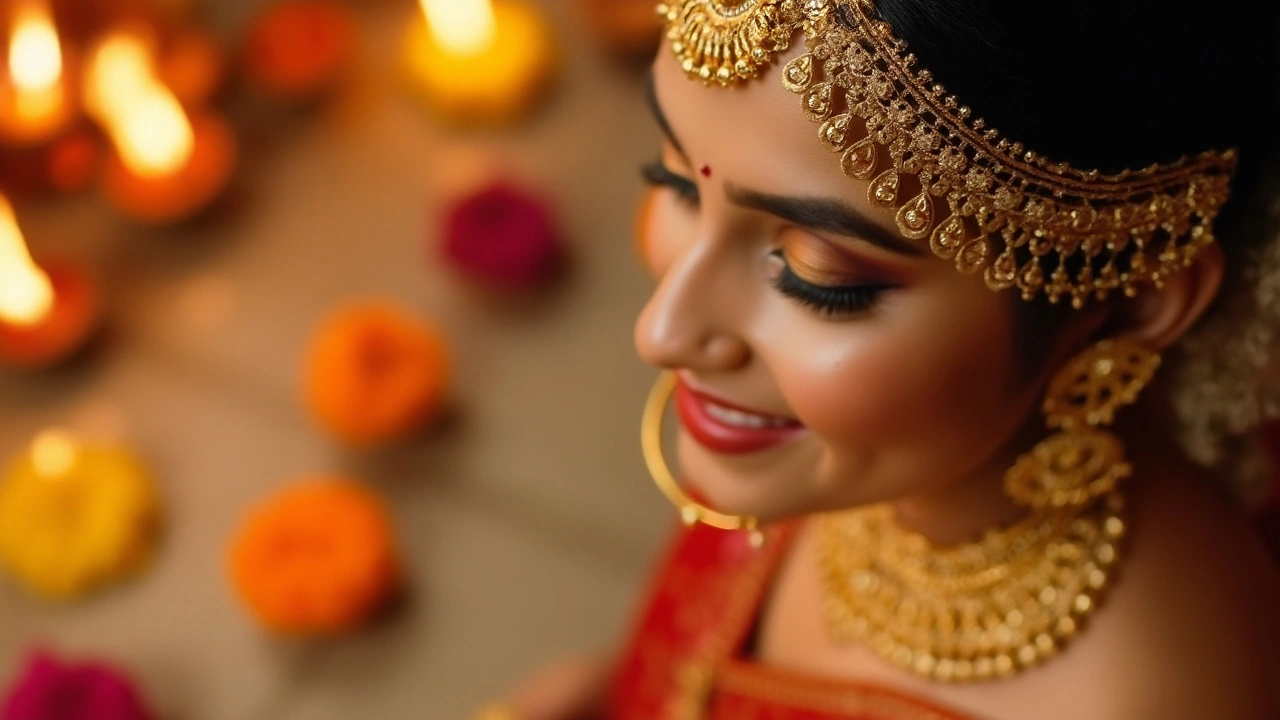
When you think of Indian bridal jewelry, the intricate gold pieces worn by brides during Hindu wedding ceremonies across India. Also known as wedding jewelry India, it's more than ornamentation—it's a language of culture, faith, and family legacy. Every piece tells a story: the mangalsutra, the sacred black and gold necklace tied by the groom to signify marital union in Tamil and Maharashtrian weddings, the heavy jhumka, dangling ear ornaments that sway with every step, rooted in South Indian temple traditions, or the elaborate nath, the nose ring that marks a bride’s transition into married life. These aren’t random accessories. They’re inherited symbols, passed down through generations, often crafted with the same techniques used centuries ago.
What makes Indian bridal jewelry unique isn’t just the gold or diamonds—it’s how deeply it’s tied to regional identity. In Tamil Nadu, brides wear mangalsutra with a pendant shaped like a tulsi leaf or a coin, reflecting devotion and prosperity. In contrast, brides in Punjab might wear a heavy haar (necklace) with Kundan stones, while in Bengal, the conch-shell and coral bangles carry spiritual meaning. Even the weight of the jewelry matters—more gold often means more blessings, and families save for years to afford it. The jewelry isn’t just worn on the wedding day; it becomes part of the bride’s dowry, her financial security, and sometimes, her only inheritance.
There’s also a quiet resistance in these traditions. Younger brides today mix modern styles—delicate chains, minimalist earrings—with classic pieces, blending heritage with personal taste. But the core remains: jewelry isn’t bought, it’s earned. It’s the result of aunts pooling money, mothers passing down their own sets, and artisans who still hand-carve every curve. Whether it’s a simple gold chain from a village jeweler or a custom-designed set from a city studio, each piece carries weight—not just in grams of metal, but in meaning.
Below, you’ll find real stories and deep dives into how this jewelry is made, worn, and understood—from Tamil weddings where gold is tied to the goddess Lakshmi, to how Diwali traditions influence bridal gifting, and why some families avoid certain stones for fear of bad luck. These aren’t just fashion tips. They’re cultural maps.