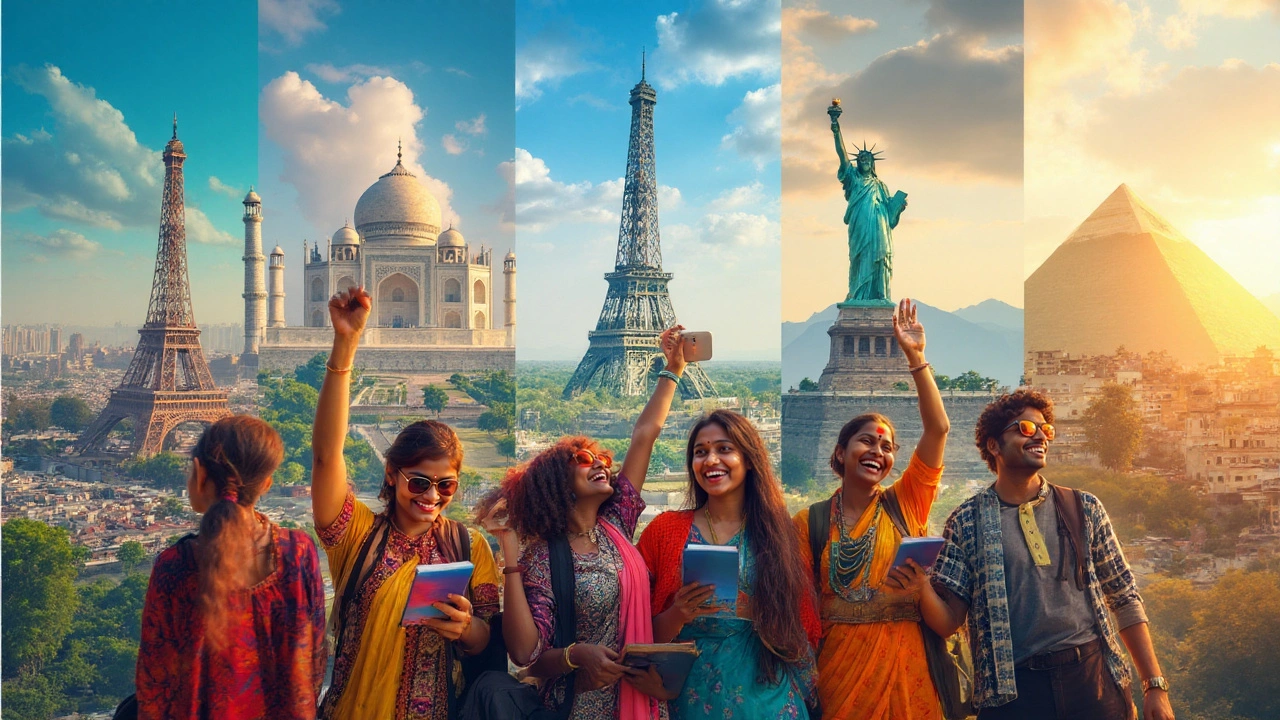
7 World Monuments You Need to See: Guide to Iconic Landmarks
Explore the seven most famous world monuments, their fascinating stories, practical travel tips, and what makes each landmark unforgettable for travelers worldwide.
When you think of iconic monuments, large, historically significant structures that represent cultural identity and collective memory. Also known as heritage landmarks, they are more than tourist stops—they're the physical heartbeat of a civilization. In Tamil Nadu, these monuments aren’t just ruins or postcard views. They’re sacred spaces where gods still walk, where centuries-old rituals echo in stone carvings, and where every pillar tells a story. The Dravidian temples, a distinct style of temple architecture from South India, characterized by towering gopurams, intricate carvings, and vast temple complexes. are the crown jewels. Places like Meenakshi Amman in Madurai or Brihadeeswarar in Thanjavur don’t just attract visitors—they hold the rhythm of daily life, from morning prayers to festival processions that fill the streets with music and color.
These monuments didn’t just appear. They were built by kings who saw architecture as devotion, by artisans who carved gods from granite without modern tools, and by communities who kept them alive through generations. The gopurams, the towering gateways of South Indian temples, often decorated with hundreds of colorful clay figures of deities and mythological scenes. aren’t just entrances—they’re visual scriptures. Each figure, each pose, each color has meaning. And while the world talks about the Taj Mahal or the Eiffel Tower, few realize that Tamil Nadu’s monuments are older, more densely detailed, and still actively worshipped. Even colonial-era buildings like the Madras High Court or Fort St. George carry the weight of history—not as dead relics, but as living parts of the city’s soul.
What makes these monuments truly special isn’t just their age or size. It’s how they’re woven into everyday life. People don’t visit them to check a box. They come to offer prayers, to hear temple bells, to taste prasadam, to watch a classical dance under ancient arches. These aren’t museums. They’re active centers of culture. And that’s why the posts below don’t just list famous sites—they show you how people live with them, how they shape festivals, how they inspire music, and why even today, a child in Kumbakonam knows the name of a temple that was built a thousand years ago.
Below, you’ll find articles that dig into the stories behind these stones—why certain gods are carved in blue, how temple rituals mirror cosmic cycles, and how global travelers misunderstand the meaning of these places. You’ll learn which monuments are tied to Tamil folklore, which ones still host daily worship, and how modern life hasn’t erased their power—it’s only deepened it. These aren’t just monuments. They’re the reason Tamil culture still breathes.
Explore the seven most famous world monuments, their fascinating stories, practical travel tips, and what makes each landmark unforgettable for travelers worldwide.