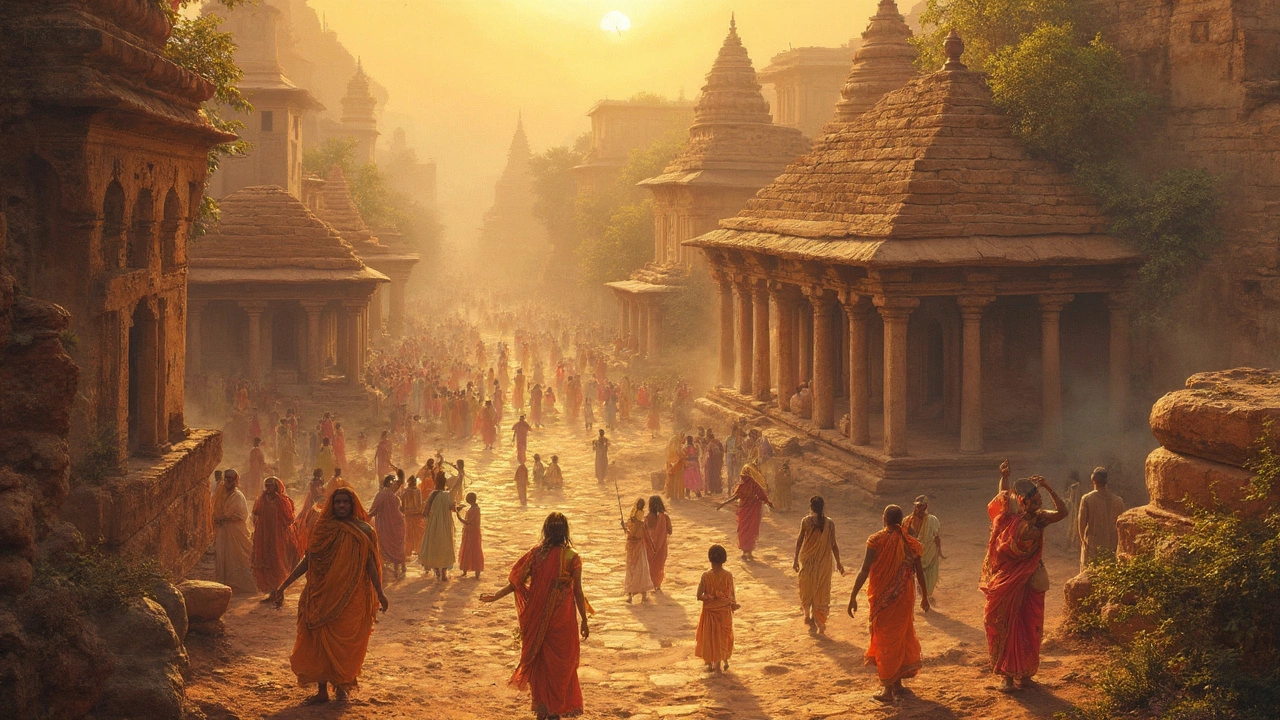
Hinduism Origins: Where It Came From and How It Evolved
When we talk about Hinduism, a diverse, ancient spiritual tradition rooted in the Indian subcontinent with no single founder or central text. Also known as Sanatana Dharma, it doesn’t look like a religion you’d find in a textbook—it’s more like a living river, fed by thousands of streams of ritual, song, philosophy, and daily practice. Unlike religions that started with a prophet or a book, Hinduism grew from the land, the rivers, the seasons, and the people who lived along them. It wasn’t invented. It was lived.
Its earliest roots stretch back over 4,000 years to the Indus Valley and the Vedic tribes who sang hymns to fire, wind, and the sun. These hymns became the Vedas, the oldest sacred texts of Hinduism, composed in Sanskrit and passed down orally for centuries before being written. From there, ideas bloomed: the concept of karma, reincarnation, dharma, and moksha. These weren’t just beliefs—they became the rhythm of everyday life. That’s why you’ll find Hindu gods, like Krishna, Shiva, and Lakshmi, who represent different aspects of existence—from love and destruction to wealth and wisdom. Their blue skin? Not a style choice. It’s a symbol of the infinite. Their festivals? Diwali, Holi, Navaratri—each tied to cosmic cycles, harvests, and moral lessons passed down through generations.
And it’s not just about temples and prayers. Hinduism shaped how people eat, heal, and even dance. Ayurveda, a traditional system of medicine based on balancing body energies, is deeply tied to Hindu cosmology. It’s why you’ll see herbal remedies, yoga, and dietary rules linked to spiritual ideas. The same culture that gave us the blue gods also gave us Indian mythology, a rich tapestry of stories where gods walk among humans, demons challenge cosmic order, and nonsense singing in villages carries deep spiritual meaning. These aren’t fairy tales. They’re frameworks for understanding life.
What you’ll find in the posts below isn’t a list of facts—it’s a look at how Hinduism lives today. Why do Tamils celebrate Diwali differently? Why does the Catholic Church have concerns about yoga? Why are some Ayurvedic products dangerous? Why do gods wear blue? Each article answers a real question someone actually asked. No fluff. No theory. Just the messy, beautiful, practical truth of a tradition that’s still breathing.