Hardest Dance: What Makes a Dance Form Physically and Culturally Demanding?
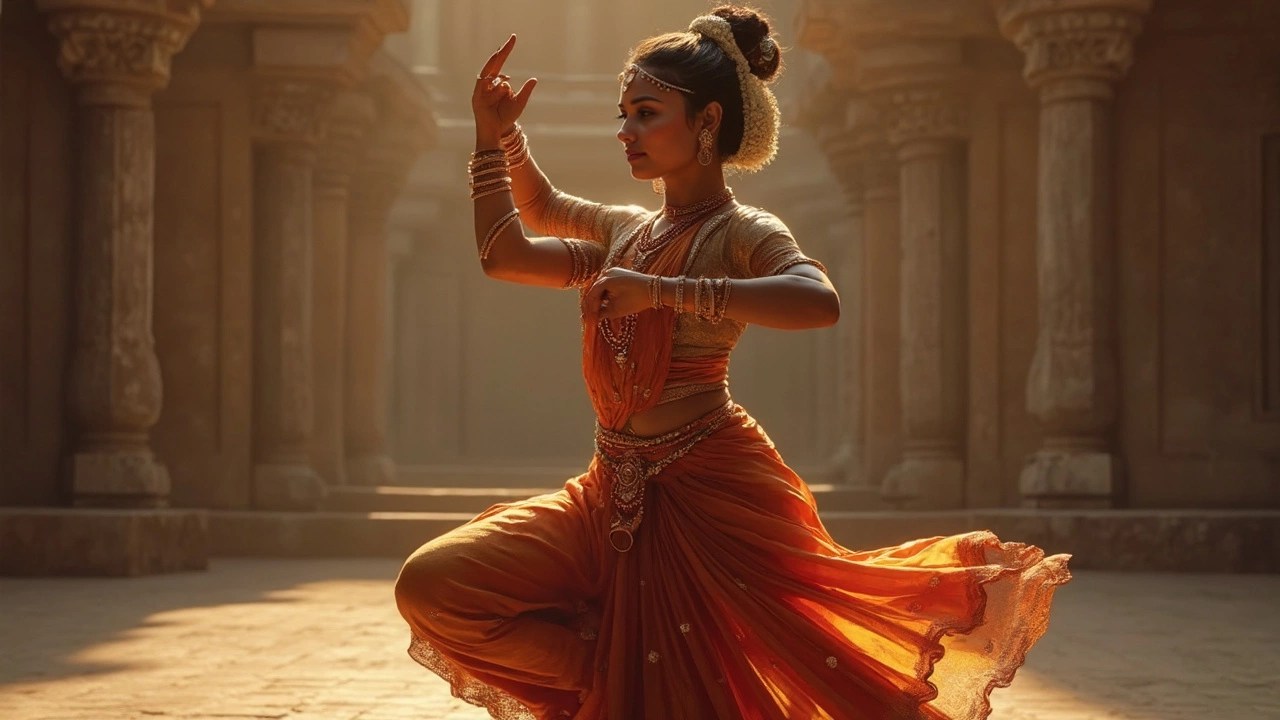
When people talk about the hardest dance, a dance form that demands extreme physical control, deep cultural knowledge, and years of disciplined training, they’re often thinking of Bharatanatyam, a classical Indian dance rooted in Tamil Nadu’s temple traditions. It’s not just about steps—it’s about holding complex poses for minutes, hitting precise footwork patterns to the rhythm of Carnatic music, a highly structured South Indian musical system with intricate talas and ragas, and expressing deep spiritual stories through every finger movement and eye glance. This isn’t performance. It’s devotion in motion.
What makes Bharatanatyam one of the hardest dances isn’t just the physical strain—it’s the mental and emotional load. Dancers must memorize hundreds of mudras (hand gestures), each with layered meanings tied to ancient Tamil texts like the Natya Shastra. They train for years just to master a single adavu, the basic step. Compare that to Tamil folk dance, like Karakattam or Theru Koothu, performed barefoot on hot streets during village festivals. These forms are physically brutal too—dancers balance heavy pots on their heads for hours, spin rapidly, and leap between drumbeats without rest. But here’s the twist: folk dances demand raw endurance, while classical dances demand perfect control. One breaks your body; the other breaks your distractions.
There’s no single answer to what the hardest dance is—it depends on what you’re measuring. Speed? Endurance? Precision? Spiritual depth? In Tamil culture, dance isn’t entertainment. It’s a living archive. Every movement carries history. Every rhythm echoes temple bells. Every performance is a silent prayer. That’s why even seasoned dancers from other traditions say Bharatanatyam is unlike anything else. It doesn’t just challenge your muscles—it rewires your focus. And if you think hip-hop or ballet is tough, try doing a 90-minute Bharatanatyam recital after fasting since sunrise, while keeping your expressions flawless and your footwork silent on stone.
Below, you’ll find articles that explore the hidden layers behind these dances—the rituals, the music, the sweat, the silence between steps. You’ll see how a single dance can hold entire worlds: of gods, of villages, of generations who refused to let tradition fade. Whether it’s the precision of classical forms or the raw energy of folk performances, the hardest dances aren’t just performed. They’re lived.