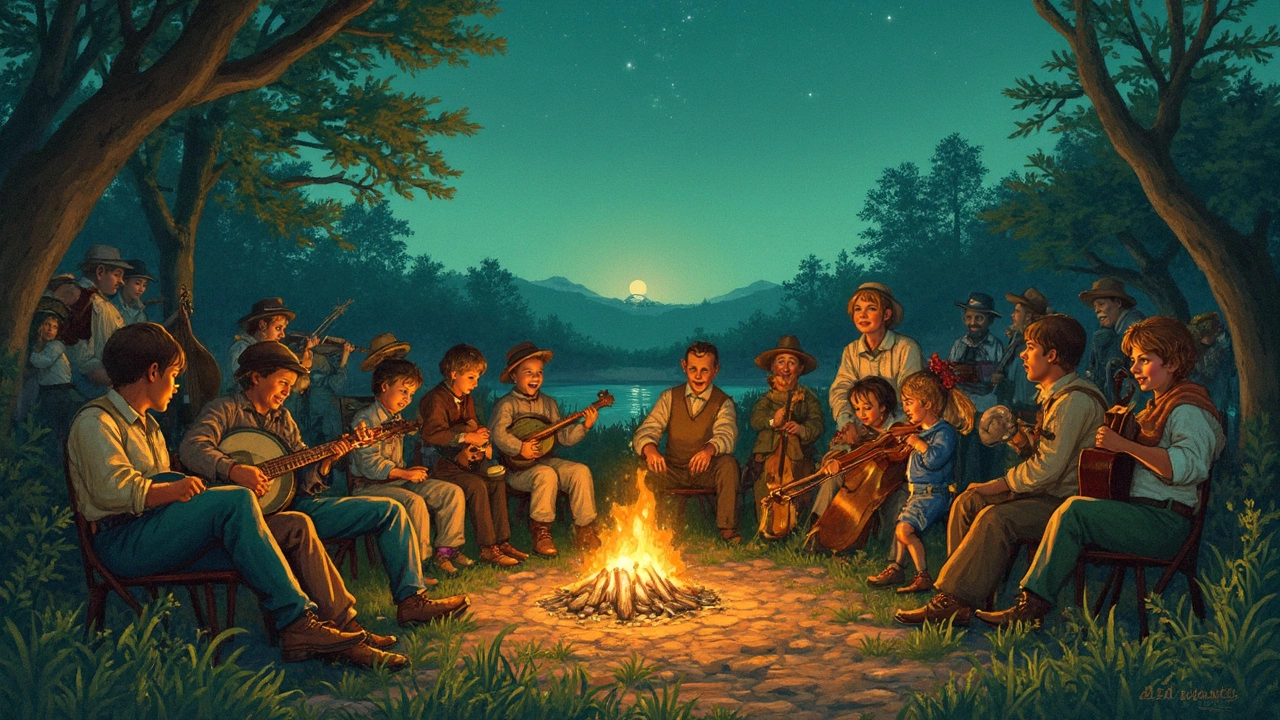
Folk Music: Roots, Rituals, and Voices of Tamil Tradition
When you hear folk music, music born from everyday life, passed down without sheet music, shaped by labor, prayer, and celebration, you’re not just listening to sound—you’re hearing history breathe. In Tamil Nadu, this isn’t background noise. It’s the heartbeat of villages, the rhythm of harvests, the voice of grandmothers singing to children under oil lamps. Unlike polished concert performances, Tamil folk music, a living tradition tied to local deities, seasons, and community rituals doesn’t need stages. It lives in fields, temples, and doorsteps, sung in dialects even dictionaries don’t fully capture.
One of its most fascinating forms is bol banao, a rhythmic, wordless vocal style used in daily work and spiritual ceremonies across rural Tamil Nadu. It’s not random humming—it’s structured, emotional, and deeply tied to movement. A woman pounding rice might use it to sync her hammer with her breath. A temple dancer might weave it into a ritual to call the gods. This isn’t entertainment. It’s survival. It’s memory. It’s how knowledge travels when books are scarce and silence is dangerous. And while Indian folk songs, a broad category that includes everything from Punjabi bhangra to Bengali baul ballads get attention elsewhere, Tamil folk music stays quietly powerful—rooted in Karakattam’s balancing pots, Theru Koothu’s masked storytelling, and Puliyattam’s tiger dances.
What makes it different? It doesn’t chase fame. It doesn’t need streaming numbers. It survives because it’s useful. It carries prayers in rhythm, teaches children through repetition, and turns hard work into something bearable. You won’t find it on Billboard, but you’ll find it in the hands of a farmer at dawn, in the chants of a widow lighting lamps, in the drums that call the rain. And if you listen closely, you’ll hear how it connects to older traditions—like the Tamil folklore, myths, spirits, and oral tales passed down for generations that give these songs their meaning. This is music that doesn’t just entertain. It holds communities together.
Below, you’ll find real stories about this music—why it’s called bol banao, how it’s tied to festivals like Karthigai Deepam, and how Tamil folk singers keep it alive without ever stepping into a recording studio. These aren’t nostalgia pieces. They’re proof that tradition isn’t dead—it’s still singing.