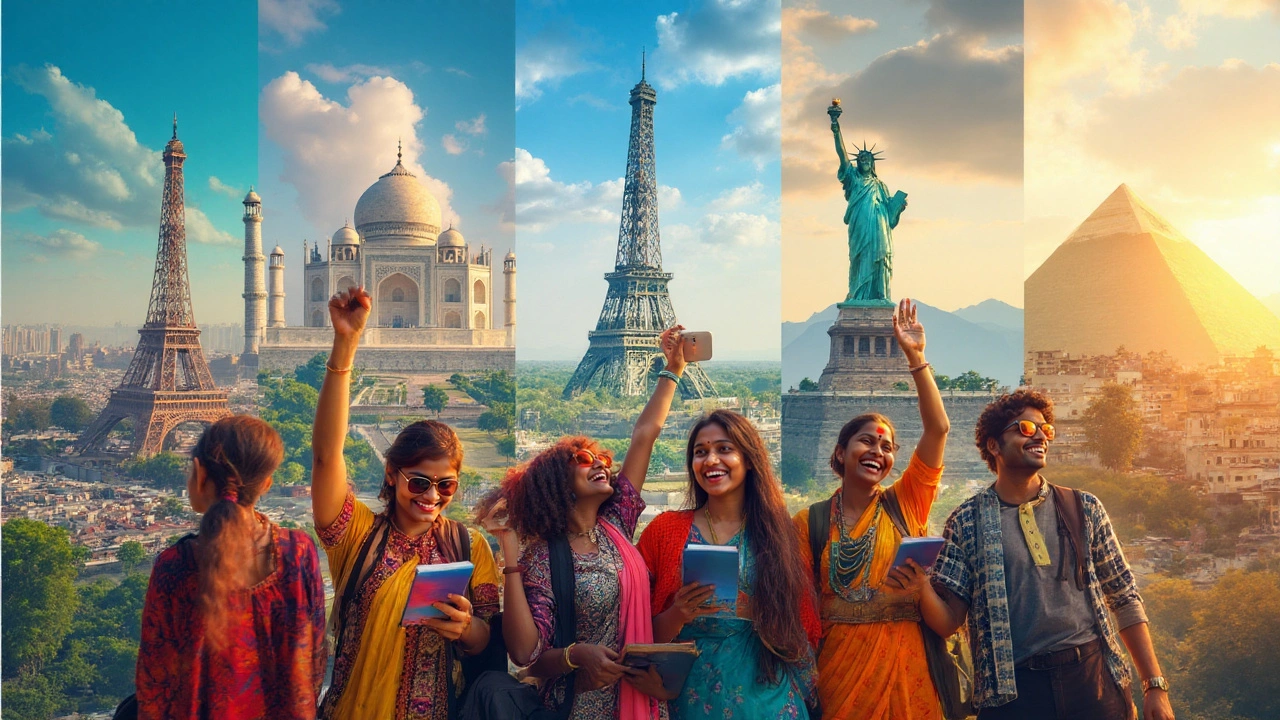
7 World Monuments You Need to See: Guide to Iconic Landmarks
Explore the seven most famous world monuments, their fascinating stories, practical travel tips, and what makes each landmark unforgettable for travelers worldwide.
When you think of famous landmarks, physical places with deep historical, cultural, or spiritual significance that draw people from around the world. Also known as cultural monuments, they aren't just photo stops—they're living pieces of identity, memory, and belief. In Tamil Nadu, these aren’t just ruins or buildings. They’re sacred spaces where centuries of devotion, art, and community life still breathe. The Meenakshi Amman Temple, a dazzling complex in Madurai dedicated to the goddess Meenakshi and her consort Sundareswarar, known for its towering gopurams and intricate carvings isn’t just architecture—it’s the heartbeat of Tamil religious life. Every morning, the sound of temple bells, the scent of incense, and the flow of pilgrims tell a story older than most written records.
Famous landmarks don’t stop at Tamil Nadu. Across India, the Taj Mahal, a white marble mausoleum in Agra built by Emperor Shah Jahan for his wife, recognized globally as a symbol of love and Mughal craftsmanship draws millions, just like the Hampi ruins, a vast open-air museum of Vijayanagara Empire temples, palaces, and bazaars, now a UNESCO World Heritage Site. These places connect to Tamil culture through shared history—trade routes, religious exchanges, and artistic influences that crossed regions long before modern borders existed. Even the Mahabalipuram Shore Temple, a 8th-century coastal structure carved from granite, one of the earliest examples of Dravidian temple architecture and a UNESCO site, shows how Tamil builders shaped sacred spaces that still stand against time and tide.
What makes a landmark truly famous isn’t just how many people visit it, but what it holds—stories of kings and commoners, rituals passed down, songs sung under its arches, and festivals that turn stone into celebration. You’ll find all this in the posts below: how Diwali lights up ancient temples in Tamil villages, why blue gods appear in temple sculptures, how folk dances like Karakattam move around sacred pillars, and why places like Madurai and Thanjavur are more than destinations—they’re living archives. Whether you’re planning a trip or just curious about what makes these sites matter, the articles here give you the real context—not just the postcards.
Explore the seven most famous world monuments, their fascinating stories, practical travel tips, and what makes each landmark unforgettable for travelers worldwide.