Do Any Countries Really Not Dance? Culture, Beliefs, and Surprising Facts
Are there actually countries where people don't dance? Discover how dance is tied to culture and explore why some societies resist or restrict it.
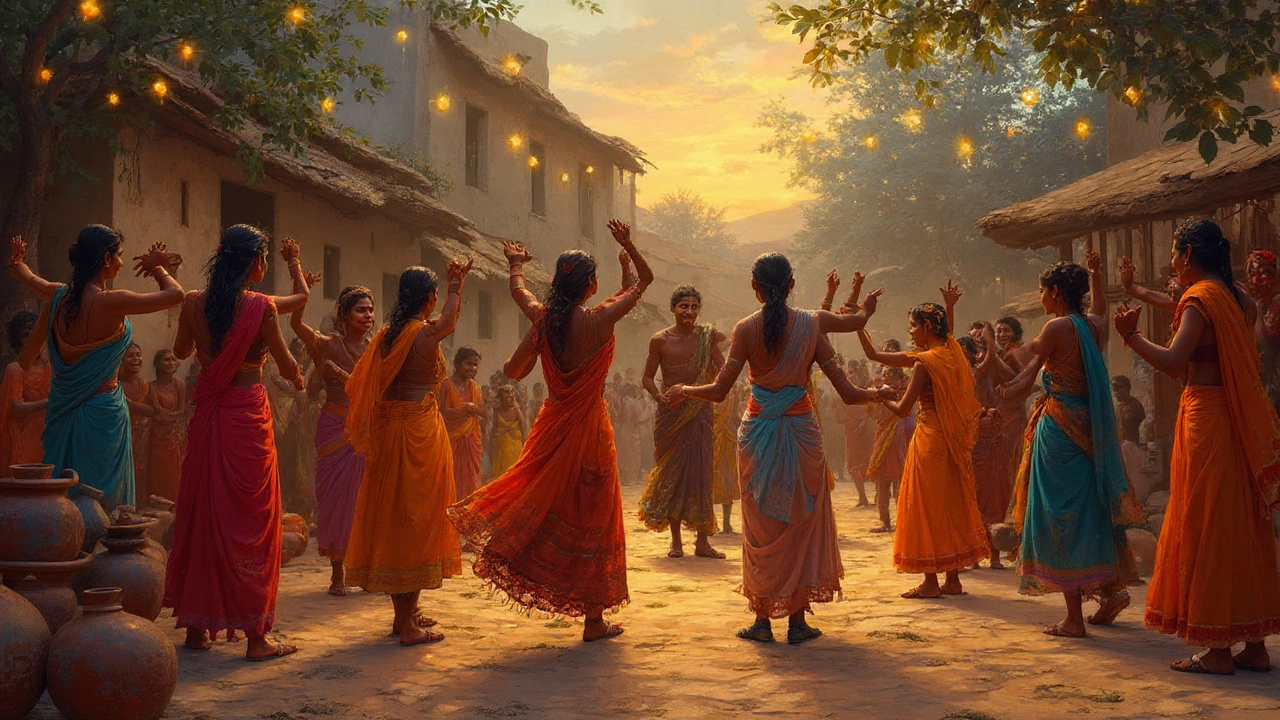
When you think of dance traditions, the expressive, ritual-driven movement systems passed down through generations in Tamil communities. Also known as Tamil folk dance, these forms aren’t just performances—they’re living prayers, storytelling tools, and community bonds made visible. In Tamil Nadu, dance isn’t something you watch on a stage. It’s something you feel in the rhythm of temple bells, the clatter of ankle bells, and the drumbeats that call villagers to gather.
Take Karakattam, a devotional dance where performers balance clay pots on their heads while moving to intricate footwork. This dance is tied to the worship of Mariamman, the goddess of rain and healing, and has been performed for centuries in village festivals. Then there’s Theru Koothu, a raw, energetic street theater-dance hybrid that brings myths to life with bold masks, loud drums, and improvised dialogue. These aren’t rehearsed shows for tourists—they’re sacred, spontaneous, and deeply rooted in local belief. Puliyattam, the tiger dance, where dancers paint themselves yellow and black to embody the spirit of the jungle, shows how movement in Tamil culture blurs the line between human and divine, animal and ancestor. These traditions don’t need theaters or tickets. They thrive in temple courtyards, village squares, and monsoon-season processions.
What makes these dance traditions different from classical forms like Bharatanatyam isn’t just their setting—it’s their purpose. They’re not about perfection. They’re about presence. A dancer in Karakattam doesn’t perform for applause; they perform because the goddess is watching. A Theru Koothu actor doesn’t rehearse lines—they channel stories older than written history. These dances carry memory. They hold identity. And they’re still alive, not preserved in museums but passed from grandparent to grandchild, from drumbeater to dancer, in homes and fields across Tamil Nadu.
What you’ll find in the posts below are deep dives into these living traditions, the rituals behind them, the music that drives them, and how they’ve survived—sometimes against all odds—into today’s world. No fluff. No myths. Just the real, raw, rhythmic heart of Tamil dance.
Are there actually countries where people don't dance? Discover how dance is tied to culture and explore why some societies resist or restrict it.