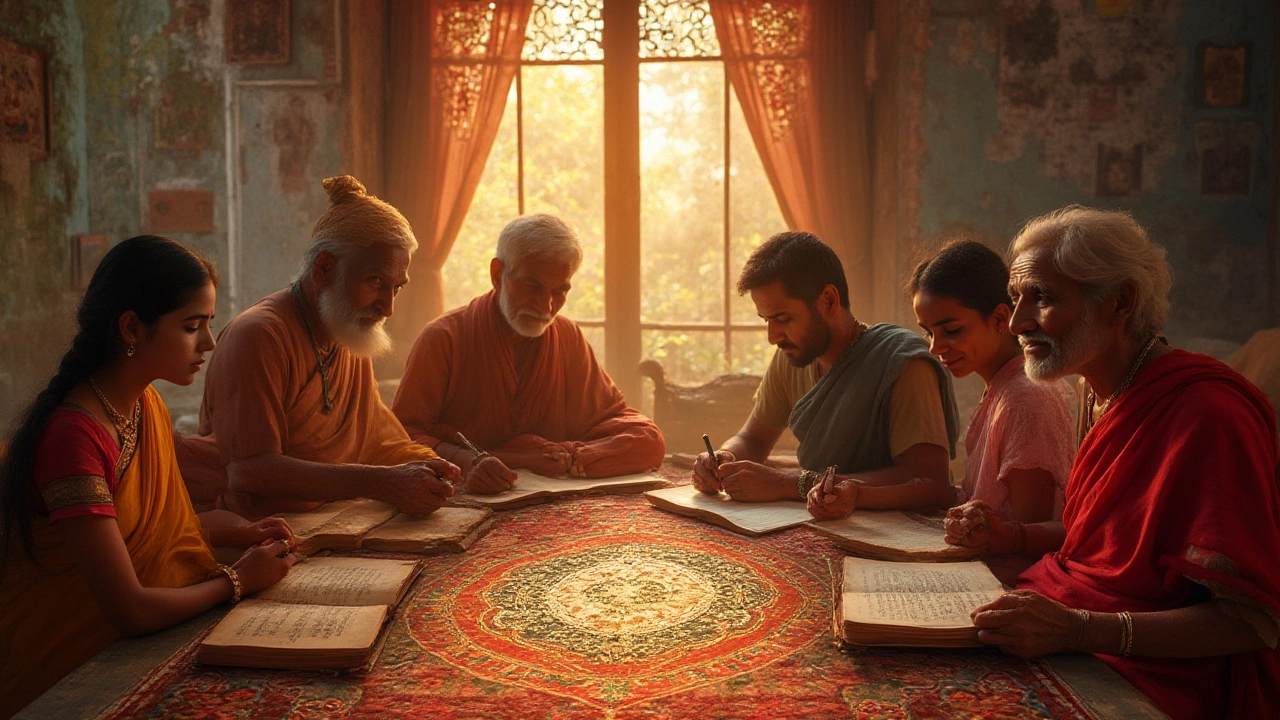
Do Hindus Have a Bible? Understanding Hindu Sacred Texts and Scriptures
Explore whether Hindus have a Bible, how Hindu scriptures are structured, and what texts shape the religion, beliefs, and daily life for millions.
When people talk about Bhagavad Gita, a 700-verse Hindu scripture from the Indian epic Mahabharata, where Lord Krishna imparts spiritual wisdom to the warrior Arjuna on the battlefield of Kurukshetra. Also known as the Song of the Lord, it’s not just a religious text—it’s a living guide for making sense of duty, fear, and purpose in everyday life. You don’t need to be a scholar to feel its pull. In Tamil Nadu, you’ll hear its verses quoted in temple chants, referenced in village councils, and whispered by students before exams. It doesn’t ask you to believe—it asks you to act.
The Krishna, the divine charioteer and teacher in the Bhagavad Gita, who reveals his universal form and teaches the path of selfless action isn’t just a god in a story. He’s the voice inside when you’re stuck between doing what’s easy and doing what’s right. The Gita doesn’t say avoid conflict—it says face it with clarity. That’s why Tamil families keep copies in their homes, not as decoration, but as a reference when life gets heavy. The concept of dharma, one’s moral duty or righteous path, shaped by role, time, and circumstance isn’t abstract. In Tamil villages, it’s what tells a farmer to plant even when the rains are late, or a mother to wake up early to feed her children before work. It’s not about perfection—it’s about showing up.
People often confuse the Gita with prayer or ritual, but it’s really about mindset. It teaches that action without attachment—doing your job without being obsessed with the result—is the path to peace. This isn’t just philosophy; it’s why Tamil entrepreneurs, artists, and teachers turn to it during tough times. You won’t find it in temple rituals alone—you’ll hear it in the quiet confidence of someone who’s lost but still moving forward.
What you’ll find in the posts below isn’t a textbook summary. It’s real talk: how the Gita connects to festivals like Diwali, why people mix its ideas with Ayurveda, how it’s misunderstood as just a Hindu book when its lessons cross cultures, and why even those who don’t read Sanskrit feel its weight in their bones. Whether you’ve never opened it or you’ve read it ten times, these articles will show you how the Gita lives—in homes, in choices, in silence and in song.
Explore whether Hindus have a Bible, how Hindu scriptures are structured, and what texts shape the religion, beliefs, and daily life for millions.