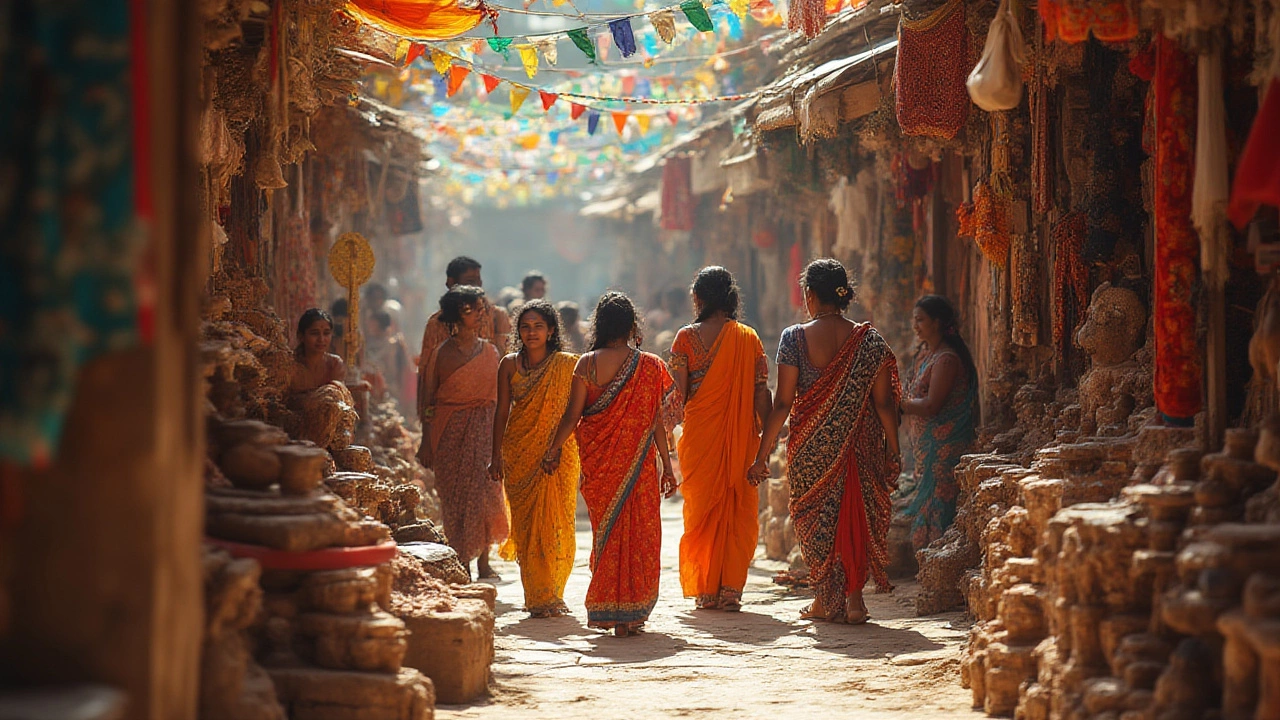
Maharashtra Art: Exploring the Diverse Heritage of Maharashtra Art and Culture
Discover the vibrant world of Maharashtra's art—its folk painting, sculpture, handicrafts, and unique traditions shaped by history, local life, and festive spirit.
When you think of the art of Maharashtra, a dynamic blend of rural storytelling, ritual performance, and handcrafted visual expression rooted in centuries-old village life. Also known as Maharashtrian folk art, it’s not just decoration—it’s memory, prayer, and identity stitched into every stroke and step. Unlike grand temple carvings or Mughal miniatures, this art lives in homes, fields, and festivals, passed down silently from mother to daughter, elder to child.
The Warli painting, a tribal art form using white pigment on mud walls to depict daily life, rituals, and nature in simple geometric shapes. Also known as Warli art, it’s one of the most recognizable visual languages of western India isn’t just a style—it’s a way of seeing the world. You’ll find it on walls during weddings, on calendars, even on tote bags sold in cities. But its roots are deep in the Adivasi communities of Palghar and Thane, where it once served as a spiritual map, not a souvenir. Then there’s the Lavani dance, a powerful, rhythmic performance combining song, drumming, and movement, historically tied to entertainment for soldiers and later reclaimed as a symbol of women’s strength. Also known as Maharashtrian folk dance, it’s not about grace alone—it’s about voice, resistance, and raw emotion. You won’t find it in textbooks as a classical form, but you’ll feel it in the pulse of a village fair or the beat of a street procession.
These aren’t isolated traditions. The art of Maharashtra connects to the rhythm of Tamil folk music in its use of nonsense syllables, to the color symbolism in Indian gods painted blue, and even to the way sweets are shared during Diwali—each act carries meaning beyond the surface. The art of Maharashtra doesn’t wait for museums. It’s alive in the clay pots shaped by village women, in the drums beaten during Ganesh Chaturthi, in the songs sung while harvesting sugarcane.
What you’ll find in the posts below isn’t a list of art styles—it’s a window into how people in Maharashtra keep their culture breathing. From the forgotten dance steps revived by young performers to the hidden meanings in Warli patterns, these stories show that tradition isn’t frozen. It’s adapting, resisting, and surviving—not in galleries, but in the hands of those who still believe in its power.
Discover the vibrant world of Maharashtra's art—its folk painting, sculpture, handicrafts, and unique traditions shaped by history, local life, and festive spirit.