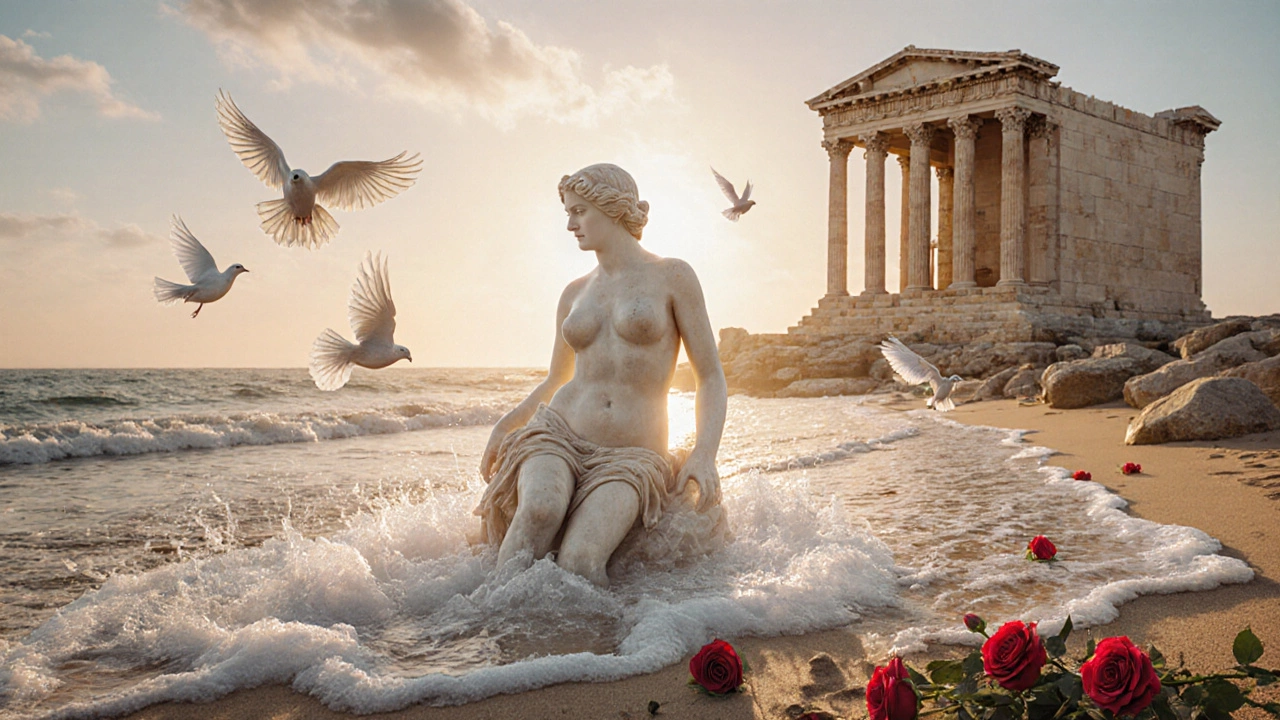
Aphrodite vs Lakshmi: Beauty, Love, and Wealth in Greek and Tamil Mythology
When we think of goddesses who rule love and abundance, two names often rise to the top: Aphrodite, the ancient Greek goddess of love, beauty, and desire, and Lakshmi, the Tamil and Hindu goddess of wealth, prosperity, and fortune. At first glance, they seem similar—both are beautiful, both are worshipped, both bring what people want most. But their stories, roles, and the values they represent are worlds apart. Aphrodite is born from sea foam, stirred by chaos and passion. Lakshmi emerges from the churning of the cosmic ocean, calm and deliberate, offering abundance to those who live with balance and devotion.
The difference isn’t just in origin—it’s in purpose. Aphrodite’s power comes from attraction, seduction, and emotional intensity. She causes wars, breaks marriages, and ignites desires that can’t be controlled. Her worship was tied to temples where physical beauty and erotic rites were part of devotion. Lakshmi, on the other hand, doesn’t seduce—she blesses. She doesn’t reward chaos; she rewards discipline. In Tamil homes, she’s not just prayed to during Diwali—she’s welcomed daily with clean floors, lit lamps, and offerings of rice and flowers. Her presence is tied to karma, not chance. You don’t win her favor by being irresistible—you earn it by being honest, generous, and grounded.
And then there’s the cultural lens. In Greek myth, beauty is a weapon. In Tamil tradition, beauty is a reflection of inner harmony. Aphrodite’s lovers are often mortal men who suffer for their desire—Adonis, Anchises, Paris. Lakshmi’s companions are Vishnu, the preserver, and the elephant, a symbol of wisdom and strength. She doesn’t leave her husband for a mortal. She stays. She sustains. She doesn’t just give money—she gives stability. You’ll find her in Tamil households where a woman manages the family budget with care, where rice is never wasted, where festivals like Pongal celebrate harvests earned through hard work, not luck.
Some might say both goddesses are about love and wealth. But Aphrodite gives you the spark. Lakshmi gives you the fire that lasts. One is about what you feel. The other is about what you build. When you look at the posts below—on Diwali rituals, Tamil folklore, and how Indian gods are painted blue—you’ll see how deeply culture shapes what we worship. You’ll find articles that explain why Lakshmi is shown with lotus flowers and elephants, and how Greek art portrayed Aphrodite’s nakedness as divine power. You’ll see how Tamil families still light oil lamps for Lakshmi, while Western media still romanticizes Aphrodite as the ultimate symbol of romance. Neither is right. Both are true—in their own worlds.
So who wins? Neither. They don’t compete. They reflect two ways of seeing the world—one where love is wild and unpredictable, and one where wealth is earned through rhythm, respect, and routine. If you’ve ever wondered why Tamil culture ties prosperity to cleanliness and prayer, while Greek myths tie it to passion and risk, you’re not alone. The answers are in the stories we tell—and in the rituals we keep alive. Below, you’ll find posts that unpack these differences, not as myths, but as living traditions that still shape how people live, love, and earn today.