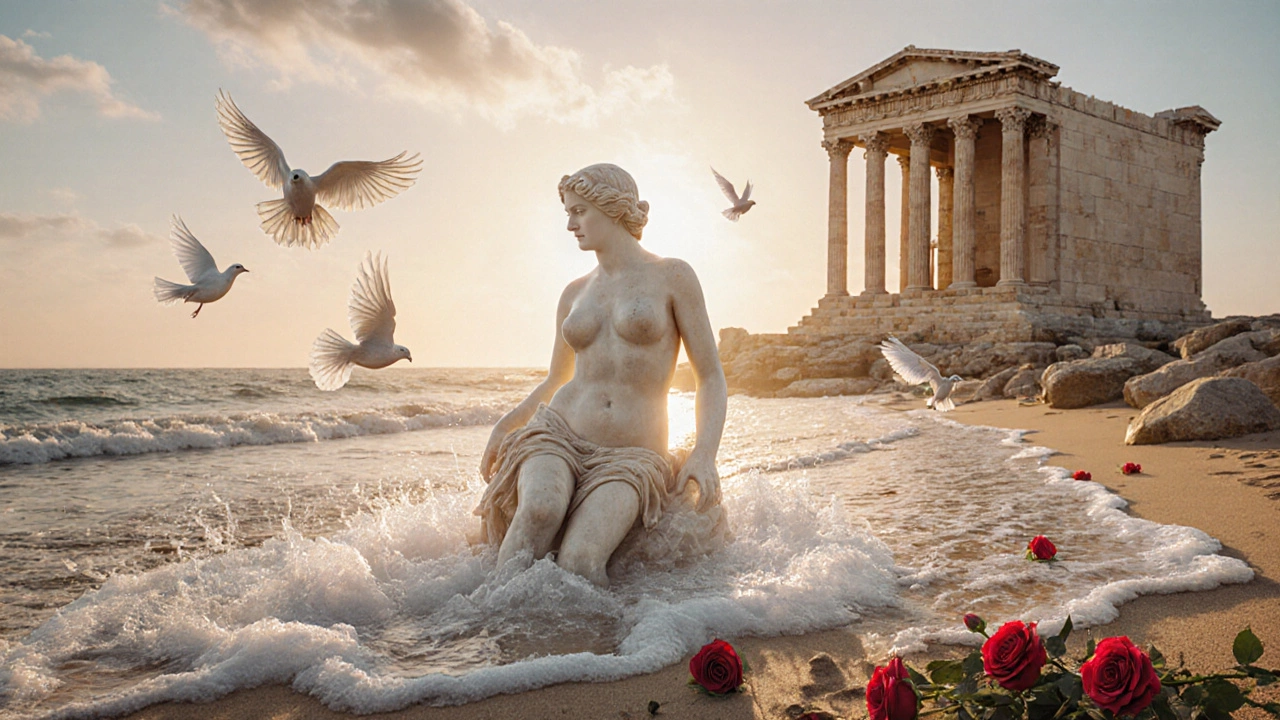
Aphrodite Hinduism: Connections Between Greek Goddesses and Hindu Deities
When people ask if Aphrodite, the Greek goddess of love and beauty has a counterpart in Hinduism, they’re not just curious—they’re sensing a deeper pattern. Hinduism doesn’t have a direct one-to-one match for Aphrodite, but it does have powerful goddesses like Lakshmi, the goddess of wealth, fortune, and beauty, and Parvati, the embodiment of love, fertility, and devotion. These figures don’t just look like Aphrodite—they carry the same energy: divine femininity, attraction, and creative power. The difference? While Aphrodite’s myths often focus on passion and chaos, Lakshmi and Parvati are deeply tied to dharma, family, and spiritual balance.
Why does this matter? Because when you see blue-skinned gods like Krishna or Shiva in Hindu art, you’re not just seeing color—you’re seeing cosmic symbolism, just like the golden glow around Aphrodite in ancient Greek statues. Both cultures used visual language to show divinity. And just as Aphrodite was worshipped in temples and festivals across the Mediterranean, Lakshmi is honored during Diwali with oil lamps, sweets, and prayers for prosperity. Even the way beauty is linked to holiness in both traditions isn’t coincidence—it’s human nature. People everywhere connect love, fertility, and divine presence. In Tamil Nadu, you’ll find temple sculptures of goddesses with flowing garments and serene expressions, not unlike the marble forms of Aphrodite in Athens. The tools are different—conch shells vs. doves—but the meaning? Nearly identical.
What you’ll find in the posts below isn’t a list of myths side by side. It’s a collection of real, grounded stories about how Hinduism expresses divine femininity through ritual, art, and daily practice. You’ll read about why Indian gods are painted blue, how Diwali ties into goddess worship, and what Tamil folklore says about water spirits like the Jalpari—all of which echo the same human need to honor beauty, power, and mystery. Whether you’re drawn to Greek myths or Hindu rituals, the patterns are there. You just have to look closely.