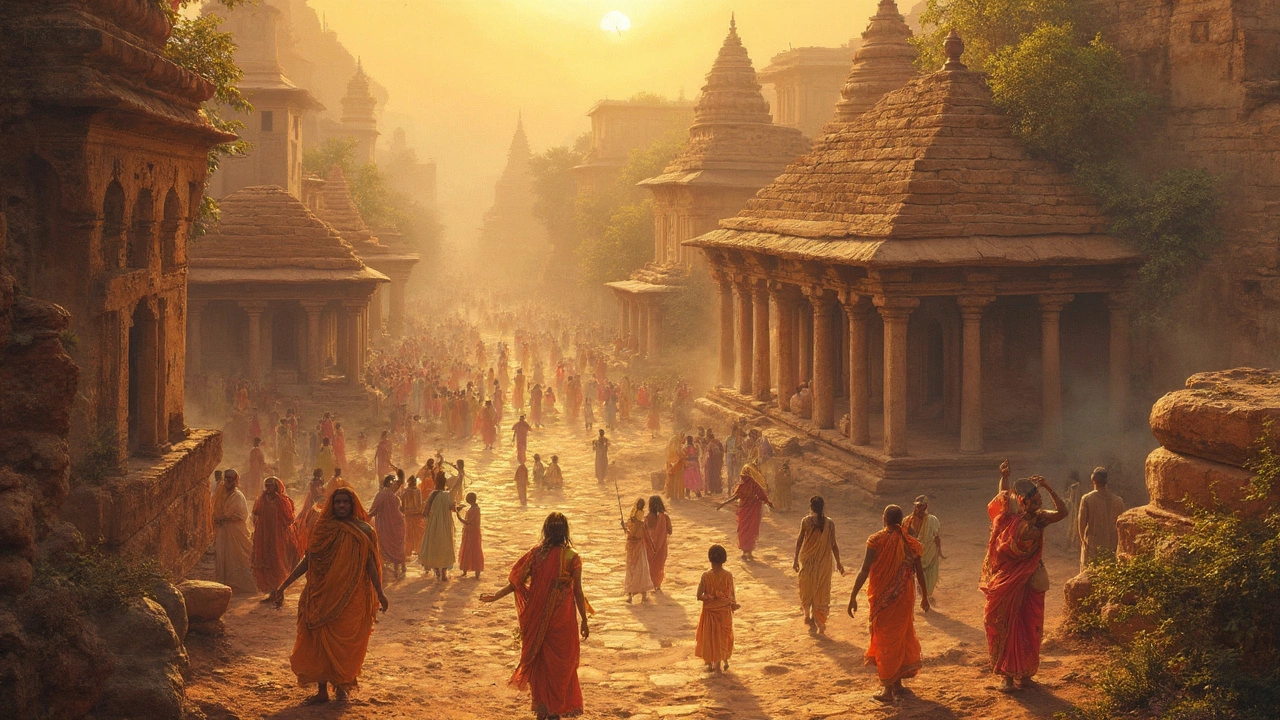
Ancient Religions: Origins, Practices, and Their Living Influence Today
When we talk about ancient religions, systematic belief systems developed thousands of years ago that still shape cultural practices today. Also known as indigenous spiritual traditions, they aren’t just history—they’re alive in how people eat, pray, dance, and celebrate. Think of the blue skin of Krishna, the silence before a Jain meal, or the rhythmic nonsense singing in Tamil villages. These aren’t random customs. They’re echoes of belief systems older than written language.
Many of today’s cultural habits trace back to Hinduism, a complex, regionally diverse spiritual tradition with roots in the Indus Valley and Vedic texts. It’s not a single book or dogma—it’s a living web of rituals, gods, and ethics. That’s why Diwali lights up homes across India, why sweets are given during festivals, and why some avoid meat not out of diet trends but because of Jainism, an ancient religion centered on non-violence that influenced entire communities to live meat-free. Even Ayurveda, a traditional system of medicine based on balance and natural elements, isn’t just herbal tea—it’s a spiritual science born from the same soil as the Upanishads.
These traditions didn’t stay in temples. They spilled into music, dance, food, and daily routines. The blue color of gods? It’s not just art—it’s a symbol of infinity. The way a Catholic might hesitate over yoga? It’s because yoga’s roots run deep into ancient Indian spirituality. Even the mermaid-like Jalpari in Tamil folklore connects to older water deities worshipped before recorded history. These aren’t myths lost in time. They’re patterns still followed, debated, and passed down.
What you’ll find below isn’t a textbook. It’s a collection of real questions people ask—about why certain foods are avoided, why gods look the way they do, how music carries meaning without words, and why some practices spark controversy across cultures. Each post cuts through noise to show you the real, human stories behind these ancient religions—and how they still shape lives today.