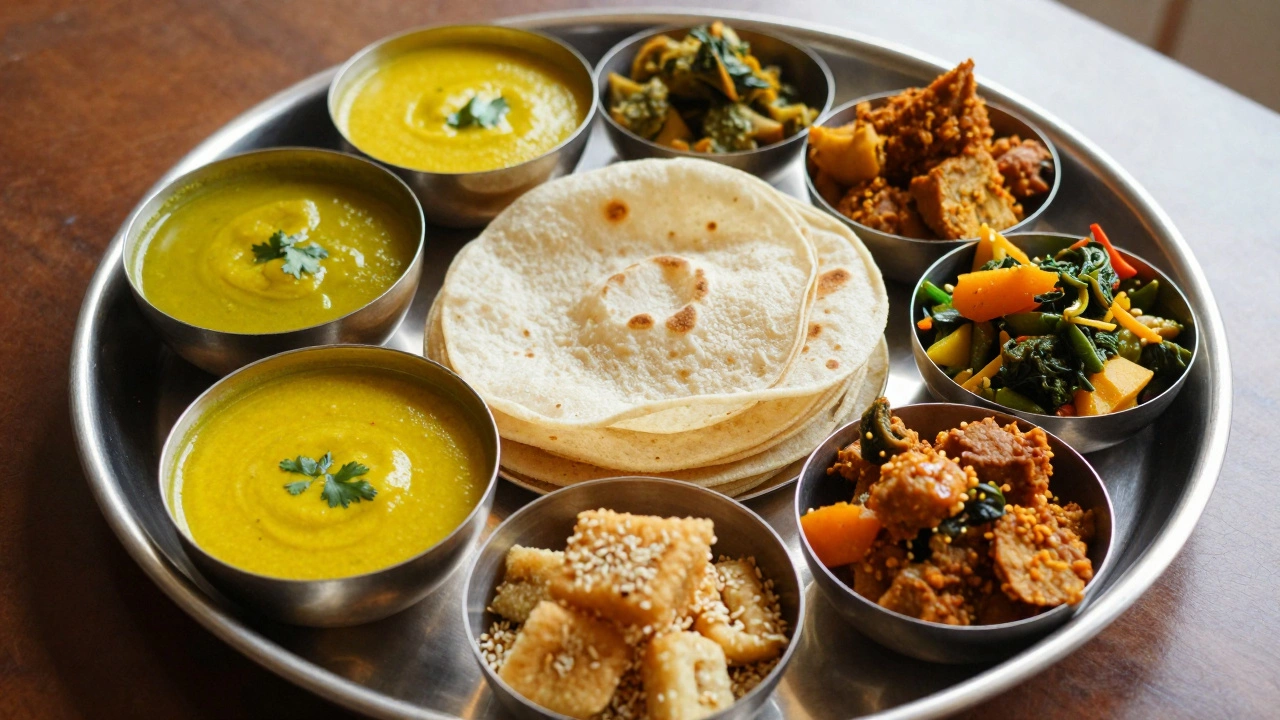
Gujarati Dietary Habit Explorer
Select a community or group to understand their typical dietary habits, protein sources, and cultural context based on the article.
Community Details
The Vegetarian Stronghold in Gujarat
To understand why this question even comes up, you have to look at the heavy influence of Jainism and Vaishnavism. These belief systems emphasize Ahimsa, or non-violence toward all living beings. Because Gujarat has a huge population of Jains and devout Hindus, vegetarianism isn't just a health choice; it's a moral and spiritual identity. In many traditional households, the kitchen is considered a sacred space. The idea of bringing meat into that space is often viewed as a violation of purity. This is why you'll find that even Gujaratis who eat meat might do so only at restaurants or specifically designated "non-veg" spots, rather than cooking it at home. If you're visiting a traditional family, it's always safer to assume they are vegetarians unless they tell you otherwise.Who Actually Eats Chicken in Gujarat?
It's a mistake to paint the entire state with one brush. While the stereotype is a sea of vegetarians, there are millions of Gujaratis who enjoy chicken and other meats. The divide usually falls along community and regional lines.For instance, the Muslim community in Gujarat, which is significant in cities like Surat and Ahmedabad, has a legendary culinary tradition involving meat. Their influence has bled into the broader local palate, creating a fusion of spices and flavors. Then you have the Parsi community, descendants of Persians who settled in Gujarat. Their food is a unique blend of sweet and sour, and meat-especially chicken and fish-is a staple of their diet.
There are also various Scheduled Castes and tribal communities in the rural belts of Gujarat who have traditionally eaten meat as a primary source of protein. For them, chicken isn't a "taboo" but a necessary part of their diet and local economy.| Community/Group | Typical Diet | Common Protein Sources | Cultural Context |
|---|---|---|---|
| Jains | Strict Vegetarian | Pulses, Nuts, Dairy | Strong focus on Ahimsa |
| Brahmin/Vaishnav | Vegetarian | Paneer, Lentils, Milk | Religious purity/Sattvic diet |
| Parsis | Non-Vegetarian | Chicken, Mutton, Fish | Persian-Indian fusion |
| Muslims | Non-Vegetarian | Chicken, Goat, Beef | Halal traditions, rich spices |
| Tribal Communities | Mixed/Non-Veg | Wild Game, Chicken, Millet | Resource-based diet |
The Modern Shift: Gen Z and Millennials
If you hang out at a trendy cafe in Vadodara today, you'll notice something different. The rigid boundaries of the past are blurring. Many young Gujaratis are experimenting with their diets. This shift is driven by global influence, fitness trends (like the high-protein craze), and a general loosening of strict social norms. Interestingly, we're seeing the rise of "flexitarians"-people who grew up in strict vegetarian homes but occasionally eat chicken when they're away at college or living in a different city. It's often a quiet transition. A person might eat chicken at a restaurant but still maintain a strictly vegetarian kitchen at home to respect their parents' wishes. This "dual identity" is a common way to balance modern desires with ancestral respect.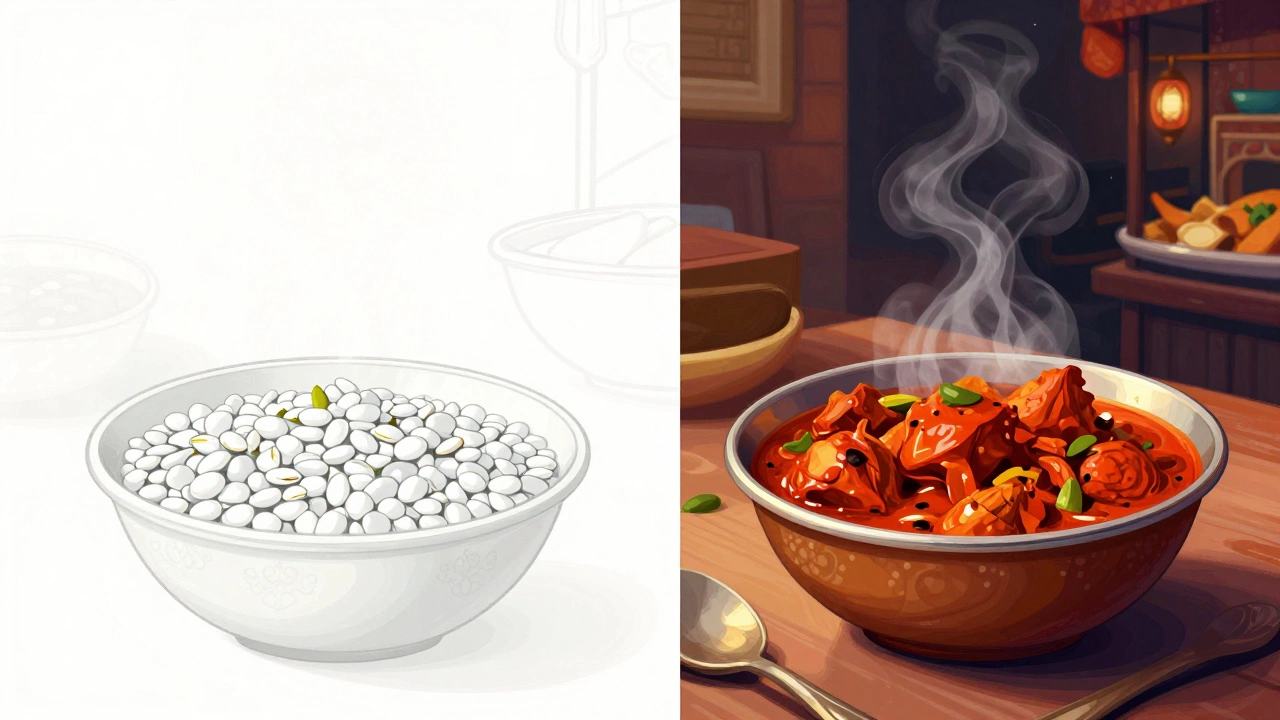
How Chicken is Prepared in Gujarat
When Gujaratis do eat chicken, they don't just follow generic recipes. They apply the same flavor profiles that make their veg food famous: a balance of sweet, spicy, and salty. Gujarati cuisine is known for its use of peanuts, coconut, and a specific blend of garam masala. For example, you might find a chicken curry that uses a touch of jaggery or sugar to balance the heat of the chilies-a hallmark of the region's taste. In the coastal areas, like Kutch or Jamnagar, the preparation leans more toward seafood and spicy chicken, reflecting the influence of the Arabian Sea. The use of Mustard seeds and curry leaves in the tempering (tadka) is also common, mirroring the way they prepare their dal and vegetables.Navigating Social Etiquette and Food
If you're an outsider visiting Gujarat, the Gujarati diet can be a bit of a puzzle. The most important thing is to be mindful of where you are eating. In many cities, restaurants are explicitly labeled as "Veg" or "Non-Veg." Entering a purely vegetarian restaurant with non-veg food is a major social faux pas and can even lead to confrontations in more conservative areas. If you're invited to a home, don't assume. Even if the person says they "eat everything," they might still have a rule against cooking meat in the main kitchen. If you're bringing a gift, avoid anything containing gelatin or meat extracts unless you're 100% sure of the household's habits. Most of the time, a box of high-quality sweets (Mithai) is the safest and most appreciated bet.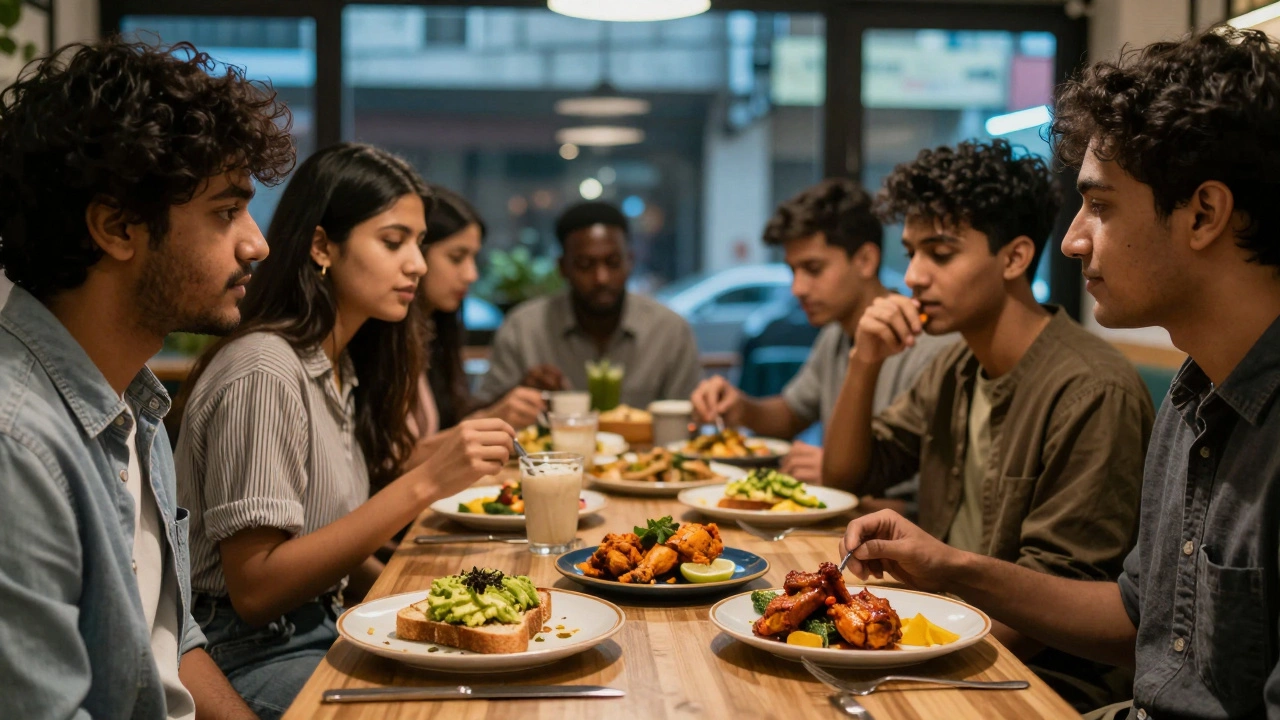
The Role of Protein in a Veg-Dominant Culture
For those who don't eat chicken, the Gujarati diet is incredibly clever about protein. They don't just rely on one thing. They use a massive variety of legumes and pulses. From Chana dal (split chickpeas) to Moong dal, the rotation is constant. They also lean heavily on dairy. Paneer, buttermilk (chaas), and thick curd are staples. This diversity is why many Gujaratis remain healthy and energetic without ever touching meat. The high fiber content from their heavy use of vegetables and grains-like bajra (pearl millet) and jowar (sorghum)-complements the protein from lentils, creating a balanced nutritional profile that rivals any meat-based diet.Is it offensive to ask a Gujarati if they eat chicken?
Not necessarily, but it's better to be subtle. In a professional or formal setting, it's more polite to ask "Do you have any dietary preferences?" rather than specifically asking about meat. In casual settings, it's usually fine, but be prepared for a firm 'no' in traditional families.
Are there non-veg restaurants in Gujarat?
Yes, absolutely. Every major city like Ahmedabad, Surat, and Vadodara has plenty of non-veg restaurants. However, they are often clustered in specific areas or clearly marked so that vegetarians can avoid them.
Do Jains eat chicken?
No. Jains follow a very strict form of vegetarianism. Not only do they avoid all meat, fish, and eggs, but many also avoid root vegetables like potatoes, onions, and garlic because harvesting them kills the entire plant.
What is the most popular non-veg dish in Gujarat?
While it varies, spicy chicken curries and various forms of Tandoori chicken are very popular. Parsi communities are especially known for their unique meat dishes, like Sali Boti (meat with potato straws).
Do all Gujaratis avoid meat?
No. While the state has a very high percentage of vegetarians, there are millions of Gujaratis across different religions and castes who eat chicken, mutton, and fish.