Tamil Religious Identity Explorer
Explore how Tamil spiritual identity evolved over three millennia. Select an era below to see the dominant beliefs and practices.
Ancient Roots
300 BCE — Pre-Classical
Rise of Buddhism
3rd C. BCE — 8th C. CE
Bhakti Movement
6th C. CE — 9th C. CE
Modern Era
14th C. CE — Present
Select an Era
Dominant Beliefs:
...
Key Characteristics:
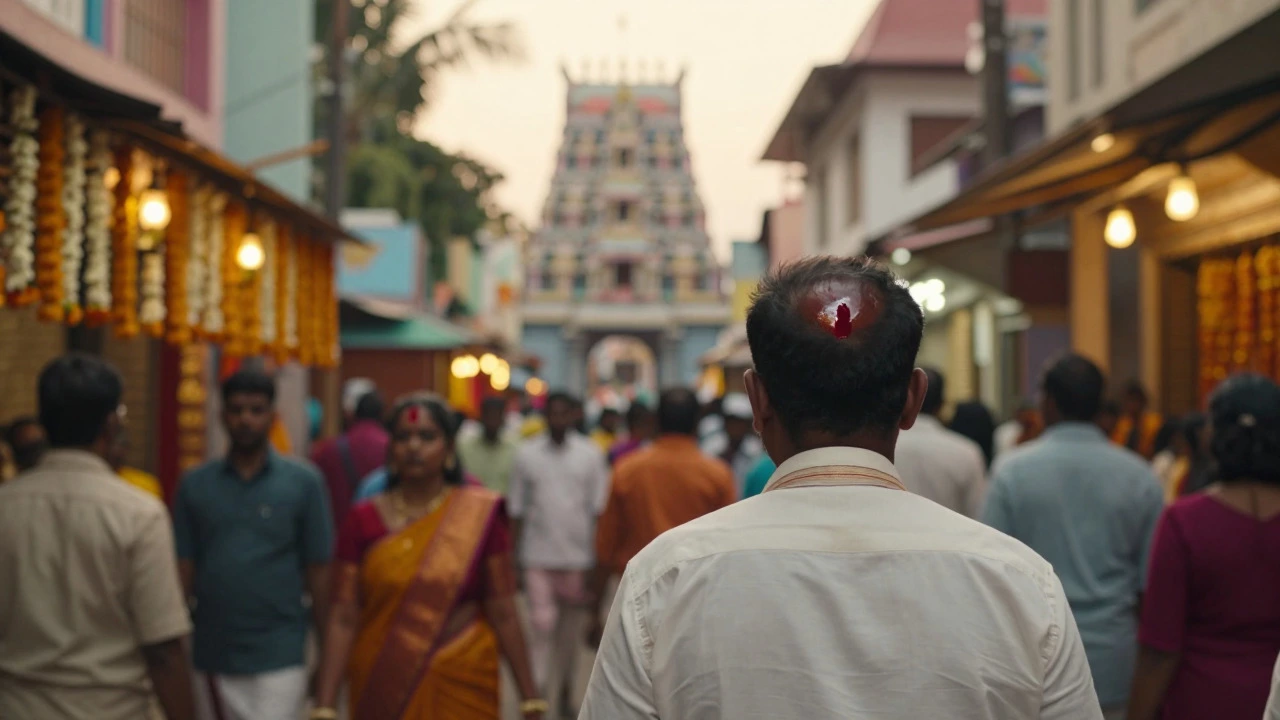
Walk through the streets of Chennai today, and you will see a sea of red tilak marks on foreheads. Visit a temple in Madurai, and the air is thick with the scent of jasmine and camphor. It is easy to look at modern Tamil society and assume that being Tamil is synonymous with being Hindu. But if you travel back in time, or look closely at the layers of history beneath the surface, the picture becomes much more complex. The question "Are Tamils Hindu or Buddhist?" isn't just about checking a box on a census form. It is about understanding a civilization that has absorbed, adapted, and evolved over three millennia.
The short answer is that most Tamils today are Hindu, specifically following traditions like Saivism (worship of Shiva) and Vaishnavism (worship of Vishnu). However, saying Tamils are only Hindu ignores a massive chapter of their past. For centuries, Buddhism was not just present in Tamil land; it was dominant. To understand who Tamils are spiritually, you have to look at how these two major religions intertwined, clashed, and eventually merged into the unique cultural fabric we see today.
The Ancient Roots: A Land Before Labels
Before we talk about gods and scriptures, we need to talk about the land itself. The region known as Tamilakam covered much of modern-day Tamil Nadu, Kerala, and parts of Sri Lanka. In its earliest recorded history, around 300 BCE, the people here didn't identify strictly as "Hindu" or "Buddhist" in the way we do today. They followed local animistic practices, worshipping village deities, spirits of nature, and ancestors.
This early spiritual landscape was fluid. There were no rigid caste structures enforced by religious texts yet. People prayed for rain, for good harvests, and for protection from demons. This openness created a vacuum that allowed outside ideas to enter easily. When traders and monks arrived from North India and beyond, they found a culture ready to listen. This period set the stage for the great religious shifts that would define Tamil identity.
The Rise of Buddhism in Tamil Nadu
If you think Buddhism belongs only to Tibet, Japan, or Thailand, you are missing a huge part of Indian history. Between the 3rd century BCE and the 8th century CE, Buddhism was arguably the most influential religion in the Tamil regions. It wasn't a fringe belief; it was the state religion for powerful empires.
The Chola dynasty, one of the longest-ruling imperial dynasties in Indian history, had strong Buddhist connections early on. King Karikala Chola, a legendary figure in Tamil literature, is often associated with patronizing Buddhist scholars. More importantly, the port cities of Tamil Nadu were hubs of international trade. Merchants from Southeast Asia, China, and the Middle East brought Buddhist monks and ideas. Places like Kanchipuram and Mahabalipuram were not just Hindu centers but vibrant Buddhist learning hubs.
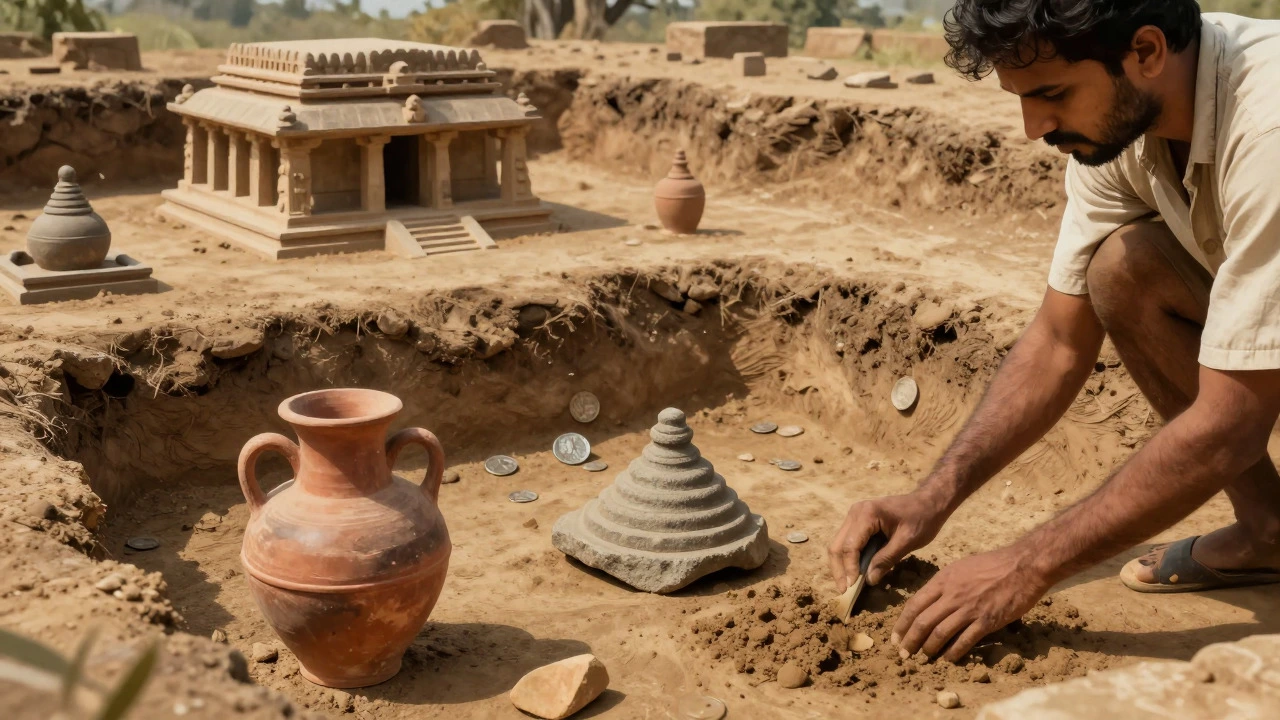
Archaeological evidence supports this. You can still find ruins of Buddhist stupas (dome-shaped monuments containing relics) and viharas (monasteries) across Tamil Nadu. The site of Keezhadi, excavated recently, has revealed artifacts suggesting close ties with Roman trade networks, where Buddhist influences likely traveled alongside goods. During this time, many Tamils converted to Buddhism because it offered a path to enlightenment that bypassed the strict caste hierarchy of Vedic rituals. It was accessible, logical, and deeply philosophical.
The Bhakti Movement: The Great Synthesis
So, if Buddhism was so popular, why did it fade? The answer lies in the Bhakti movement, a devotional revolution that swept through South India between the 6th and 9th centuries CE. This wasn't a war fought with swords, but with poetry and emotion.
Two groups of poet-saints emerged: the Nayanars, devotees of Shiva, and the Alvars, devotees of Vishnu. These saints spoke Tamil, the language of the common people, rather than Sanskrit, which was reserved for the elite. They sang about love, longing, and surrender to God. Their songs were catchy, emotional, and deeply personal.
Here is the crucial part: the Bhakti saints didn't just reject Buddhism; they absorbed its ideas. Concepts like compassion (karuna), non-violence (ahimsa), and the idea that anyone could reach the divine regardless of birth were central to Buddhism. The Alvars and Nayanars wove these concepts into Hindu worship. They made Hinduism more inclusive and emotionally resonant. Over time, the distinct line between a Buddhist monk and a Hindu saint blurred. Many former Buddhist monasteries were converted into Hindu temples. The practice of meditation, once a Buddhist stronghold, became a key part of Hindu yoga and temple rituals.
Why Buddhism Faded in Tamil Nadu
Buddhism didn't disappear overnight. It declined gradually due to several factors. First, the loss of royal patronage. As later Chola and Pandya kings embraced Shaivism and Vaishnavism to legitimize their rule, funding for Buddhist institutions dried up. Without money, monasteries fell into disrepair.
Second, the integration mentioned earlier worked too well. By adopting Buddhist ethics and practices, Hinduism became more attractive to the masses. Why be Buddhist when your new Hindu god offers the same compassion but also fits into your family's ancestral traditions? Third, the arrival of Islam in the medieval period shifted the religious dynamic again, further pushing Buddhism to the margins. By the 14th century, organized Buddhism had largely vanished from mainland Tamil Nadu, surviving mainly in neighboring Sri Lanka and among certain tribal communities.
Modern Tamil Identity: Mostly Hindu, But Not Exclusively
Today, if you ask a Tamil person about their religion, the vast majority will say Hindu. According to recent census data, Hindus make up nearly 87% of Tamil Nadu's population. Muslims constitute about 5%, Christians about 5%, and Buddhists less than 1%. So, statistically, the label "Hindu" fits most Tamils.
But this doesn't mean the Buddhist heritage is dead. It lives on in subtle ways. The emphasis on vegetarianism in many Tamil households, while rooted in Jain and Buddhist ideals, is now a standard Hindu practice. The architecture of many temples shows influences from Buddhist stupa designs. Even the famous Tamil epic, the Silappathikaram, written in the Sangam period, reflects a society where Hindu, Buddhist, and Jaina beliefs coexisted peacefully.
Moreover, there is a small but growing revival of interest in Buddhism among educated Tamils today. Some view it as a return to their ancient roots, free from what they see as the superstitions of modern caste-based Hinduism. Organizations promote "Tamil Buddhism," linking the Dravidian identity with the rationalist aspects of Buddha's teachings.
Comparing Influences: A Quick Look
| Aspect | Hindu Influence | Buddhist Influence |
|---|---|---|
| Primary Deities | Shiva, Vishnu, Devi | Gautama Buddha, Bodhisattvas |
| Key Texts | Vedas, Puranas, Tirukkural | Pali Canon, Jataka Tales |
| Social Structure | Traditionally caste-based | Egalitarian, no caste |
| Practice Focus | Rituals, Puja, Temple worship | Meditation, Ethics, Mindfulness |
| Current Status | Dominant mainstream religion | Historical legacy, niche revival |
Conclusion: Beyond Binary Labels
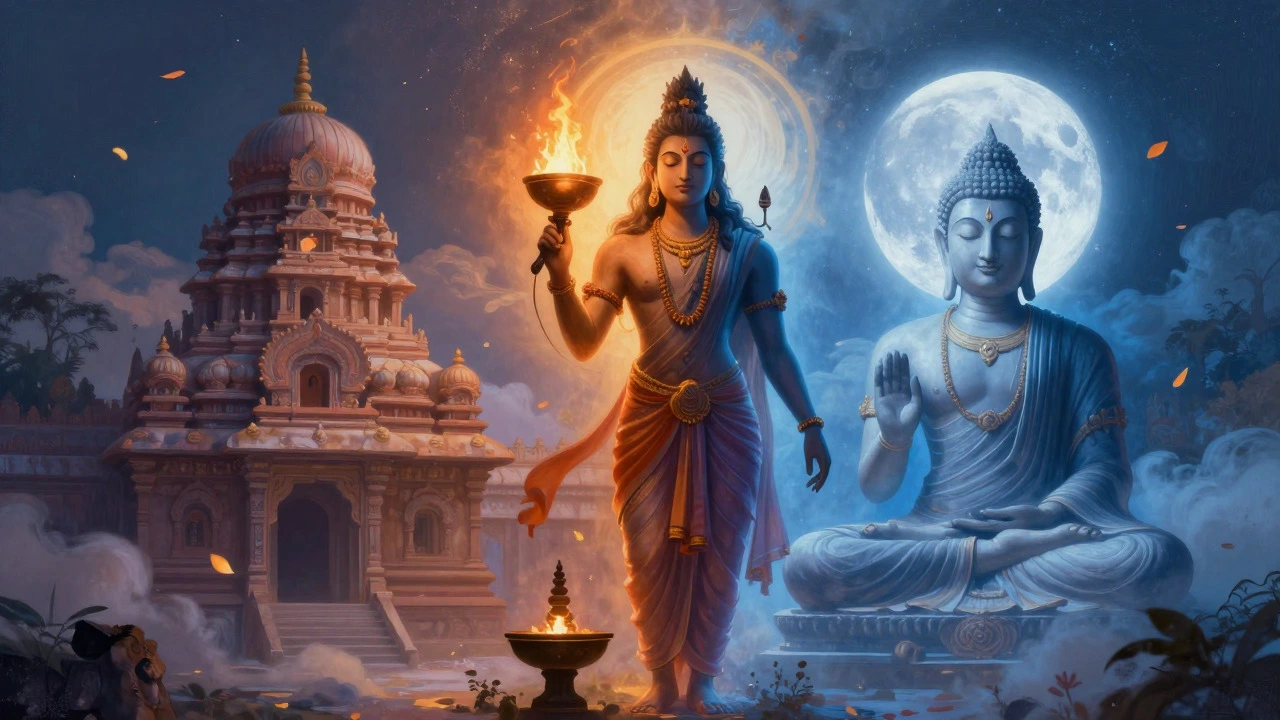
Labeling Tamils as simply "Hindu" or "Buddhist" is like calling a rainbow just "red." Yes, red is the most visible color, but the beauty comes from the mix. Tamils are primarily Hindu today, shaped by centuries of devotion to Shiva and Vishnu. But that Hinduism is uniquely Tamil because it carries the DNA of Buddhism. It includes the compassion, the logic, and the egalitarian spirit that Buddha taught.
When you visit a temple in Thanjavur, you are standing on ground that once held a Buddhist monastery. When you read the poetry of Kambar, you are reading verses influenced by both Hindu epics and Buddhist morals. The identity is layered. Understanding this helps us appreciate not just who Tamils are now, but how they got here. It reminds us that cultures are not static blocks of stone, but flowing rivers, constantly picking up sediment from the lands they pass through.
Are all Tamils Hindu?
No. While the majority of Tamils are Hindu, there are significant populations of Muslims, Christians, and a small number of Buddhists. Religion and ethnicity are not the same thing. Being Tamil is a linguistic and cultural identity, not a religious one.
Did Buddhism completely disappear from Tamil Nadu?
Organized Buddhism as a major social force disappeared, but its influence remains. Many Hindu practices in Tamil Nadu, such as meditation and vegetarianism, have Buddhist origins. Additionally, archaeological sites and historical texts continue to preserve the memory of Buddhist presence.
What is the relationship between Tamil and Buddhist languages?
Early Buddhist texts in the region were often written in Pali or Sanskrit. However, as Buddhism localized, some teachings were translated into Tamil. The interaction between Tamil literature and Buddhist philosophy enriched both traditions, leading to works that blend ethical teachings from both sources.
Why do some Tamils convert to Buddhism today?
Some modern Tamils convert to Buddhism as a political or social statement against the caste system, which they associate with traditional Hinduism. Others are drawn to Buddhism's rational approach and mindfulness practices, seeing it as a return to their ancient heritage.
How does Sri Lankan Tamil religion differ?
Sri Lankan Tamils are predominantly Hindu, similar to those in India. However, living in a country where Sinhalese Buddhists are the majority, there is greater daily interaction and mutual respect between Tamil Hindus and Sinhalese Buddhists. This has led to some cultural syncretism in festivals and community events.