Yoga & Religion Explorer
Select a tradition to see how it frames yoga's purpose, practice, and view of the self. Each path shares common tools but pursues different ultimate goals.
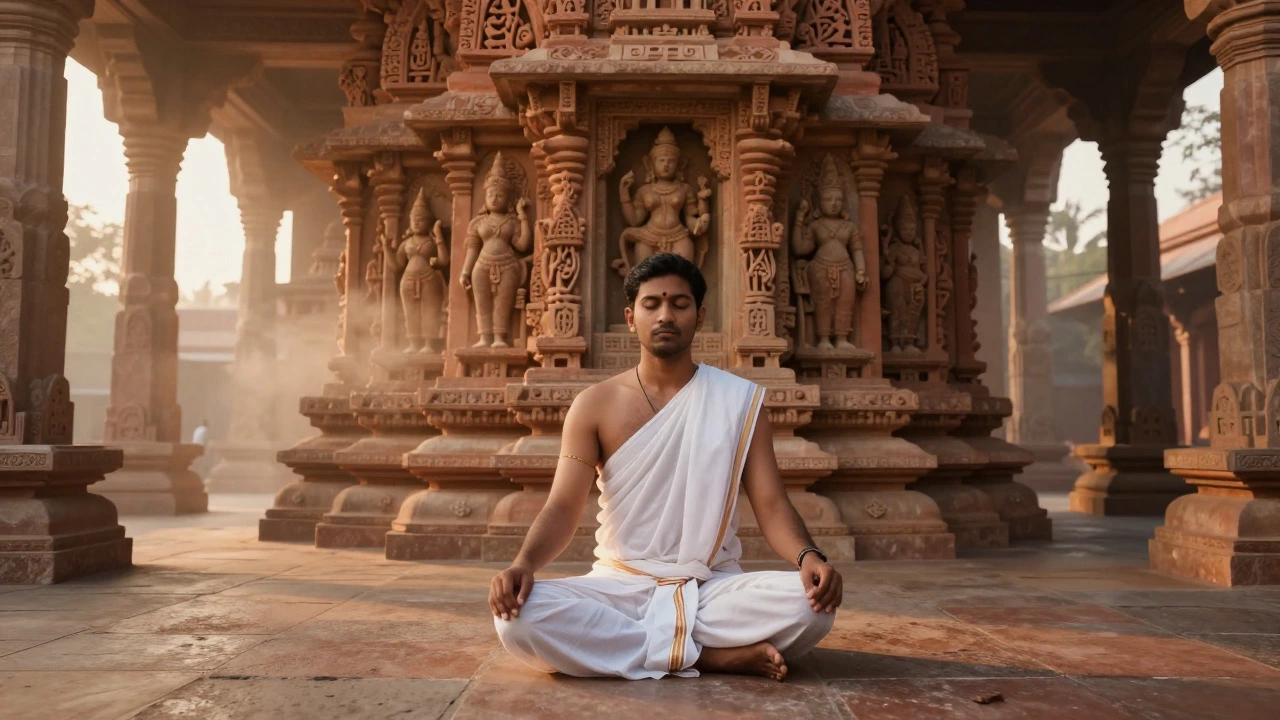
Primary Home
View on Self: Atman is identical to Brahman
Key Practices: Asanas, Pranayama, Bhakti (devotion)
Rooted in the Yoga Sutras of Patanjali. Yoga is a soteriological method to detach from material desires and realize pure consciousness (Purusha), distinct from matter (Prakriti).
Shared Toolkit
View on Self: Anatta (No permanent self)
Key Practices: Dhyana (Meditation), Mindfulness
Adopted yogic practices to support the Eightfold Path. Unlike Hinduism's cosmic soul merger, the goal is ending suffering through deep meditative states like those practiced by Siddhartha Gautama.
Ascetic Connection
View on Self: Jiva (Soul) bound by Karma
Key Practices: Austerities, Fasting, Meditation
Emphasizes non-violence and extreme self-discipline. Yoga here is less about flexible postures and more about intense austerities (Tapa) to shed karmic matter and purify the soul.
Global Adaptation
View on Self: Psychological/Physiological balance
Key Practices: Fitness, Flexibility, Breathwork
Largely stripped of theological baggage since Hatha Yoga democratized the practice. Focused on physical benefits, mental health, and stress relief while retaining structural integrity.
Key Distinction
While the tools (breath awareness, body scanning, mental discipline) are strikingly similar across traditions, the ultimate goals differ significantly. Understanding these roots adds layers of meaning to why certain poses have specific names and why instructors say "namaste."
Test Your Knowledge
Answer 5 questions to check your understanding of yoga's spiritual roots.
Walk into any modern gym in Brisbane or New York, and you’ll likely see people stretching on mats, listening to lo-fi beats, and focusing on their core. It looks like fitness. But ask a historian or a practitioner of the traditional path, and they’ll tell you something different: yoga is an ancient discipline originating from the Indian subcontinent that integrates physical postures, breath control, and meditation to achieve spiritual union. So, what religion is it actually tied to? The short answer is complex, but the long answer reveals why yoga has become a global phenomenon.
The Roots in Vedic Tradition
To understand the religious association, we have to go back about 5,000 years to the Indus Valley civilization and the subsequent Vedic period. While early Vedic texts focused heavily on fire rituals and hymns, the seeds of yoga were planted in the Upanishads. These philosophical texts shifted focus from external ritual to internal experience. They introduced concepts like Brahman (the ultimate reality) and Atman (the individual self), suggesting that realizing their unity was the highest goal. This isn't just philosophy; it’s the theological backbone of what we now call classical yoga.
Hinduism: The Primary Home
If you had to pick one label, most scholars would point to Hinduism as the dominant religious tradition where yoga developed into a systematic practice. Why? Because the foundational text, the Yoga Sutras of Patanjali, written around the 2nd century CE, explicitly frames yoga within a Hindu cosmological context. Patanjali defines yoga as "chitta vritti nirodha"-the stilling of the fluctuations of the mind. For him, this wasn't just for relaxation; it was a tool to detach from material desires and realize the Purusha (pure consciousness), which is distinct from Prakriti (matter). In this view, yoga is a soteriological method-a way to save the soul from the cycle of rebirth (Samsara). Many Hindu traditions, including Vaishnavism and Shaivism, adopted these techniques to deepen devotion to deities like Vishnu or Shiva, making yoga a central pillar of daily worship and personal growth.
Buddhism and the Shared Toolkit
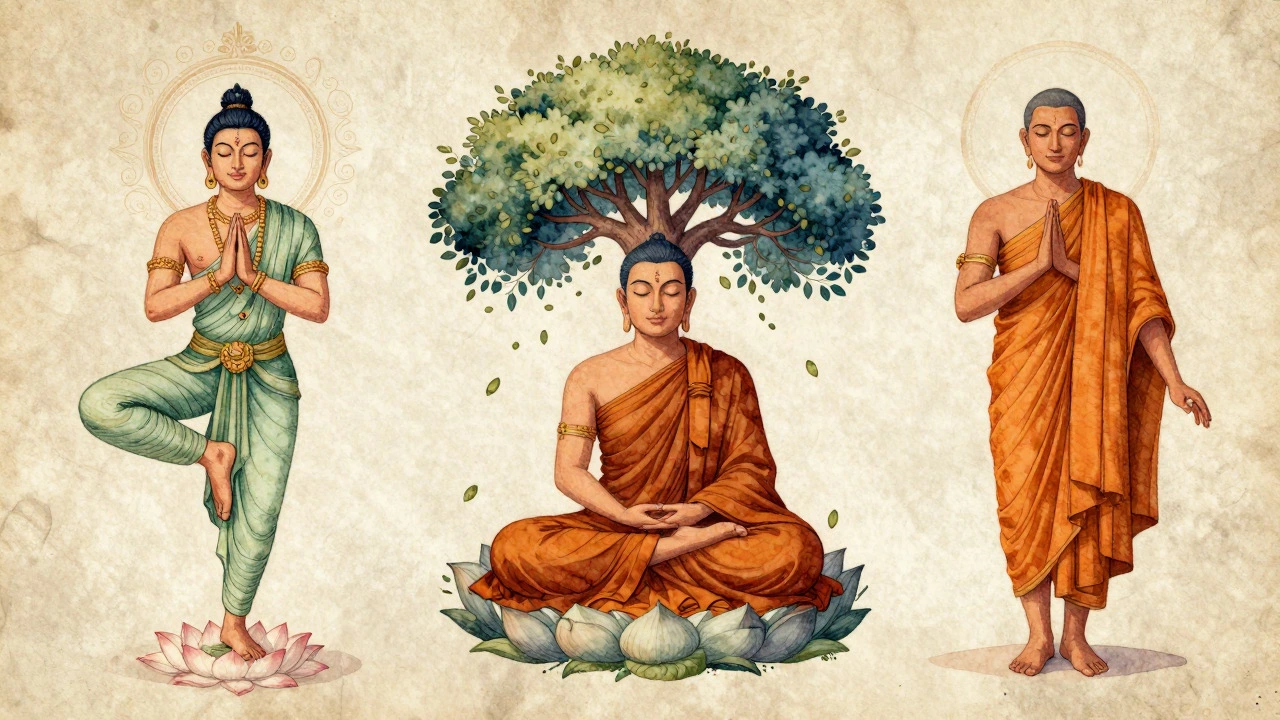
However, saying yoga belongs *only* to Hinduism ignores its massive influence on Buddhism, which adopted yogic practices to support the Eightfold Path and achieve enlightenment. When Siddhartha Gautama sat under the Bodhi tree, he wasn't doing what we recognize as Hatha Yoga today, but he was practicing deep meditative states known as Dhyana. Early Buddhist texts frequently use the term "yogi" to describe practitioners who master concentration and mindfulness. Unlike the Hindu goal of merging with a cosmic soul, the Buddhist goal is Nirvana-the cessation of suffering. Yet, the tools are strikingly similar: breath awareness, body scanning, and mental discipline. Today, many Westerners practice "Buddhist Yoga," blending Vipassana meditation with gentle movement, proving that the boundary between the two traditions is porous.
Jainism and the Ascetic Connection
We can’t talk about the religious landscape without mentioning Jainism, an ancient Indian religion that emphasizes non-violence and asceticism, incorporating yoga as a means to purify the soul. Jains believe that every living being possesses a soul (Jiva) trapped by karma. To shed this karmic matter, they practice extreme self-discipline. Their form of yoga is less about flexible postures and more about intense austerities, fasting, and meditation. The Jain concept of Tapa (asceticism) shares DNA with the later development of Hatha Yoga, where physical endurance is seen as a way to burn off impurities. If you’ve ever seen images of Jain monks standing on one leg for hours, that’s a form of yogic practice rooted in their specific religious framework.
Hatha Yoga: The Bridge to Modernity
So how did we get from meditating monks to the heated studios we know today? The key is Hatha Yoga, a branch that focuses on physical postures (asanas) and breath control (pranayama) to prepare the body for higher meditation. Emerging around the 15th century, Hatha Yoga made the subtle energies of the body tangible. Texts like the Hatha Yoga Pradipika detailed hundreds of poses, claiming they aligned the chakras (energy centers) and balanced the Id and Pingala nadis (energy channels). This shift was crucial because it democratized yoga. You didn’t need to be a scholar of Sanskrit or a devout temple priest to benefit. You just needed a body. This practical, physical approach is what traveled westward in the early 20th century, stripped of much of its theological baggage but retaining its structural integrity.
Secularization and Global Adaptation
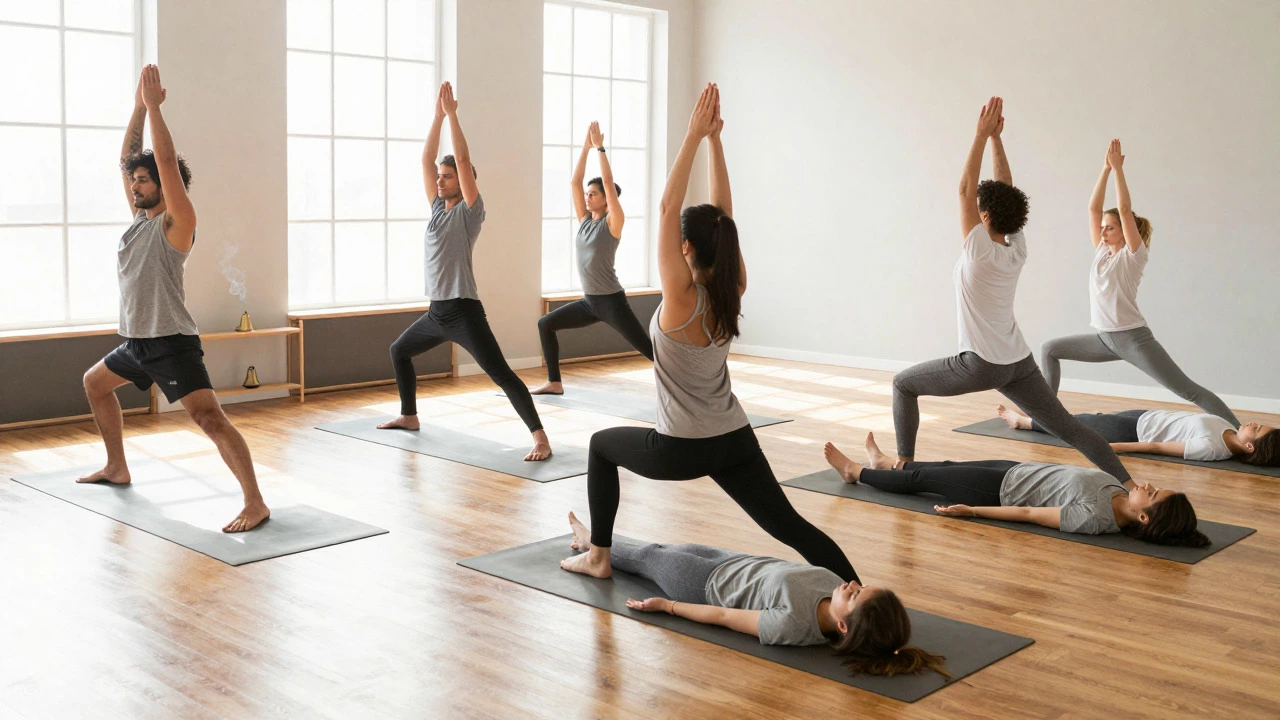
Today, the question "what religion is yoga?" often gets a shrug. In the West, yoga has largely been secularized. It’s marketed as stress relief, flexibility training, or mental health support. Companies sell yoga apps, and corporations offer wellness programs. Does this mean it lost its religious identity? Not necessarily. Think of it like coffee. Coffee originated in Sufi monasteries in Yemen, used to stay awake during prayer. Now, it’s in your morning cup at Starbucks. Is it no longer connected to its roots? No. It’s just evolved. Similarly, while many practitioners don’t chant mantras or visualize deities, the underlying principle remains: using the body and mind to access a state of calm and clarity. Whether you call that divine connection or neurological reset, the mechanism is the same.
| Tradition | Primary Goal | Key Practice Focus | View on the Self |
|---|---|---|---|
| Hinduism | Moksha (Liberation) | Asanas, Pranayama, Bhakti | Atman is identical to Brahman |
| Buddhism | Nirvana (Cessation of Suffering) | Dhyana (Meditation), Mindfulness | Anatta (No permanent self) |
| Jainism | Kaivalya (Isolation of Soul) | Austerities, Fasting, Meditation | Jiva (Soul) bound by Karma |
| Modern Secular | Wellness, Stress Reduction | Fitness, Flexibility, Breathwork | Psychological/Physiological balance |
Why the Distinction Matters
Understanding these roots helps us appreciate the depth of the practice. If you’re only interested in the physical benefits, great-Hatha Yoga delivers results. But if you want to explore the full spectrum, knowing the religious context adds layers of meaning. It explains why certain poses have names like "Child’s Pose" or "Warrior I." It explains why teachers might say "namaste" at the end of class-it’s not just a greeting; it’s a recognition of the divine spark in another person. Even if you aren’t religious, respecting the origin shows cultural humility. It acknowledges that yoga is a gift from a specific cultural and spiritual lineage, not a generic invention.
Frequently Asked Questions
Is yoga strictly a Hindu practice?
While yoga originated in the Indian subcontinent and is deeply integrated into Hindu theology, it is not exclusive to Hindus. Buddhists, Jains, and Sikhs all have yogic traditions. Today, it is practiced globally across all faiths and by non-religious individuals alike.
Can Christians or Muslims practice yoga?
Yes. Most Abrahamic religions do not forbid yoga. However, some conservative groups may view certain elements (like chanting Sanskrit mantras or visualizing deities) as conflicting with monotheistic beliefs. Many practitioners adapt these aspects to fit their own spiritual framework, focusing on the universal benefits of breath and movement.
What is the difference between yoga and meditation?
Meditation is a component of yoga, specifically the stage of Dhyana (concentration). Yoga is the broader system that includes ethical disciplines, physical postures, breath control, and meditation. You can meditate without doing yoga, but traditional yoga always includes meditation as its final step.
Does yoga require belief in God?
No. Classical Patanjali Yoga is theistic but doesn't specify a particular deity. Modern secular yoga is entirely non-theistic. You can practice yoga as a purely physical exercise or as a spiritual journey without believing in a personal God.
Why do yoga instructors say Namaste?
Namaste is a Sanskrit word meaning "I bow to you." Literally, it translates to "The light in me salutes the light in you." It serves as a reminder of mutual respect and the shared humanity (or divinity) between teacher and student, regardless of religious background.