Dance Legacy Calculator
What Defines Your Greatest Dancer?
Select the characteristic that matters most to your definition of 'greatest' in dance
Your Dance Legacy Match
Style:
Select a characteristic to see which dancer best matches your definition
When someone asks who the greatest dancer of all time is, they’re not really asking for a name. They’re asking which person best captured the soul of a culture through movement. There’s no single answer because dance isn’t a sport with rankings-it’s a language spoken in rhythm, emotion, and tradition. From the temple floors of Tamil Nadu to the streets of Seville, dancers have carried history in their steps. The greatest dancer isn’t the one with the most awards or viral videos. It’s the one whose movement made people feel something deeper than entertainment.
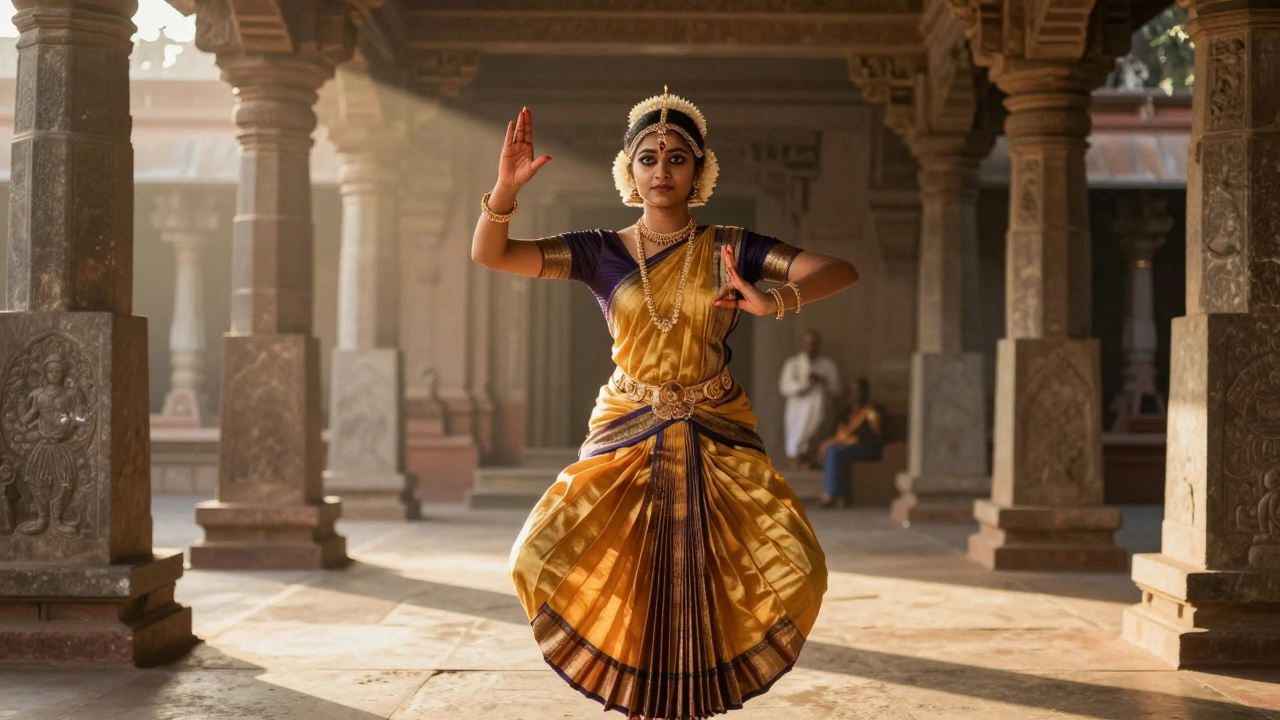
The Weight of Tradition: Bharatanatyam and Rukmini Devi
In southern India, Bharatanatyam wasn’t just dance-it was devotion. For centuries, it was performed by Devadasis in temples, a sacred ritual tied to gods and stories. Then, in the early 1900s, social change threatened to erase it. That’s when Rukmini Devi Arundale stepped in. She didn’t just revive Bharatanatyam; she reshaped it for a modern world without losing its spiritual core. Her precision, grace, and deep understanding of the shastras (ancient texts) turned a fading temple art into a global symbol of Indian classical dance. She trained hundreds of students, many of whom became teachers themselves. Today, every Bharatanatyam dancer, whether in Chennai or Chicago, carries a thread of her legacy. Her movements weren’t flashy. They were exact. Every gesture, every footwork, every gaze had meaning. That’s why, for many, she remains the greatest-not because she was the most famous, but because she saved a tradition.
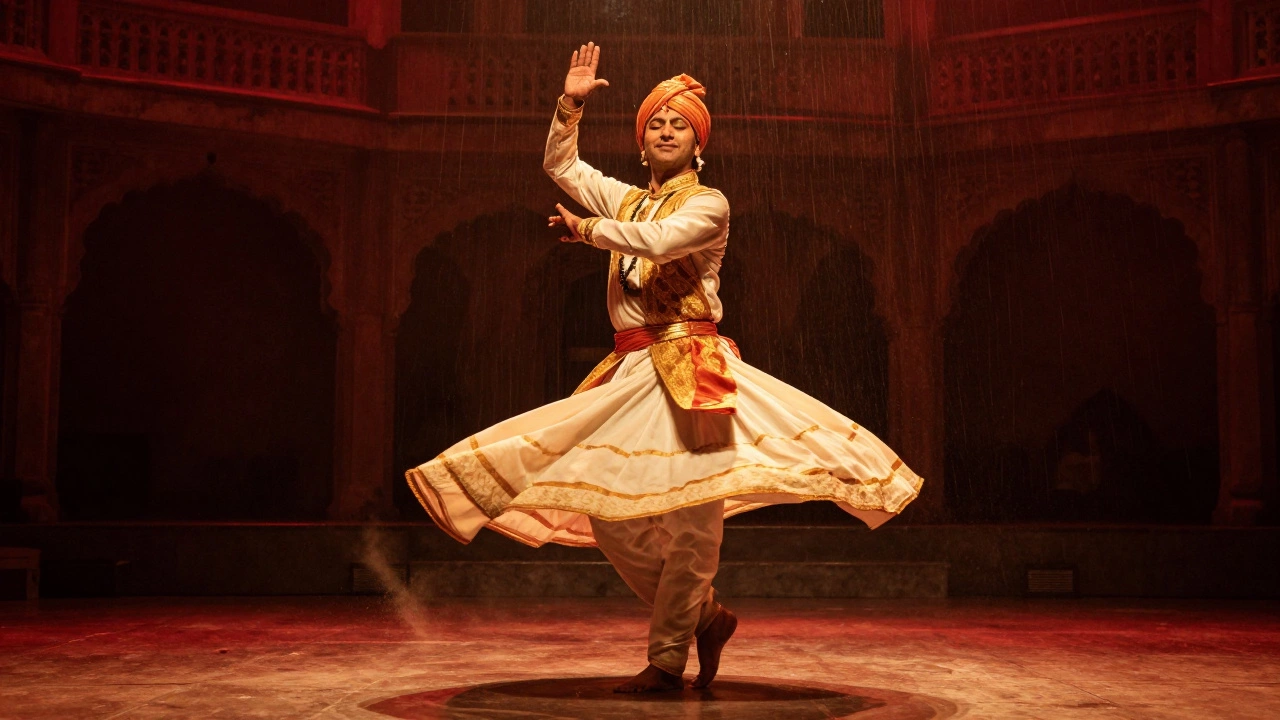
The Storyteller of the North: Birju Maharaj and Kathak
In northern India, Kathak danced through Mughal courts and village fairs. It’s a dance of spins, footwork, and storytelling. No one embodied that more than Birju Maharaj. Born into a family of Kathak masters, he didn’t just perform-he expanded the language of the form. He brought emotional depth to movements that were once focused on technical brilliance. His footwork could mimic the sound of rain, his hand gestures could paint a whole scene of a monsoon. He didn’t just teach dance; he taught how to feel it. He choreographed pieces based on poems by Kabir, stories from the Mahabharata, and even everyday moments like a woman drawing water from a well. His students include dancers from Japan, France, and Brazil. He didn’t chase fame, but the world came to him. When he danced, time stopped. People didn’t watch. They remembered.
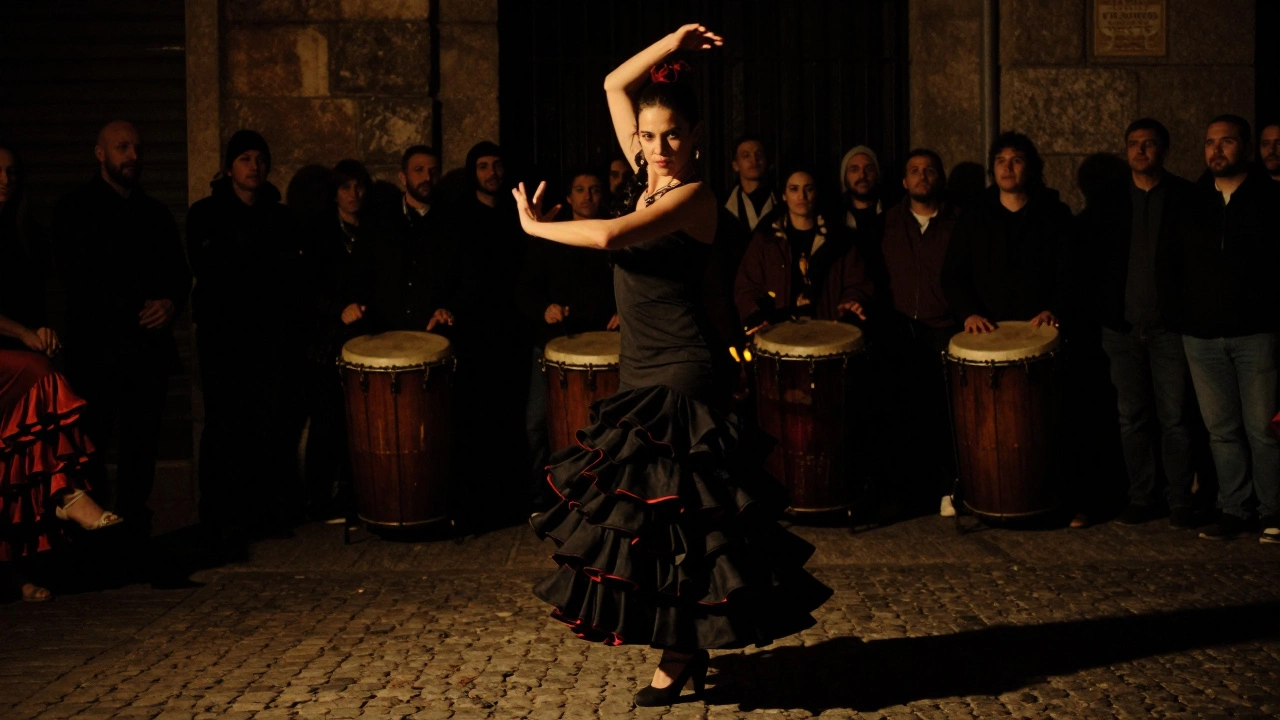
The Fire of Spain: Carmen Amaya and Flamenco
Flamenco isn’t just dance. It’s grief, joy, pride, and resistance all in one rhythm. And no one danced it with more raw power than Carmen Amaya. Born into a Romani family in Barcelona in 1913, she broke every rule. Women at the time danced with grace and subtlety. She came out with fast, pounding footwork, wild spins, and a presence that filled entire rooms. She wore men’s trousers on stage-something unheard of. Her feet weren’t just moving; they were drumming. She toured the world during the 1930s and 40s, performing for kings, presidents, and Hollywood stars. Charlie Chaplin called her "the greatest dancer in the world." She didn’t need a stage. She created one wherever she stood. Her legacy isn’t in recordings-it’s in every female flamenco dancer who dares to stomp hard, speak loud, and own her space.
The Ballet Revolution: Mikhail Baryshnikov
On the other side of the world, ballet was seen as elegant, delicate, almost fragile. Then came Mikhail Baryshnikov. A Soviet defector in 1974, he brought a new kind of energy to Western stages. His jumps defied gravity. His turns were faster than anyone had seen. But what set him apart wasn’t just technique-it was emotion. He didn’t just perform Prince Siegfried in Swan Lake; he made you feel the prince’s loneliness. He danced with Martha Graham in modern pieces and with Balanchine in neoclassical works. He refused to be boxed into one style. He brought ballet to TV, to Broadway, to film. He made it matter to people who never thought they’d care. He didn’t just dance better than others. He made people believe ballet could be alive, urgent, and deeply human.
The Modern Voice: Martha Graham
If you think dance is about pretty poses, you haven’t met Martha Graham. In the 1920s, she rejected ballet’s rules and created a new language of movement based on breath, contraction, and release. Her dances weren’t about love or fairy tales. They were about fear, rage, identity, and the female experience. She choreographed pieces like "Lamentation," where a dancer sat wrapped in fabric, trembling with grief. She worked with artists like Georgia O’Keeffe and Aaron Copland. She trained dancers who became legends themselves-Merce Cunningham, Paul Taylor. Her technique is still taught in every modern dance school. She didn’t just dance. She made dance into a way to speak truths no one else dared say.
Why There’s No Single Answer
There’s no ranking system for greatness in dance. You can’t measure soul with numbers. Rukmini Devi preserved a dying art. Birju Maharaj gave it new emotional depth. Carmen Amaya shattered gender norms. Baryshnikov made ballet feel urgent. Martha Graham turned movement into philosophy. Each of them changed what dance could be. The greatest dancer isn’t the one with the most followers. It’s the one who changed the game so deeply that everyone after them had to move differently.
What Makes a Dancer Truly Great?
Great dancers don’t just perform steps. They carry history, emotion, and culture in their bodies. They don’t follow trends-they set them. Their movements become references for generations. They teach not just technique, but meaning. They make you feel something long after the music ends. Greatness in dance isn’t about perfection. It’s about truth. It’s about saying something with your body that words never could.
Modern Dancers Who Carry the Torch
Today, dancers like Pandit Birju Maharaj’s granddaughter, Akanksha Maharaj, keep Kathak alive with new themes-climate change, urban isolation, gender equality. In Tamil Nadu, young Bharatanatyam artists use digital media to reach global audiences without diluting tradition. In Spain, flamenco schools now teach girls as young as five to stomp with the same fire Carmen once did. In the U.S., contemporary choreographers blend Indian mudras with modern dance to tell stories of diaspora and identity. The greatest dancer of all time may not be one person. Maybe it’s the collective of those who refused to let dance die.
Who is considered the greatest classical dancer in India?
There’s no official title, but Rukmini Devi Arundale is widely regarded as the most influential figure in reviving and modernizing Bharatanatyam. Birju Maharaj is equally revered for transforming Kathak into a deeply expressive art form. Both are foundational, but their greatness lies in different areas-preservation versus emotional innovation.
Can a dancer from another culture be called the greatest of all time?
Yes. Dance is universal, even when rooted in specific cultures. Carmen Amaya, Mikhail Baryshnikov, and Martha Graham each redefined their art forms in ways that influenced dancers worldwide. Their greatness isn’t measured by nationality but by impact. A dancer who changes how an entire culture sees movement can be considered among the greatest, no matter where they’re from.
Is ballet considered a classical dance form?
Yes, ballet is one of the most structured classical dance forms, with origins in 15th-century Italy and codified technique in France and Russia. Unlike Indian classical dance, which is tied to spiritual texts and regional traditions, ballet follows a global syllabus. But both share the same core: discipline, storytelling, and emotional depth passed down through generations.
Why is Flamenco so powerful?
Flamenco carries the history of the Romani people in Spain-centuries of persecution, resilience, and cultural pride. Its raw emotion comes from deep personal expression. The footwork (zapateado), hand claps (palmas), and vocal cries (jaleo) aren’t just performance-they’re ancestral voices. Carmen Amaya made this visible to the world, proving that dance could be both art and protest.
Do you need formal training to be considered a great dancer?
Not always. Many great dancers, like Carmen Amaya, learned through family and community, not schools. But what matters is mastery of the form’s language. Formal training gives structure, but true greatness comes from understanding the soul behind the steps-whether you learned in a studio, a temple, or a village square.