Worship in Tamil Culture: Rituals, Deities, and Daily Practices
At the heart of Tamil life is worship, a daily, living practice that blends devotion, ritual, and community in ways that are deeply personal and culturally specific. Also known as bhakti, this form of worship isn’t confined to temples—it’s in the morning offering of flowers to a small shrine by the doorway, in the chanting of Tamil hymns before breakfast, and in the lighting of oil lamps during Karthigai Deepam. Unlike abstract spirituality, Tamil worship is tactile, sensory, and rooted in place. It’s the smell of incense in a village temple, the sound of bells ringing as the priest swings the lamp, the taste of prasadam shared after prayer.
This kind of worship revolves around a set of core Hindu deities, gods and goddesses who are not distant figures but active, present forces in everyday life. Murugan, Mariamman, and Lakshmi aren’t just names in scriptures—they’re neighbors you visit when you’re sick, when you’re celebrating, or when you need help. Murugan, the warrior god, is worshipped in hilltop temples like Palani, where devotees carry kavadis as acts of penance and gratitude. Mariamman, the goddess of disease and healing, is honored in village shrines with offerings of neem leaves and red rice. These deities aren’t chosen because they’re popular—they’re chosen because they answer. Worship here isn’t about perfection. It’s about consistency. A mother might light a lamp every night even if she doesn’t know the full meaning of the prayer. A farmer might tie a thread around a banyan tree before planting, not because a priest told him to, but because his father did.
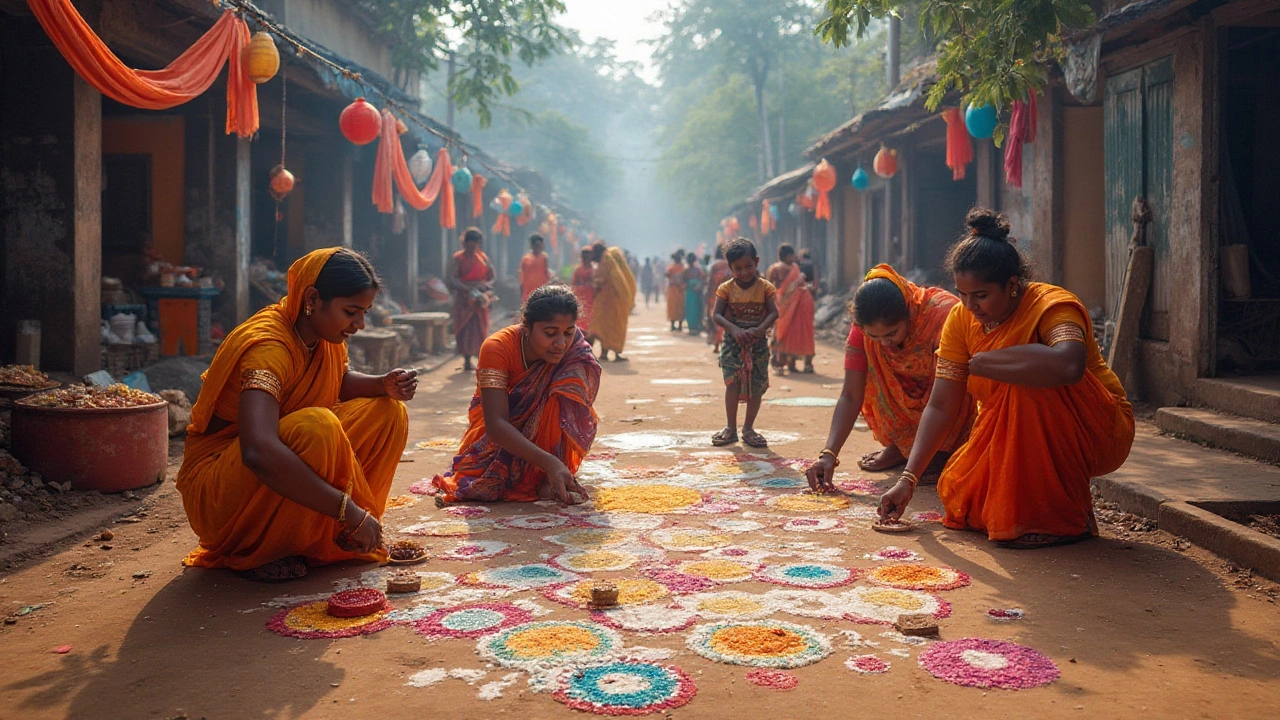
Temple rituals in Tamil Nadu follow ancient rhythms, but they’re not frozen in time. The daily temple rituals, a sequence of offerings, chants, and processions that happen at dawn, noon, and dusk, are performed with the same care today as they were a thousand years ago. But now, some temples stream abhishekam live so people overseas can participate. Others use apps to book darshan slots. The structure stays the same, but the tools adapt. Even the way people offer coconuts or flowers has changed—some now use biodegradable pots instead of plastic. The devotion hasn’t changed. The form just got smarter. And then there’s the quiet worship—the kind that happens in homes, where a grandmother teaches her granddaughter how to draw kolams before sunrise, each pattern a silent prayer for protection and abundance. This isn’t performance. It’s memory passed through hands.
What you’ll find in the articles below isn’t a list of rituals you need to follow. It’s a look at how worship lives—in the blue skin of Krishna, in the nonsense singing of rural festivals, in the way Diwali is celebrated differently in Madurai than in Chennai, and in the surprising overlaps between Tamil practices and global traditions. You’ll see how worship isn’t just about gods. It’s about people. About continuity. About showing up, again and again, even when the world changes around you.