What to Wear to an Indian Wedding: Guide to Traditional and Modern Attire
When you're invited to an Indian wedding, a vibrant, multi-day celebration rooted in regional customs, family rituals, and elaborate dress codes. Also known as Hindu wedding, it's not just a ceremony—it's a cultural experience where clothing speaks louder than words. Getting the outfit right isn't about matching the bride—it's about honoring the occasion without overshadowing it.
There's no single rule for what to wear, because Indian wedding attire, varies wildly across states, religions, and communities. Also known as ethnic wear, it includes everything from the Tamil bride’s silk Kanchipuram saree to the Punjabi groom’s brocade sherwani. In Tamil Nadu, women often wear richly woven silk sarees with gold zari borders, while men might opt for a dhoti paired with a angavastram. In North India, lehengas and kurta-pajamas dominate. Even within the same family, you might see a grandmother in a cotton churidar and a cousin in a sequined gown. The key is to avoid white (associated with mourning), black (seen as inauspicious), and outfits that look too much like the bride’s—especially if she’s wearing red.
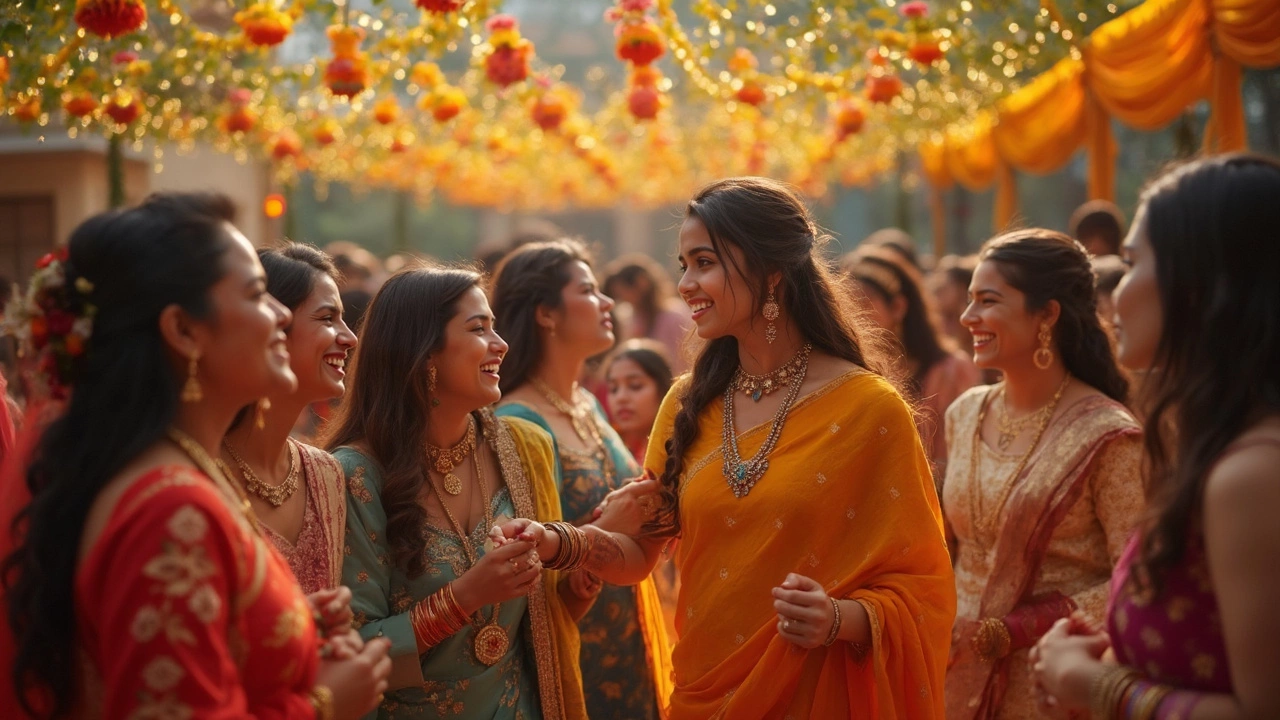
For guests, the safest bet is color. Think deep reds, emerald greens, royal blues, or golden yellows—colors that shimmer under festival lights and match the energy of the event. If you're unsure, a well-tailored salwar kameez or a printed silk saree works everywhere. Men can go for a crisp kurta with churidar or a bandhgala jacket. Avoid jeans, sneakers, or anything too casual—this isn’t a backyard BBQ. And if you’re not sure what’s expected, ask the host. Most families appreciate the effort more than perfection.
What you wear also depends on the event. An Indian wedding isn’t one party—it’s a week of events. The mehndi calls for bright, flowy clothes. The sangeet is all about movement, so choose something you can dance in. The main ceremony is formal, often requiring traditional wear. And the reception? That’s where modern styles sneak in—think fusion lehengas or tailored Indo-Western gowns. The Tamil wedding clothing, especially in rural areas, still leans heavily on handloom silks and temple jewelry. Also known as Kanchipuram silk, it’s not just fabric—it’s heritage. Even if you’re not Tamil, wearing a piece of that tradition shows respect.
You’ll see plenty of posts below that break down what to wear by region, religion, and gender. Some explain why Tamil brides wear gold coins in their hair. Others show how Punjabi grooms pick their turbans based on family lineage. There are guides on where to rent outfits, how to style accessories without going overboard, and even how to navigate dress codes when you’re a foreign guest. You won’t find one-size-fits-all answers here—because there aren’t any. But you will find real, practical advice from people who’ve been there, worn the wrong thing, and learned the hard way.