What to Wear for an Ayurvedic Massage: Abhyanga, Shirodhara, Panchakarma Guide
Worried about what to wear to an Ayurvedic massage? See exactly what to keep on, what to pack, and how draping works for Abhyanga, Shirodhara, and more.
When you get an Ayurvedic massage, a traditional Indian healing practice that uses herbal oils and rhythmic pressure to balance the body’s doshas. It’s not just about the oil or the technique—it’s about creating the right environment for your body to relax and heal. One of the most overlooked parts of this experience? What you wear. Many people assume it’s like a spa session where you’re draped in a towel, but Ayurveda has its own logic—and it’s not about modesty alone.
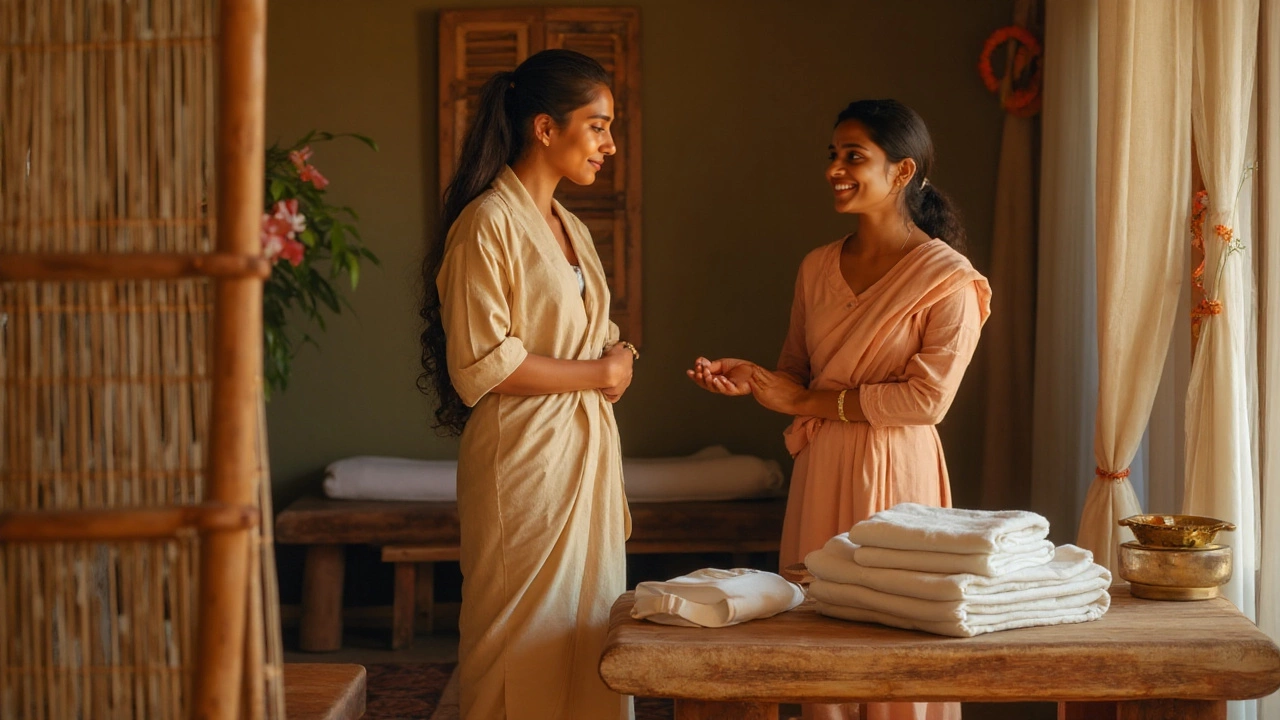
Most Ayurvedic centers recommend wearing loose, natural-fiber clothes like cotton or linen, both before and after the session. Why? Synthetic fabrics trap heat and sweat, which interferes with the body’s ability to release toxins. Cotton lets your skin breathe, helps the oils absorb better, and keeps your body temperature stable. You’ll often be asked to change into clean, simple clothes provided by the center—usually a dhoti for men or a long cotton skirt and top for women. These aren’t just cultural choices; they’re functional. Tight clothes restrict circulation, and anything with zippers or buttons can press into the skin during oil application, disrupting the flow of energy.
It’s also important to avoid wearing jewelry or strong perfumes. Metals like gold or silver can react with herbal oils, and fragrance masks the natural scent of the oils—something Ayurvedic practitioners use to gauge your body’s response. Even your underwear matters. Many practitioners suggest going without underwear during the massage, especially if the treatment targets the lower back, hips, or abdomen. This isn’t about exposure—it’s about letting the oil reach the marma points (vital energy spots) without barriers. If you’re uncomfortable, ask for a cloth wrap. Reputable centers will always respect your boundaries.
What you wear after the massage is just as important. You’ll need to sit quietly for 15–20 minutes while the oil soaks in. Wear something you don’t mind getting oily—no silk or delicate fabrics. A loose cotton robe or old t-shirt and shorts work best. Many people skip showers right after, letting the oil work for hours. If you do wash, use warm water and mild soap. Hot water strips the oils too fast, and harsh soaps can undo the calming effect.
There’s a reason Ayurvedic massage doesn’t look like a typical Swedish massage. It’s rooted in a system that sees the body as a living ecosystem. Your clothing choices aren’t random—they’re part of a ritual designed to support healing. Think of it like this: you wouldn’t put a high-performance engine in a rusted-out chassis. Your body needs the right conditions to respond to the oils, pressure, and herbs. That starts with what’s on your skin.
Some centers in Tamil Nadu or Kerala still use traditional draping methods passed down for generations. Others adapt for modern comfort. Either way, the goal is the same: remove friction, reduce distraction, and let the healing begin. The best advice? Ask ahead. Know what to expect. Bring your own cotton clothes if you’re traveling. And don’t let awkwardness stop you from getting the full benefit. This isn’t about fashion—it’s about function, tradition, and your well-being.
Below, you’ll find real stories and practical guides from people who’ve been through Ayurvedic treatments—from what went wrong when they wore the wrong thing, to how simple clothing choices made all the difference in their recovery.
Worried about what to wear to an Ayurvedic massage? See exactly what to keep on, what to pack, and how draping works for Abhyanga, Shirodhara, and more.