Tamil Instruments: Traditional Music Tools and Their Cultural Roots
When you hear the deep, resonant beat of a mridangam, a double-headed drum central to South Indian classical music, often played in temples and concert halls, you’re hearing centuries of Tamil tradition. This isn’t just percussion—it’s the heartbeat of Carnatic music, a highly structured system of melody and rhythm developed in Tamil Nadu and surrounding regions, distinct from North Indian Hindustani styles. Tamil instruments aren’t just tools; they’re vessels of devotion, storytelling, and community identity, passed down through generations of musicians who learned not from books, but from the rhythm of daily life.
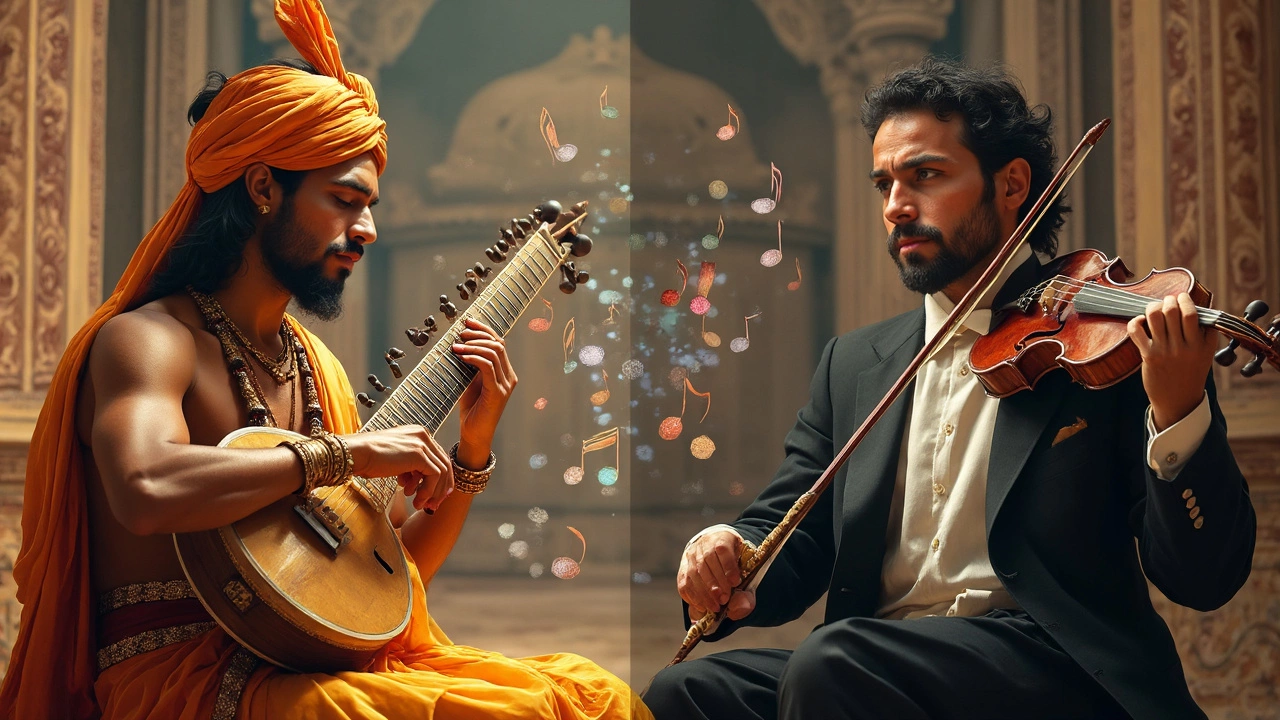
Take the veena, a plucked string instrument with a long neck and resonating gourd, often seen in temple rituals and classical recitals. Its 7 strings and 24 fixed frets produce notes that glide smoothly between pitches, a technique called gamaka that’s impossible to replicate on a piano or guitar. Then there’s the tambura, a drone instrument that holds the tonal foundation for any Carnatic performance, its continuous hum creating a meditative space for the singer or soloist. In folk settings, you’ll hear the thavil, a loud, barrel-shaped drum paired with the nadaswaram, a double-reed wind instrument that can be heard from miles away during temple processions. These aren’t background sounds—they’re the voice of Tamil rituals, from weddings to harvest festivals.
What makes these instruments unique isn’t just their shape or sound, but how deeply they’re woven into Tamil identity. The mridangam isn’t just played—it’s treated with reverence. Musicians clean it with oil, tune it with paste made from rice flour and water, and never place it on the ground. In rural Tamil Nadu, children learn rhythms by mimicking the claps of women grinding rice, turning everyday actions into musical training. Even the kolatam, a stick dance with rhythmic percussion, uses simple wooden sticks to create complex patterns that echo ancient war chants and village celebrations. These instruments don’t exist in isolation—they’re part of a living ecosystem that includes dance, song, and ritual.
If you’ve ever wondered why Tamil music sounds different from Bollywood or Punjabi pop, the answer lies in these instruments. They’re not designed for mass appeal or streaming algorithms. They’re built for precision, for spiritual depth, for the slow unfolding of a raga over 20 minutes. You won’t find a mridangam in a pop band, but you’ll find it in every major temple in Madurai, every classical concert in Chennai, every village festival where elders still teach the young to feel rhythm before they learn its name.
Below, you’ll find articles that dig into these instruments—their history, how they’re made, who plays them, and how they connect to Tamil folklore, religious practice, and everyday life. Whether it’s the haunting sound of the nadaswaram during a funeral procession or the playful clatter of sticks in a folk dance, each piece reveals how sound shapes culture in Tamil Nadu.