Indian Classical Music Differences: Carnatic vs Hindustani Explained
When people talk about Indian classical music, a 2,000-year-old system of melodic and rhythmic structures rooted in ancient texts like the Natya Shastra. It's not one thing—it's two distinct traditions: Carnatic and Hindustani. One comes from the south, the other from the north. They share the same roots, but they grew up in different soil, spoke different dialects, and learned different ways to express emotion through sound.
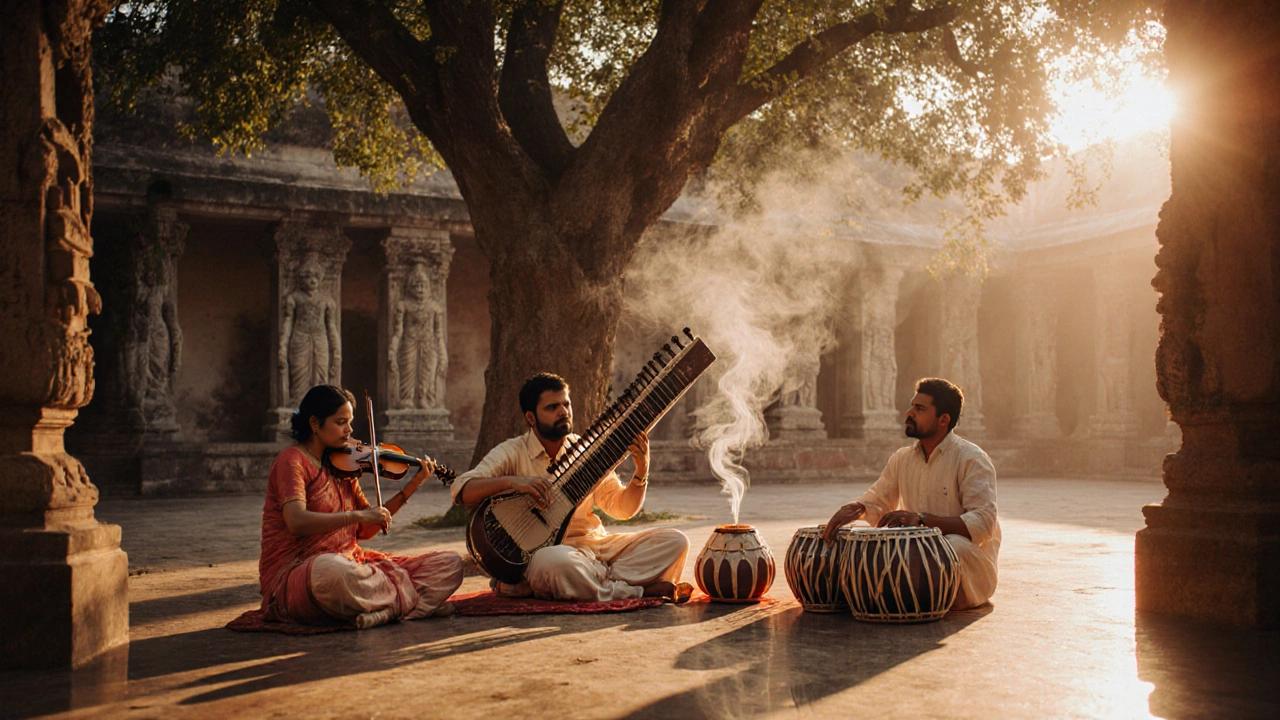
Carnatic music, the classical tradition of Tamil Nadu, Karnataka, Andhra Pradesh, and Kerala, is deeply tied to temple rituals, devotional poetry, and strict adherence to ragas and talas. It’s structured, precise, and often sung in Sanskrit or regional languages like Telugu and Tamil. The violin and mridangam aren’t just instruments—they’re essential voices in the ensemble. Hindustani music, the classical style of North India, Pakistan, and Bangladesh, evolved under Persian and Islamic influence. It’s more improvisational, with space for personal expression. The sitar, tabla, and bansuri take center stage, and performances often begin with a slow alap that builds like a slow-burning fire.
The differences aren’t just about geography—they’re in how time is treated, how notes are ornamented, and even how students learn. Carnatic students memorize hundreds of compositions before they improvise. Hindustani students spend years learning to feel the raga, not just play it. One tradition uses fixed rhythmic cycles with little variation; the other bends time with subtle pauses and syncopations. Carnatic music rarely leaves the stage without lyrics; Hindustani music often lets the melody speak alone.
And yet, both are alive today—not in museums, but in living rooms, concert halls, and YouTube videos watched by millions. You’ll hear Carnatic in Chennai’s rainy evenings, and Hindustani in Delhi’s rooftop gatherings. One isn’t better. One isn’t older. They’re just different paths to the same truth: music as devotion, as discipline, as soul.
Below, you’ll find articles that dig into these differences—what instruments define each, how ragas vary by region, why some songs sound spiritual in one tradition and romantic in another, and how modern artists are blending them. Whether you’re a listener, a learner, or just curious, this collection will help you hear the difference—not just with your ears, but with your understanding.