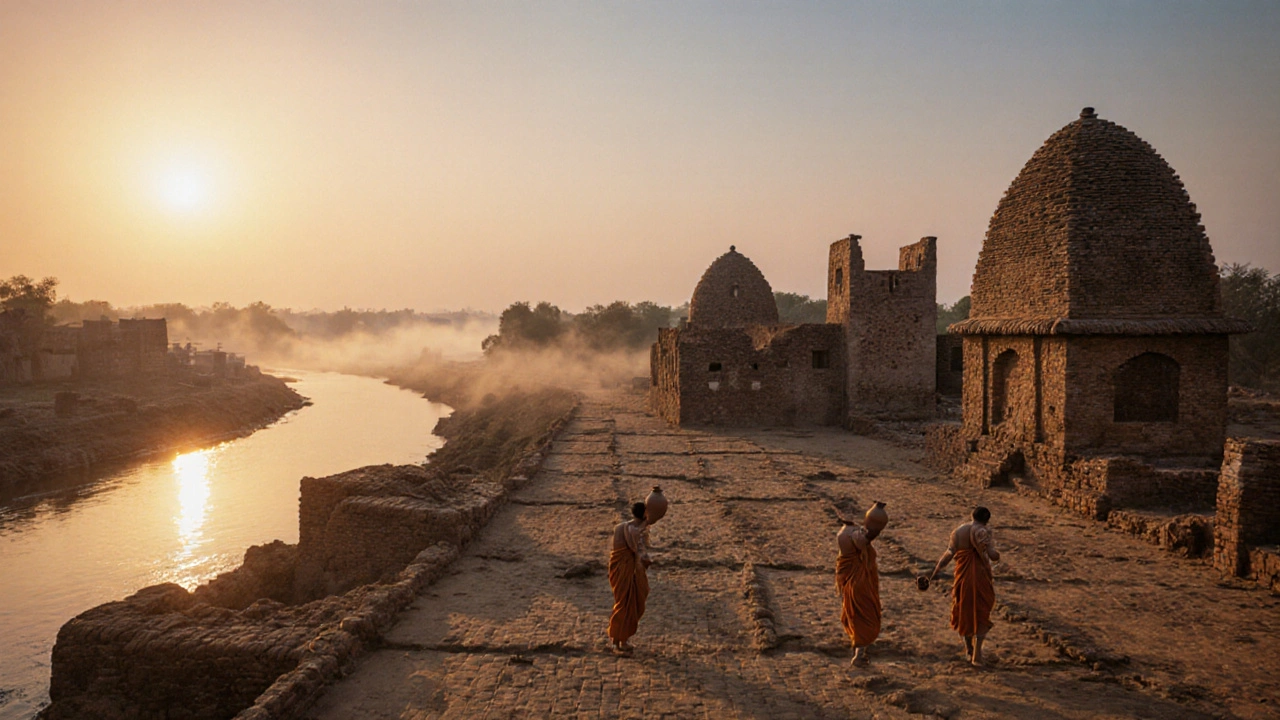
India’s Rich Cultural Heritage Explained
Explore India's rich cultural heritage, from ancient history and diverse religions to festivals, arts, architecture, cuisine, and traditional clothing.
When we talk about Indian art, a vast, living tradition spanning thousands of years that includes visual forms, music, dance, and ritual performance. Also known as South Asian art, it’s not confined to galleries—it’s in temple walls, village festivals, and the rhythm of a folk singer’s voice. This isn’t decorative. It’s devotion. It’s storytelling. It’s identity carved into stone, painted on cloth, or sung in dialects passed down through generations.
Take the blue skin of Hindu deities, a visual symbol tied to infinity, cosmic power, and divine presence in ancient Indian art. It’s not an aesthetic choice. It’s theology made visible. You’ll find this same logic in Carnatic classical music, a devotional system from South India rooted in temple rituals, with complex ragas and percussion that mirror spiritual discipline. Or in Tamil folklore, a world of masked dances like Karakattam and shadow theatre called Theru Koothu, where myths come alive through movement and song. These aren’t separate threads—they’re woven together by the same cultural fabric: art as a bridge between the human and the divine.
Indian art doesn’t wait for museums. It’s in the sweets gifted during Diwali, where color and taste carry meaning. It’s in the nonsense singing of bol banao, where rhythm replaces words to express joy, grief, or prayer. It’s in the way a folk dancer in Tamil Nadu moves like a river, or how a Punjabi bhangra beat pulses with harvest energy. You won’t find this in textbooks alone. You find it in the hands of artisans, the feet of dancers, and the voices of singers who’ve never heard of "fine art" but know exactly what it means to create something true.
What you’ll find in the posts below isn’t a list of paintings or artists. It’s a map of how Indian art lives—through belief, through ritual, through everyday acts of creation. Whether it’s why gods are painted blue, how music splits between north and south, or why folk songs use no words at all—you’ll see how deeply art is tied to who people are, not just what they make.
Explore India's rich cultural heritage, from ancient history and diverse religions to festivals, arts, architecture, cuisine, and traditional clothing.