Hindustani Classical Music: Origins, Instruments, and How It Differs from Carnatic
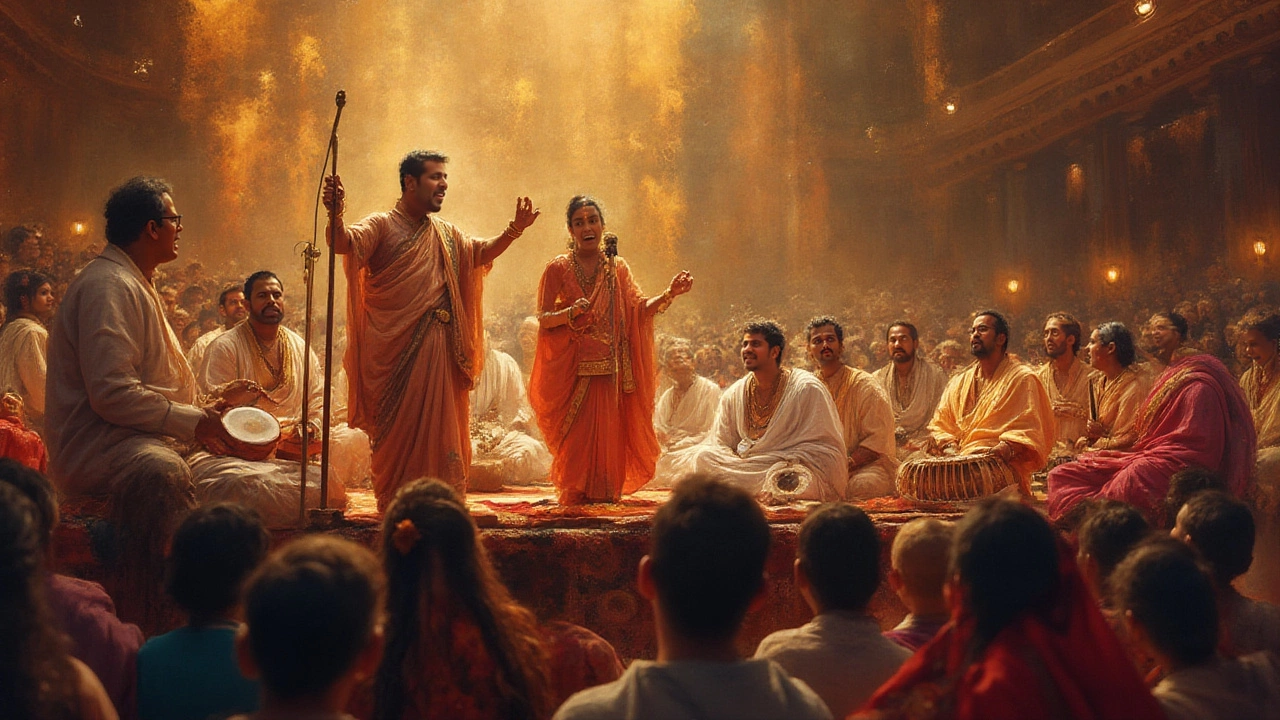
When you hear the slow, soaring notes of a sitar drifting through a quiet evening, you're listening to Hindustani classical music, a centuries-old musical system from North India that blends ancient Vedic chants with Persian and Mughal influences. Also known as North Indian classical music, it’s not just melody—it’s a spiritual discipline built on ragas, talas, and improvisation. Unlike its southern counterpart, Carnatic music, Hindustani music thrived in royal courts, not temples. It absorbed instruments like the tabla and sarangi, and developed a more flexible structure that lets musicians stretch a raga over hours, exploring every emotional nuance.
This tradition isn’t just about notes—it’s about mood, time, and space. A raga like Yaman is meant for dusk, while Bhairav belongs to early morning. The vocal style, known as khayal, lets singers play with pitch and rhythm in ways that feel spontaneous, even when meticulously practiced. Instruments like the sitar, bansuri, and harmonium aren’t just tools—they’re voices that carry the soul of the raga. You’ll find this music alive in cities like Delhi, Lucknow, and Varanasi, where gharanas (musical lineages) pass down techniques from teacher to student, often over decades.
Many people confuse Hindustani with Carnatic music, but they’re as different as jazz and flamenco. Carnatic music is more rigid, mathematically precise, and rooted in devotional texts. Hindustani music is more fluid, emotional, and open to experimentation. One uses the tanpura for drone; the other often uses the shruti box. One sings in Sanskrit and Telugu; the other leans into Urdu and Hindi poetry. Both are profound, but they speak in different tongues.
What you’ll find below are articles that cut through the noise—explaining why Indian gods are painted blue, how nonsense singing fits into folk traditions, and how Diwali and Navratri connect to broader cultural rhythms. You’ll also find the clear, direct comparison between Hindustani and Carnatic music that so many people search for. This isn’t theory for academics—it’s real music, lived and felt, and these posts help you hear it the way those who grew up with it do.