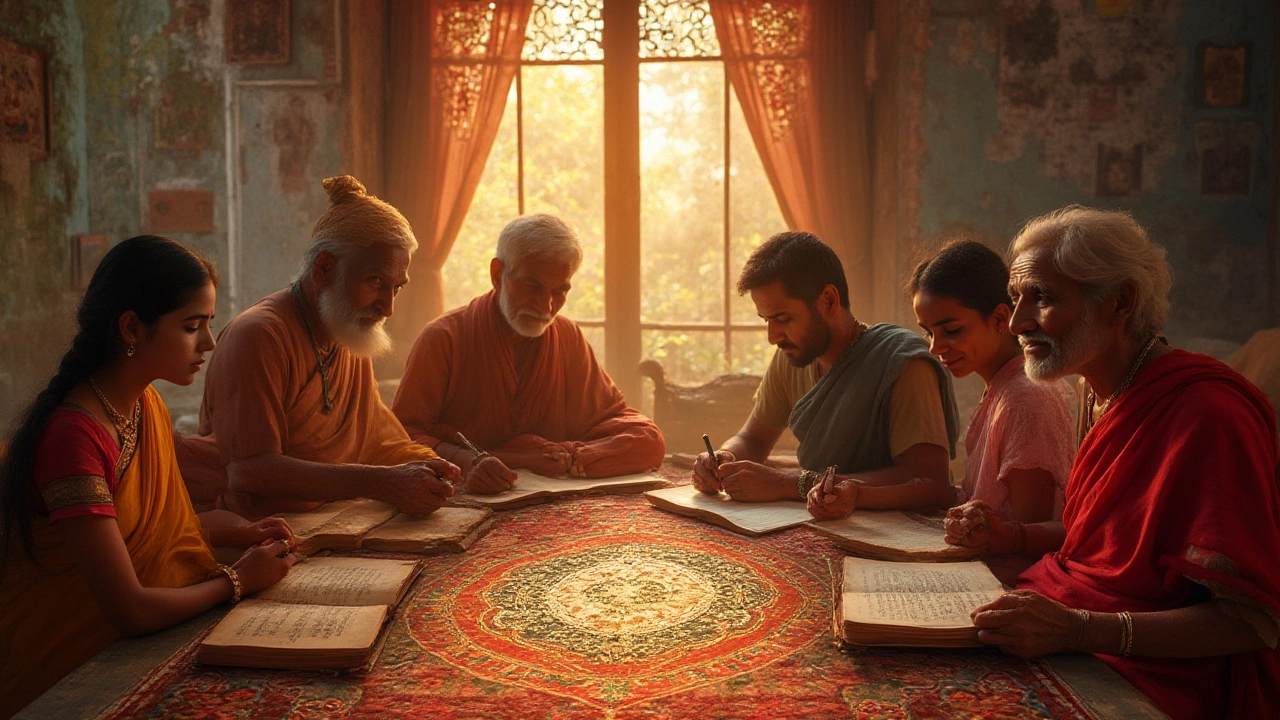
Do Hindus Have a Bible? Understanding Hindu Sacred Texts and Scriptures
Explore whether Hindus have a Bible, how Hindu scriptures are structured, and what texts shape the religion, beliefs, and daily life for millions.
When people talk about Hinduism scriptures, the foundational sacred texts that guide spiritual practice, ethics, and cosmology in Hindu tradition. Also known as Shruti and Smriti, these writings aren’t just old books—they’re living guides used in homes, temples, and meditation halls across India and beyond. Unlike religions built around a single holy book, Hinduism draws from a vast library of texts, each serving a different purpose—from ritual chants to deep philosophical inquiry.
At the heart of it all are the Vedas, the oldest and most authoritative Hindu scriptures, composed in Sanskrit and passed down orally for centuries before being written. There are four: Rigveda, Yajurveda, Samaveda, and Atharvaveda. These aren’t stories or commandments—they’re hymns, formulas, and instructions for rituals that connect daily life to cosmic order. Then come the Upanishads, philosophical extensions of the Vedas that ask the big questions: Who am I? What is reality? What happens after death?. These are where Hinduism’s most profound ideas—like Brahman (the ultimate reality) and Atman (the true self)—first took shape.
For most people today, the Bhagavad Gita, a 700-verse dialogue between Prince Arjuna and Lord Krishna on the battlefield of Kurukshetra. is the most accessible scripture. It doesn’t ask you to memorize rituals; it asks you to live with clarity, duty, and inner peace. You’ll find it quoted in homes, schools, and even corporate seminars. It’s not just religious—it’s practical. Then there are the Puranas, the epics like the Ramayana and Mahabharata, and countless regional texts that bring these ideas to life through stories, songs, and festivals.
These texts don’t sit on shelves. They’re chanted at sunrise, whispered during death rites, sung in village temples, and debated in modern yoga studios. The same verses that guided kings and sages now help students find focus, parents raise children with values, and seekers find stillness in chaos. You won’t find a single "correct" version—Hinduism thrives on diversity of interpretation. But the core message stays: knowledge leads to liberation, action done with awareness brings peace, and truth is bigger than any one book.
What you’ll find in the posts below is how these scriptures show up in real life—why gods are painted blue, how festivals like Diwali tie back to ancient hymns, why some communities avoid meat, and how yoga and Ayurveda connect to spiritual roots. These aren’t abstract ideas. They’re living traditions, still shaping how millions wake up, eat, pray, and live each day.
Explore whether Hindus have a Bible, how Hindu scriptures are structured, and what texts shape the religion, beliefs, and daily life for millions.